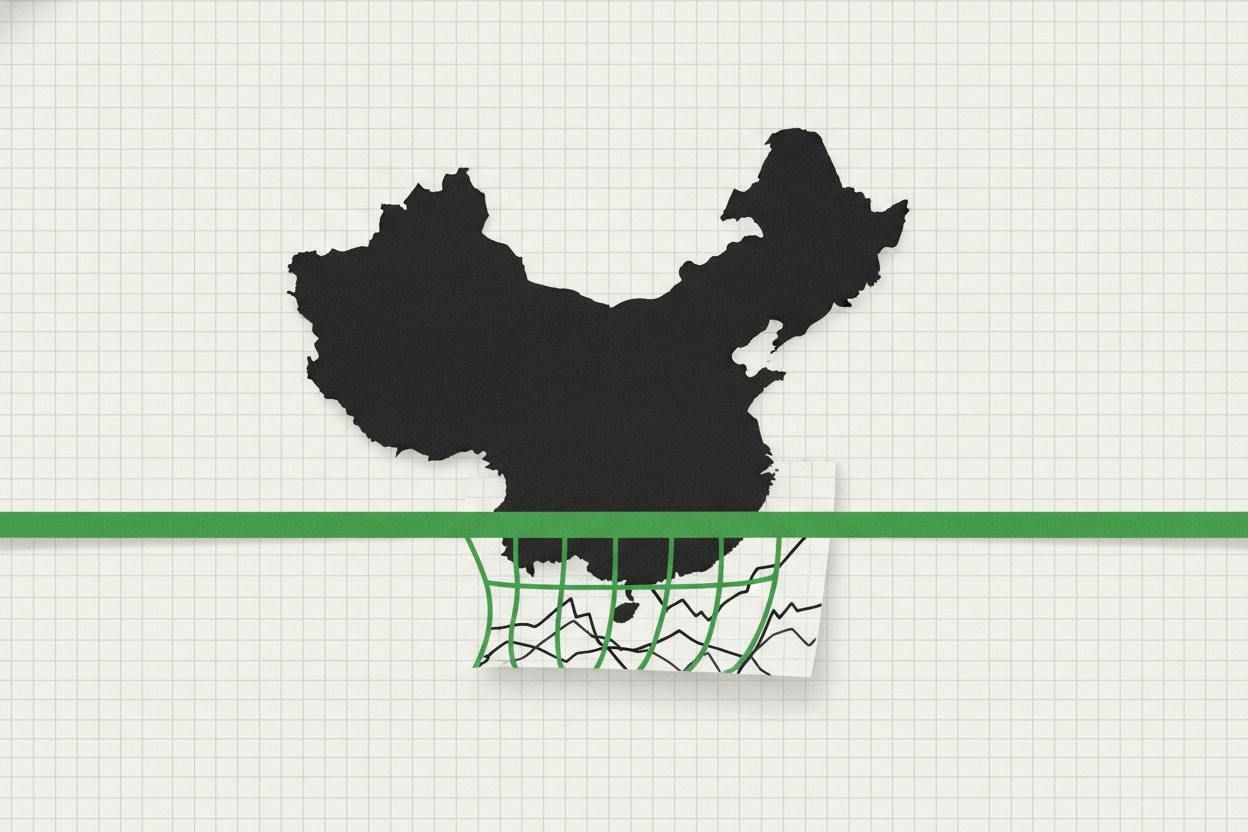
Chinese stocks finished Friday on a firmer note, snapping a rough stretch that had pushed a key benchmark into bear-market territory just a day earlier. The turnaround came after a late wave of buying in state-backed exchange-traded funds (ETFs) — the market's so-called "national team" — helped reverse an early slide.
The CSI 300, which tracks the 300 largest stocks listed in Shanghai and Shenzhen, had fallen more than 20% from its June peak on Thursday. That drop officially put the index in a bear market, a threshold that often draws closer attention from policymakers worried about market stability.
How the 'national team' moves the market
On Friday, traders pointed to heavier inflows into a cluster of big, liquid ETFs that are widely seen as vehicles for state support. When new money flows into an ETF, the fund must buy more of the underlying shares, spreading the bid across the index. That mechanical buying can lift the largest constituents quickly, which in turn drags the broader index higher.
But the bigger impact is often psychological. Visible state support can make investors feel there's a "floor" under prices, reducing the fear of a disorderly selloff. That can dial down short-term volatility even if company earnings prospects haven't changed.
This isn't the first time Beijing has leaned on state-linked funds to steady the market. Similar buying was seen during previous sharp declines, and the approach is part of a broader toolkit officials use to manage investor sentiment. The "national team" typically operates through large, highly liquid ETFs because they can absorb big orders without causing wild price swings in individual stocks.
What it means for investors
For everyday investors, the key takeaway is that state support can calm the trading tape quickly, but it doesn't necessarily fix the underlying issues weighing on stocks. The CSI 300's slide reflects a mix of concerns, including slower economic growth, property-sector stress, and weaker corporate earnings. ETF buying can steady valuations in the short term, but it doesn't change those fundamentals.
That said, the signal effect is real. When the national team steps in, it often reduces the risk of a sharp, disorderly decline, which can be reassuring for investors who might otherwise panic. It also reinforces the perception of a "policy put" — the idea that officials will lean against sharp drops. That perception can help stabilize markets even when the news flow is negative.
Investors should also note that this kind of support tends to be more about positioning than about long-term trends. It can lift the biggest index names, but smaller stocks and sectors outside the benchmark may not benefit as much. And if earnings continue to disappoint, the support may only provide a temporary cushion.
What to watch next
Markets will be watching whether the national team's buying continues in the coming sessions and whether it can sustain the rebound. Also in focus is the upcoming CSI 300 earnings rush, with major companies like BYD, PetroChina, and several banks set to report. Those results will give investors a clearer picture of whether corporate profits are holding up.
Beyond China, global factors remain in play. Emerging Asian markets have been under pressure recently, partly due to concerns about tech spending and global growth. And rising oil prices have weighed on other Asian markets, adding to the cautious mood.
For now, Friday's rebound shows that state support can still move the needle. But investors should keep in mind that the underlying challenges haven't disappeared. The national team can provide a floor, but it can't guarantee a lasting trend shift.



