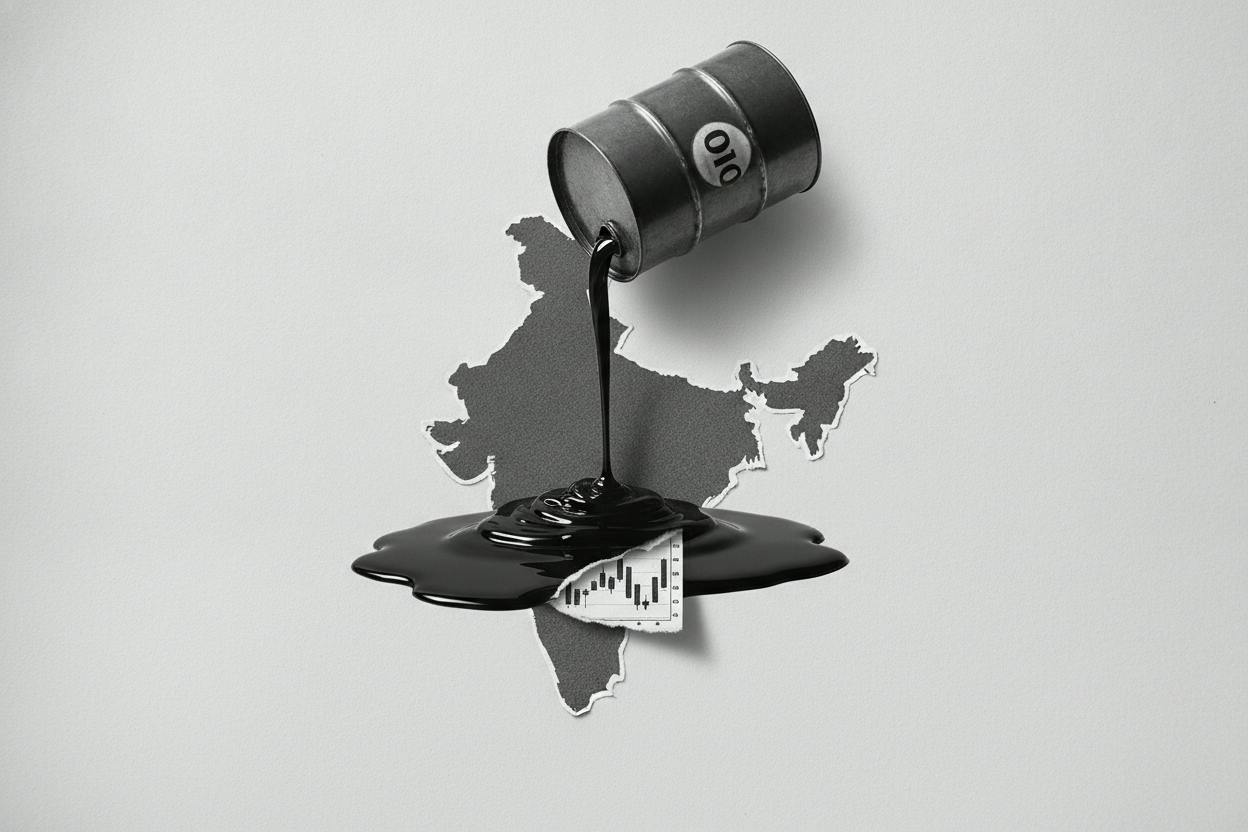
Indian stocks extended their losing streak to a fourth session on Tuesday, as a spike in global oil prices to around $114 a barrel on Middle East supply fears outweighed a modest rebound in technology shares. The Nifty 50 index slipped 0.70%, with investors focused on the potential economic fallout from costlier crude.
India is one of the world's largest oil importers, so a jump in Brent prices rarely stays contained to the energy sector. More expensive barrels raise the country's import bill and often translate into pricier fuel and transport costs, which can keep inflation sticky and put pressure on the current account—the gap between what a country earns from abroad and what it spends.
Why oil matters so much for India
For a country that imports the vast majority of its crude oil, every dollar increase in the price of a barrel has a direct impact on the economy. Higher oil prices mean India has to spend more foreign currency to buy the same amount of energy, which can widen the trade deficit and weigh on the rupee.
A weaker rupee makes imports even more expensive, creating a feedback loop that can push inflation higher. That is a particular concern for the Reserve Bank of India (RBI), which has been trying to bring inflation down to its target. If oil prices stay elevated, the central bank may have less room to cut interest rates, which could dampen economic growth and corporate earnings.
For everyday investors, this means that oil price movements are not just a story for energy traders. They can affect the value of your portfolio across sectors, from airlines and logistics companies that burn fuel to consumer goods firms that face higher input costs.
IT shares bounce, but not enough
Amid the oil-driven selloff, information technology shares managed a rebound, rising about 1% on the day. The IT sector, which earns a large portion of its revenue in dollars, often benefits when the rupee weakens, as that boosts the value of their overseas earnings when converted back to local currency.
However, the bounce in tech stocks was not enough to lift the broader market. The Nifty 50's decline shows that energy-price worries are dominating investor sentiment, at least for now. The index has now fallen for four consecutive sessions, reflecting a cautious mood among traders.
Investors are also keeping an eye on global cues, including how other Asian markets are reacting to oil at these levels. In Japan, for instance, tech stocks have been hit by a US selloff, while AI spending concerns have pushed Treasury yields lower in the US.
What it means for investors
For ordinary investors, the key takeaway is that oil prices are a macro force that can move markets beyond just the energy sector. When crude spikes, it's worth considering how your holdings might be affected. Companies with high energy costs or those that rely heavily on imported raw materials could see their margins squeezed. On the other hand, sectors like IT that earn in dollars might get a boost from a weaker rupee.
It's also important to remember that market moves like this are part of the normal ebb and flow. A single day's decline doesn't necessarily signal a long-term trend, but a sustained rise in oil prices could have broader implications for inflation and interest rates.
Investors should watch for any further escalation in Middle East tensions, as that could push oil even higher. Also, keep an eye on the RBI's policy stance—if inflation remains sticky, the central bank may hold off on rate cuts, which could affect bond yields and equity valuations.
For now, the market is in a wait-and-see mode, with energy prices taking center stage. As always, it's wise to stay diversified and avoid making hasty decisions based on short-term volatility.



