Chinese mainland stocks slipped on Wednesday as investors held their breath ahead of June inflation data that could influence the next move from the People's Bank of China (PBoC). The Shanghai Composite and Shenzhen Component both edged lower in cautious trading, reflecting uncertainty about how price pressures are evolving across the economy.
What the data is expected to show
Markets are watching two key inflation gauges. Consumer price inflation (CPI) is forecast to hold steady at 1.2% year-on-year, according to IG, a trading platform. That would suggest household demand remains subdued, giving policymakers room to keep supporting the economy without worrying about overheating.
Producer price inflation (PPI), however, is expected to tick up to 4.1% from 3.9% in the previous month. That would signal rising input costs for factories and manufacturers, even as consumers aren't yet feeling the pinch at the checkout.
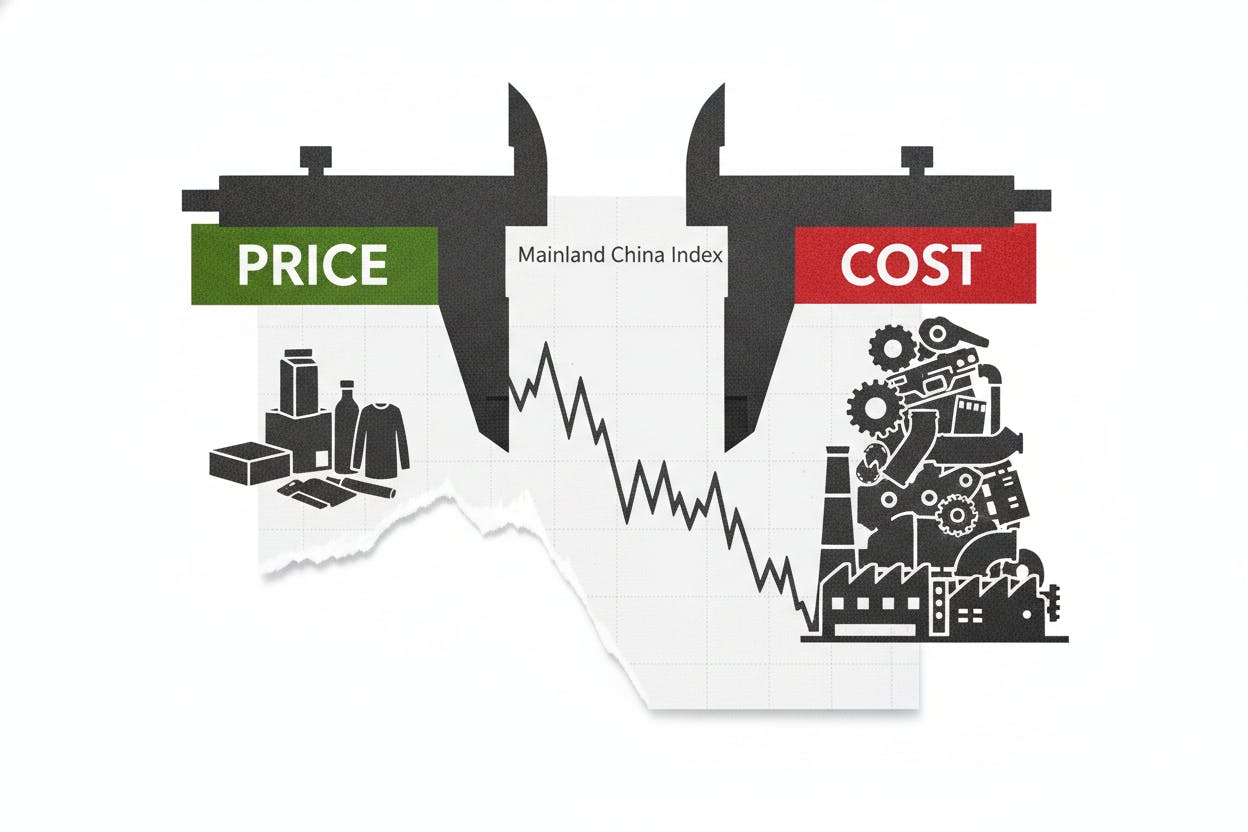
The gap between the two measures matters. When producer prices rise faster than consumer prices, companies—especially those in manufacturing with limited pricing power—can see their profit margins squeezed. They're paying more for raw materials and components but can't easily pass those costs on to customers.
PBoC adds liquidity
The PBoC has already taken steps to ease financial conditions. It conducted a 1 trillion-yuan outright reverse repo operation, effectively injecting cash into the banking system and helping keep borrowing costs down. That's part of a broader effort to support a recovery that has shown signs of unevenness.
But easier money can only do so much. If cost pressures persist, the boost from lower funding costs may be offset by weaker corporate earnings. That's the trade-off investors are weighing as they wait for Thursday's official data release.
Similar dynamics are playing out elsewhere in Asia. In Thailand, for example, headline inflation has slowed but core inflation hit a six-year high, creating a mixed picture for policymakers there. And in Japan, the Nikkei has been flat as chip stocks cool and the government targets steel imports.
What it means for investors
For those holding Chinese A-shares, the inflation data is more than just a number. If PPI comes in at 4.1% while CPI stays at 1.2%, it reinforces a narrative of cost-push inflation without demand-pull strength. That could keep markets trading in a choppy, stop-start pattern.
Downstream manufacturers—companies that make finished goods for consumers—are likely to face the most pressure on their profit forecasts. Firms that can raise prices more easily, such as those in sectors with strong brands or limited competition, may be better positioned.
Liquidity from the PBoC can lift valuations in the short term, but it's not a cure-all. Investors will be watching not just the headline inflation numbers but also the details—which categories are driving producer price increases and whether any of that is starting to feed through to consumer prices.
Hong Kong stocks have also been in focus recently, with gains tied to an OPEC+ output hike that sent oil to four-month lows. That's a separate factor, but it shows how global commodity prices feed into the inflation picture for China, a major importer of energy and raw materials.
The broader backdrop
China's economy has been navigating a tricky period. Growth has slowed from the rapid pace of previous years, and policymakers have been careful to avoid stoking inflation while still providing enough stimulus to keep activity from stalling. The PBoC's liquidity operation is part of that balancing act.
Globally, central banks are also watching inflation data closely. The Federal Reserve's minutes from its latest meeting are due soon, and markets are parsing every clue about the pace of rate cuts. In that context, China's inflation figures offer a glimpse into whether the world's second-largest economy is facing similar price pressures or charting its own course.
For everyday investors, the key takeaway is that inflation isn't just about rising prices at the store. It's a signal about the health of the economy and the likely direction of policy. When consumer inflation is low, it gives central banks room to cut rates or inject liquidity. But when producer costs rise, it can eat into corporate profits and make stocks more volatile.
Thursday's data will provide the next piece of the puzzle. Until then, expect Chinese markets to remain cautious, with investors weighing the balance between supportive policy and margin pressure.