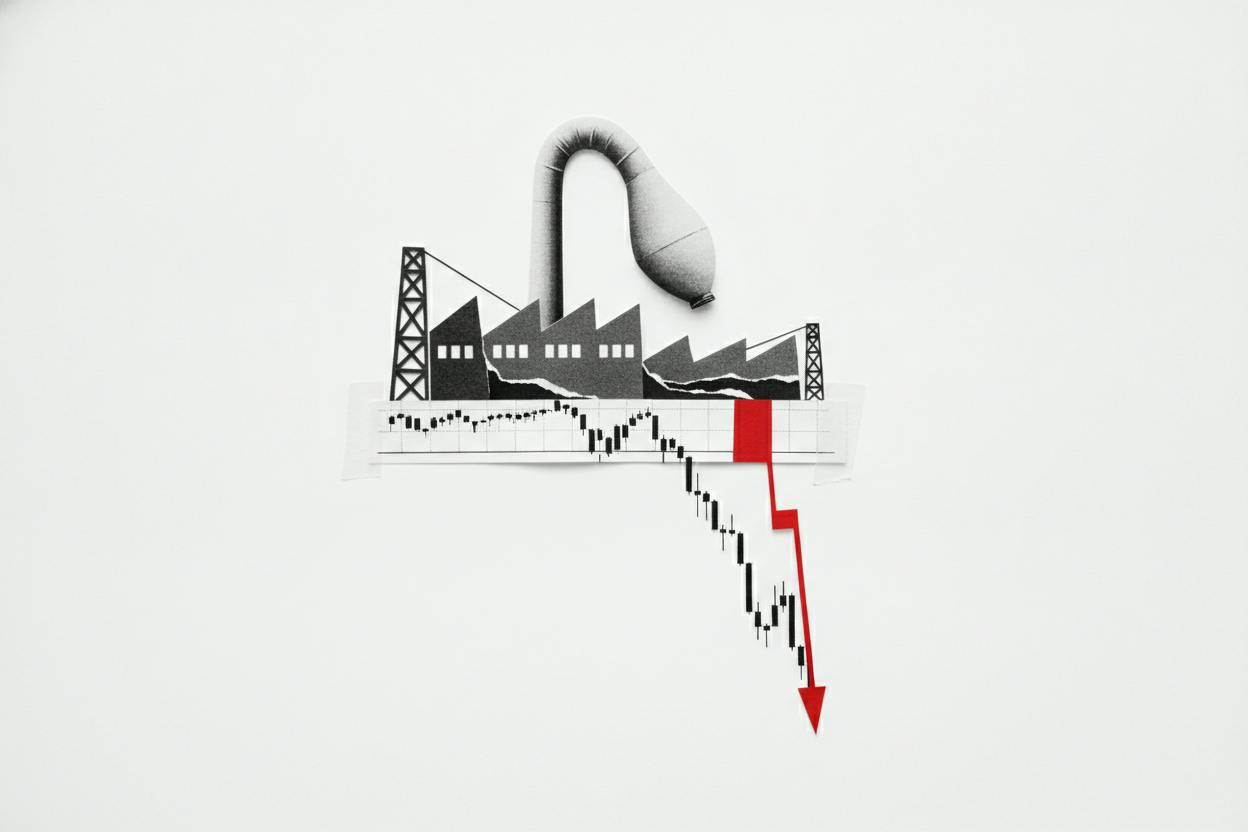
Chinese stocks fell on Tuesday as investors digested a slowdown in factory profit growth that came in below expectations, while also weighing new signals on US-China trade relations.
The Shanghai Composite ended the session 1.7% lower at 3,823.62, while the Shenzhen Component slid 3.4% to 12,858.75. The declines were led by concerns that the world's second-largest economy is losing some momentum, even as the broader earnings picture remains positive.
Factory profit growth cools
The immediate catalyst was fresh data showing that profits at China's major industrial firms rose 15.7% year over year in the first eight months of the year, reaching 5.272 trillion yuan. That figure, however, marked a slowdown from the 17.6% growth recorded in the first seven months and fell short of the 18% forecast compiled by Trading Economics.
Industrial profits are a closely watched indicator of corporate health in China's manufacturing-heavy economy. They reflect demand both at home and abroad, and can signal how much pricing power companies have. A slowdown, even a modest one, can raise questions about whether the recovery is broadening or losing steam.
This is not the first sign of cooling. Earlier data showed that factory profit growth had already eased to 4.2% in August alone, a sharp deceleration from earlier in the year. That trend has been partly attributed to softer global demand and ongoing challenges in the property sector, which remains a drag on domestic consumption and investment.
Tariff relief hopes in focus
Adding to the mix, investors were parsing reports of fresh US-China tariff relief plans. While details remained thin, any move to ease trade barriers would be seen as a positive for Chinese exporters and global supply chains. However, market participants appeared cautious, with the profit data taking center stage.
Trade tensions have been a recurring theme for Chinese equities over the past several years. Tariffs on Chinese goods have weighed on export-oriented companies, while also complicating the outlook for technology firms that rely on cross-border supply chains. Any meaningful relief could provide a tailwind, but investors have learned to temper expectations until concrete measures are announced.
What it means for investors
For everyday investors, the takeaway is that Chinese stocks remain sensitive to a mix of domestic economic data and geopolitical headlines. The profit slowdown suggests that the recovery, while real, is not accelerating at the pace many had hoped. That could translate into more volatility in the near term.
It's also worth noting that the Shanghai Composite and Shenzhen Component are broad indices that include many large state-owned enterprises and financial firms. Their moves can be influenced by policy shifts and global sentiment as much as by company-specific earnings. For those with exposure to Chinese equities through funds or ETFs, this kind of data can be a useful barometer of the underlying economy's health.
Investors will likely keep a close eye on upcoming economic releases, including trade data and retail sales, to see whether the slowdown in factory profits is a blip or a trend. The path of US-China relations will also remain a key swing factor, as any breakthrough on tariffs could quickly shift sentiment.
In the meantime, the broader Asian market context is mixed. While Chinese stocks slipped, other regional markets have shown resilience, partly on hopes of trade truces and stimulus measures. For example, Saudi stocks rose on trade truce hopes and IPO chatter, highlighting how global trade sentiment can ripple across markets.
Similarly, US durable goods orders held steady in August, beating forecasts, which offered some reassurance about the health of American manufacturing. That contrast underscores the divergent paths of the world's two largest economies.
Looking ahead
For now, the focus shifts to whether Beijing will introduce additional stimulus to support growth. Policymakers have already rolled out measures to boost consumption and stabilize the property market, but the latest profit data may add pressure for more action.
Investors should also watch how the tariff relief plans evolve. Any concrete steps to reduce or remove tariffs could provide a meaningful boost to Chinese equities, particularly for export-oriented sectors. Until then, expect the market to remain reactive to headlines and data.
As always, it's important to remember that short-term market moves don't necessarily reflect long-term fundamentals. Chinese stocks have had a volatile year, and while the profit slowdown is a concern, the overall growth rate remains solid. For patient investors, the key is to focus on the broader trend rather than daily fluctuations.