China's copper smelters, the world's largest producers of refined copper, are entering the final stretch of the year with a double squeeze on their margins. A tightening supply of scrap copper and a sharp drop in the price of sulfuric acid—a key byproduct that often offsets processing costs—are prompting some producers to slow down.
Despite the pressure, refined copper output in China is still expected to grow by 3% to 3.4% this year, according to Wood Mackenzie and Zijin Tianfeng Futures. That is a marked slowdown from the 10.4% pace Reuters cited for 2025, reflecting the growing strain on the industry.
Two-sided feedstock squeeze
The slowdown is being driven by a two-sided feedstock squeeze. On one side, a tax crackdown is tightening the supply of scrap copper, a secondary raw material that smelters often rely on when concentrate—the primary input—is scarce or expensive. On the other, smelters continue to face an ongoing shortage of copper concentrate, the main ore-based input used to make refined copper.
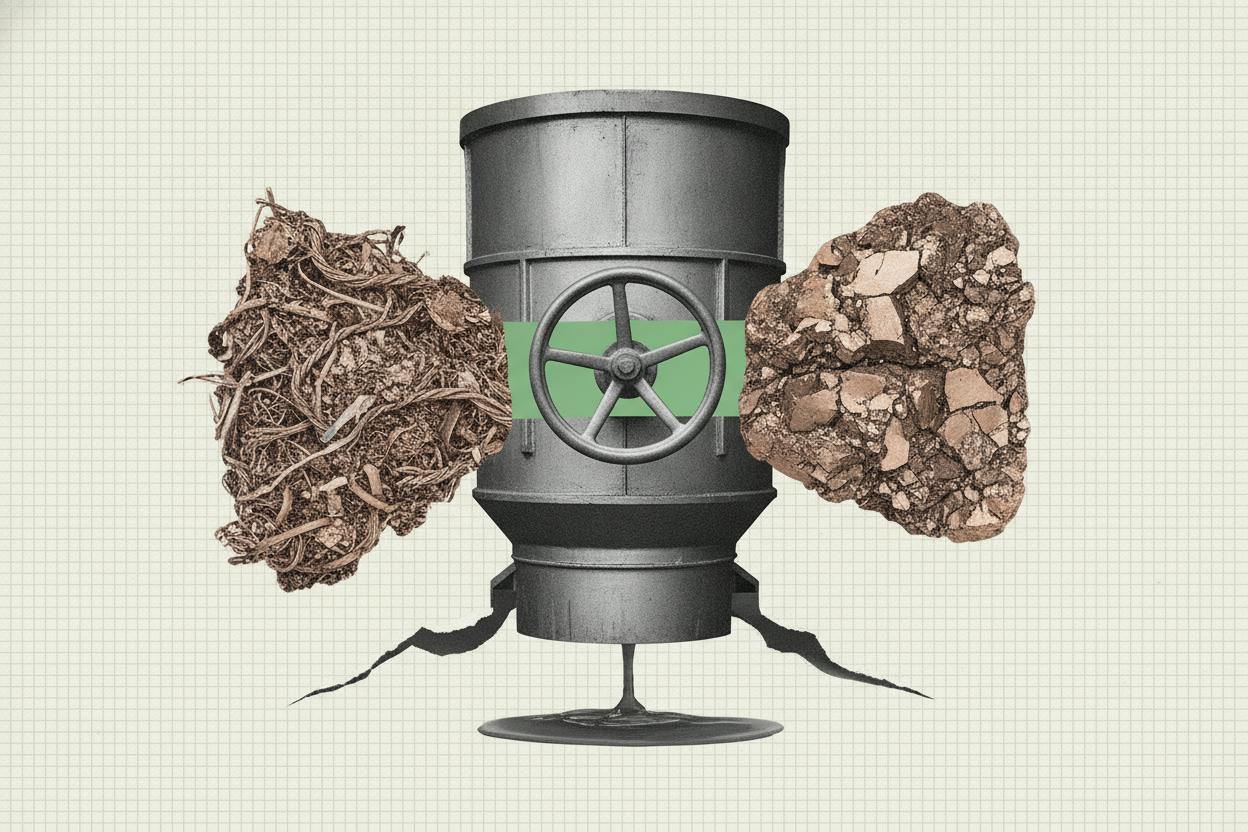
Normally, plants can switch between scrap and concentrate depending on which is cheaper and more available. But with both sources under pressure, that flexibility—often called a safety valve—is disappearing. The result is that some smelters are choosing to trim output rather than run at a loss.
The squeeze is also visible in the byproduct market. Sulfuric acid, which is produced during the smelting process and sold to industries like fertilizer and chemical manufacturing, saw prices fall 11% in September. For many smelters, sulfuric acid sales are a crucial profit center that helps offset the thin margins on copper itself. When acid prices drop, the overall economics of running a smelter worsen.
What this means for copper markets
For investors, the key question is whether this slowdown in Chinese output will tighten global copper supplies. China is the dominant player in refined copper production, so even a modest reduction in its output can have ripple effects on global inventories and prices.
Recent data already points to tightening supply. Copper and zinc spreads signal tightening supply as China inventories drop, a trend that could be amplified if smelters cut output further in the coming months.
However, the expected 3%-3.4% growth still means more copper will be produced this year than last, just at a slower rate. That could temper any sharp price rally, especially if demand from key sectors like construction and electronics remains soft.
Broader economic backdrop
The copper market is also sensitive to the broader health of China's economy, which has been showing mixed signals. China's factory profit growth cooled to 4.2% in August, with AI hardware providing a bright spot but overall momentum fading. Slower industrial activity typically means less demand for copper, which could offset some of the supply-side tightness.
Trade tensions also remain a wildcard. The US-China summit ended with a trade truce extension but few breakthroughs, leaving uncertainty over tariffs and supply chains that could affect copper flows and manufacturing demand.
What it means for investors
For everyday investors, the copper story is not about buying a specific stock, but about understanding a key global commodity that affects everything from construction costs to electronics prices. Copper is often called "Dr. Copper" because its price is seen as a barometer for global economic health.
If Chinese smelters continue to face margin pressure and cut output, copper prices could firm up, benefiting miners and copper-focused exchange-traded funds. On the other hand, if demand weakens further, any supply reduction might not be enough to push prices higher.
Investors should also watch the sulfuric acid market, as it is a hidden driver of smelter profitability. A sustained drop in acid prices could force more production cuts, while a recovery could ease the pressure.
In the near term, the market will be watching for monthly output data from China and any further policy moves on scrap imports or tax enforcement. The next few months will show whether the safety valve is truly closed or just temporarily stuck.