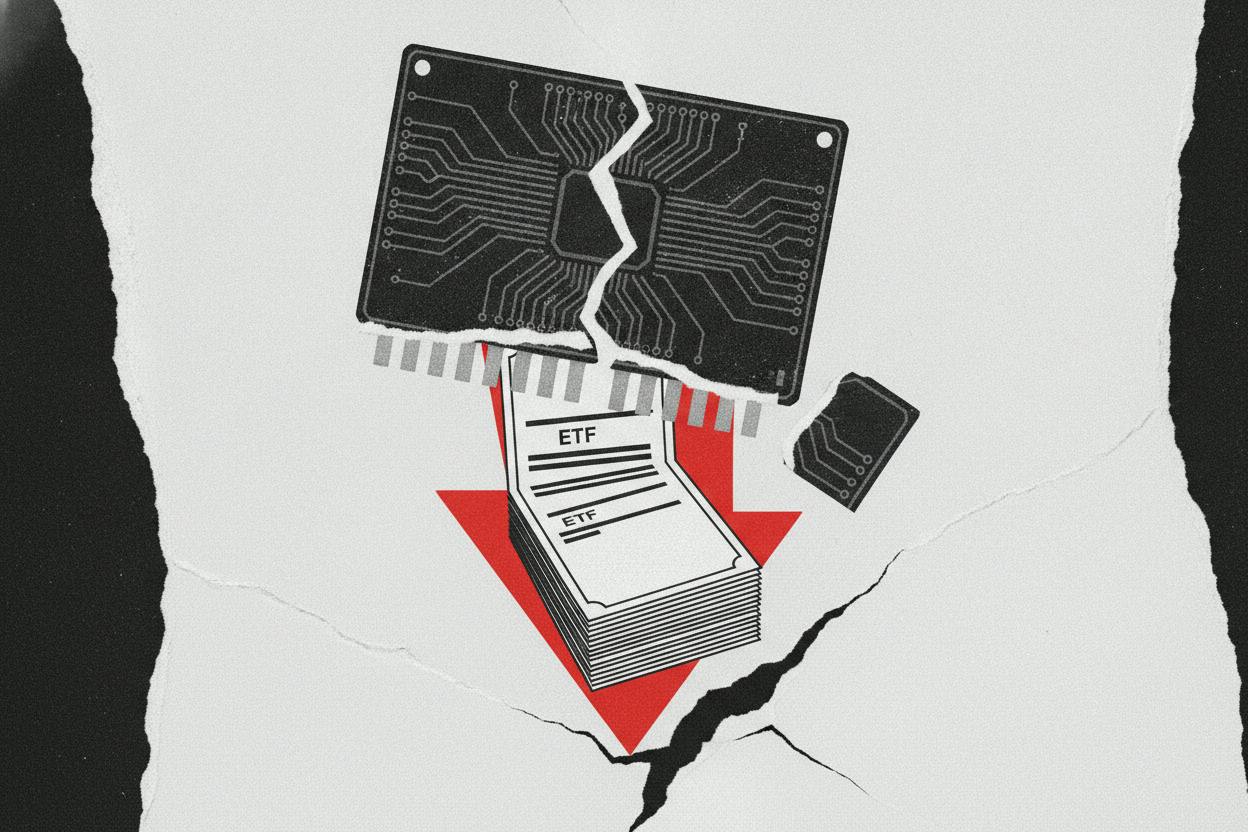
It was a rough day for technology investors as a sharp decline in chip stocks, triggered by Intel's latest quarterly results, rippled through the broader market. The sell-off hit exchange-traded funds (ETFs) that track tech and semiconductor indexes, with some of the most popular funds suffering double-digit percentage losses.
The Invesco QQQ, which tracks the Nasdaq 100, fell 3.6%. More specialized semiconductor funds fared worse: the iShares Semiconductor ETF (SOXX) dropped 9.2%, and the SPDR S&P Semiconductor ETF (XSD) lost 7.7%. The broader Technology Select Sector SPDR Fund (XLK) also declined, falling 5.2%.
Meanwhile, energy ETFs bucked the trend, rising about 1.5% as investors rotated into sectors perceived as safer or benefiting from higher oil prices.
Why chip stocks matter beyond their size
Semiconductors are a relatively small slice of the overall stock market, but they are a critical component of many popular tech funds. Chips are the building blocks of everything from smartphones and computers to cars and data centers, so their performance often signals broader trends in technology demand.
When chipmakers like Intel report weak results, it can raise concerns about the health of the entire tech sector. Intel's forecast, which pointed to soft demand in the PC market and ongoing challenges in its business, was seen as a warning sign for the industry. That sentiment quickly spread to other chipmakers, dragging down the whole group.
Because so many tech ETFs hold semiconductor stocks, a chip sell-off rarely stays contained. Even funds that are not specifically focused on chips, like QQQ, have significant exposure to companies like Nvidia, AMD, and Intel. As a result, a drop in chip prices can pull down the entire fund.
How ETF mechanics can amplify moves
There is also a mechanical effect at play. When investors sell shares of a popular ETF, the fund manager or market maker often has to sell the underlying stocks to keep the fund's price in line with its net asset value. This can add extra selling pressure to the very stocks that are already falling, potentially deepening the decline.
This is especially true for highly liquid ETFs like QQQ, which are often used by traders to quickly adjust their exposure to the tech sector. When fear hits, these funds can see heavy outflows, forcing the sale of large blocks of stocks in a short period.
For everyday investors, this means that even if you don't own individual chip stocks, you can still feel the impact through your tech-focused mutual funds or ETFs. It's a reminder that diversification within a sector doesn't always protect against sector-wide shocks.
What it means for investors
For those with money in tech ETFs, the immediate takeaway is that volatility is part of the game. Tech funds have been among the best performers in recent years, but they can also experience sharp pullbacks when sentiment turns.
Energy ETFs, on the other hand, offered a bright spot. Their rise of about 1.5% suggests that some investors are rotating into sectors that benefit from higher commodity prices, possibly as a hedge against tech weakness.
Looking ahead, investors will be watching whether the chip sell-off is a short-term reaction or the start of a broader trend. Key factors include the health of the PC market, spending on artificial intelligence infrastructure, and the overall economic outlook. As Intel's weak forecast dragged US stocks lower, the focus now shifts to other tech giants and their earnings reports.
For those considering new investments, it's important to understand the composition of any ETF you own. A fund labeled "tech" may have a heavy weighting in semiconductors, which can be more volatile than the broader market. Knowing what you hold can help you avoid surprises.
Ultimately, days like this are a normal part of investing. The key is to stay focused on your long-term goals and not make impulsive decisions based on short-term market moves. As always, diversification across sectors and asset classes can help cushion the blow when one area of the market stumbles.