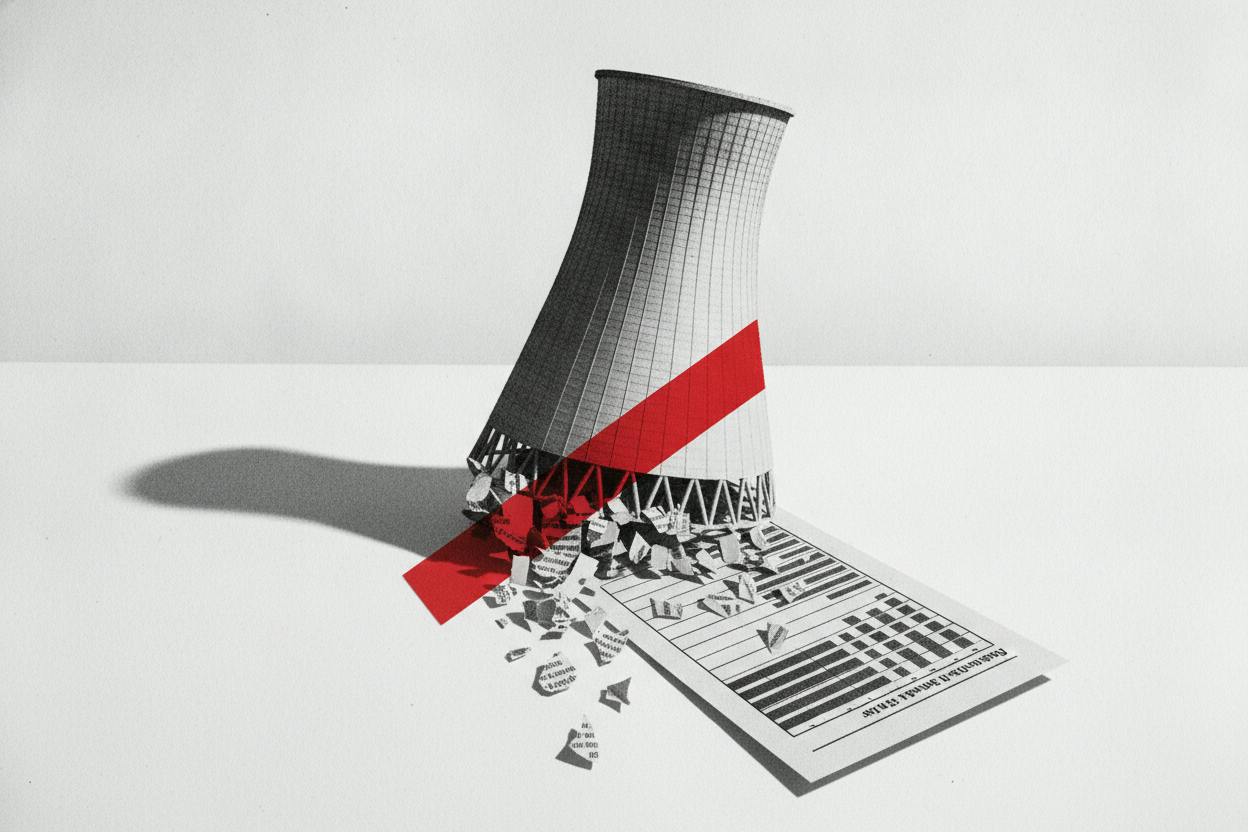
Japan's Chubu Electric Power has dramatically reversed its financial outlook, now forecasting a record net loss of ¥215 billion for the fiscal year ending in March. The swing comes after the utility booked a one-off charge of roughly ¥380 billion ($2.4 billion) tied to its Hamaoka nuclear plant, a move that flipped its earlier profit forecast of ¥160 billion into a deep loss.
What happened at Hamaoka?
The charge stems from Chubu's decision to withdraw its application to restart two reactors at the Hamaoka plant, located in Shizuoka Prefecture, and its statement that it has no firm timeline to reapply. That uncertainty forced the company to recognize an impairment loss—an accounting write-down reflecting that the asset is expected to generate less future value than previously assumed—as well as a valuation loss on nuclear fuel.
Impairment charges are common in capital-intensive industries like utilities, where large infrastructure projects can become uneconomic or face regulatory hurdles. In this case, the prolonged shutdown of Hamaoka, which has been offline since the 2011 Fukushima disaster, made it clear that the plant's future revenue potential had diminished.
The reversal is stark: just months ago, in July, Chubu had guided for a net profit of ¥160 billion. Now, the company is bracing for its worst annual result on record, underscoring how a single regulatory or operational setback can reshape a utility's entire financial year.
Why nuclear matters for Japanese utilities
Nuclear power has been a contentious and costly issue for Japanese utilities since the 2011 earthquake and tsunami triggered the Fukushima meltdown. In the aftermath, all of Japan's nuclear reactors were gradually taken offline for safety reviews. While some have been restarted under stricter regulations, many remain idle, forcing utilities to rely on more expensive fossil fuels and to absorb heavy costs for maintaining dormant plants.
For Chubu, Hamaoka has been a particular focus. The plant sits near a major fault line, and its restart has faced intense local opposition and regulatory scrutiny. The company's decision to withdraw its application suggests that the path to restarting the reactors is not only uncertain but potentially years away, if it happens at all.
This is not an isolated issue. Other Japanese utilities have also grappled with similar challenges, and the sector as a whole has seen earnings volatility tied to nuclear policy. Investors in Japanese utility stocks have learned to expect such swings, but the scale of Chubu's charge is notable even by those standards.
What it means for investors
For everyday investors, this news is a reminder that utility stocks—often seen as stable, defensive holdings—can carry significant event risk. A single regulatory decision or asset write-down can wipe out years of earnings, as Chubu's reversal demonstrates.
The ¥215 billion net loss forecast is a record for the company, and it will likely weigh on its share price and dividend prospects. While Chubu has not announced changes to its dividend policy, such a large loss could pressure future payouts, especially if the company needs to conserve cash to manage its balance sheet.
Investors should also consider the broader implications for Japan's nuclear sector. The Hamaoka situation highlights the difficulty of restarting reactors, even when a utility is willing to invest in safety upgrades. This could affect other utilities with similar restart ambitions, as well as companies that supply equipment or services to the nuclear industry.
That said, the charge is a one-off, and Chubu's underlying operations—its electricity generation and retail business—remain intact. The company's core business is not necessarily impaired, but the loss will reduce its retained earnings and could limit its financial flexibility in the near term.
For those watching the sector, the key question is whether Chubu will eventually reapply to restart Hamaoka, and if so, when. Until then, the plant remains a drag on the company's finances and a source of uncertainty for investors.
In the meantime, the news adds to a mixed picture for global energy markets. While some companies are posting record profits on strong commodity prices, others, like Chubu, are facing write-downs and losses due to regulatory and operational challenges. The contrast is a useful reminder that energy investing is not a one-way bet.
For a broader view of how companies are navigating similar pressures, see how TotalEnergies beat forecasts on strong refining margins and how Shell posted its biggest profit since 2022. On the other hand, KHNP's abandonment of Czech nuclear talks shows how nuclear projects can falter, affecting related stocks.
Ultimately, Chubu's record loss is a cautionary tale about the risks embedded in capital-intensive, regulated industries. For investors, it underscores the importance of looking beyond a company's headline earnings to understand the underlying assets and the regulatory environment in which it operates.