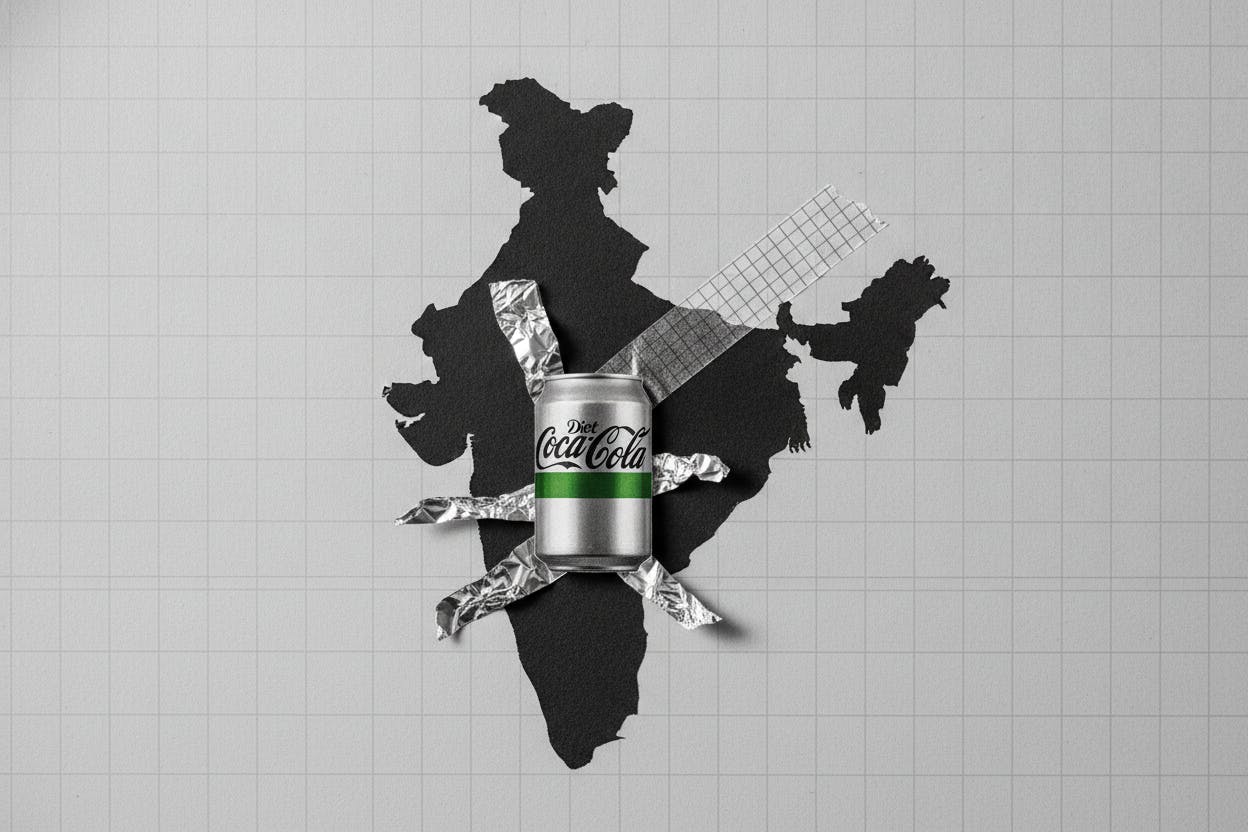
Coca-Cola reported a loss of market share in India during the second quarter, as the beverage giant struggled with higher packaging costs and a gap in its mid-priced product lineup. The news comes even as demand for Diet Coke is surging, with the company expecting a tenfold increase in sales from a small base.
Chief Financial Officer John Murphy told Reuters that the company's performance in India was hampered by a lack of appropriate pack sizes in the 11 to 40 rupee price range. This missing "pack price architecture" made it harder for Coca-Cola to offer affordable options to price-sensitive Indian consumers, who often make purchasing decisions based on individual pack prices rather than brand loyalty.
Pack size strategy matters in India
In India, where disposable incomes vary widely, the ability to offer products at multiple price points is crucial. Coca-Cola's competitors have been more aggressive in this space, offering smaller, cheaper packs that appeal to budget-conscious buyers. The company's absence in this mid-tier segment allowed rivals to capture market share, particularly in rural and semi-urban areas.
Rising aluminum costs also added pressure, as cans are a key packaging format for the company. Higher input costs forced Coca-Cola to either absorb the expense or raise prices, both of which can hurt competitiveness in a market where every rupee matters.
Diet Coke's unexpected boom
Despite the overall market share decline, Diet Coke is experiencing a remarkable surge in India. The zero-sugar variant is on track for a tenfold jump in demand, though from a very small base. This growth reflects a broader global trend toward healthier beverage options, as consumers become more health-conscious and seek alternatives to sugary drinks.
However, the Diet Coke boom is not yet enough to offset the broader challenges. The brand's small starting point means that even a tenfold increase represents a modest absolute volume. For context, Diet Coke's market share in India remains tiny compared to regular Coke or local competitors like Thums Up, which Coca-Cola also owns.
What it means for investors
For investors, the India market share loss is a reminder that even global giants face local hurdles. Coca-Cola's struggles highlight the importance of local pricing strategies and supply chain management in emerging markets. India is a key growth market for the company, with a young population and rising consumption, but success requires constant adaptation.
The Diet Coke surge, while promising, is not yet a game-changer. Investors should watch whether the company can close the pack size gap and manage input costs. If Coca-Cola can introduce the right mid-tier packs, it could regain share and capitalize on the Diet Coke trend.
Broader market conditions also matter. Rising aluminum costs are a headwind for many consumer goods companies, and the ability to pass on costs to consumers varies by market. In India, where price sensitivity is high, companies often have to absorb cost increases, squeezing margins.
For context, other companies in India are also navigating similar dynamics. For example, TTK Prestige saw its profit double on the back of India's induction cooktop boom, showing how local consumer trends can drive growth. Meanwhile, Indian IT stocks jumped 3.3% as the Nifty held steady ahead of a Fed rate decision, indicating that broader market sentiment remains positive despite sector-specific challenges.
The road ahead
Coca-Cola's management is likely to focus on fixing the pack size issue in the coming quarters. The company has a history of adapting to local markets, and India's potential remains enormous. However, competition from local brands and other global players like PepsiCo means that any misstep can quickly lead to market share losses.
Investors should also keep an eye on aluminum prices. If they remain elevated, Coca-Cola may need to explore alternative packaging or further optimize its supply chain. The company's ability to innovate in packaging and pricing will be key to its India turnaround.
In the meantime, the Diet Coke growth story offers a bright spot, but it is unlikely to move the needle for the overall business in the near term. For everyday investors, the takeaway is that even strong brands face local challenges, and diversification across markets and products remains important.