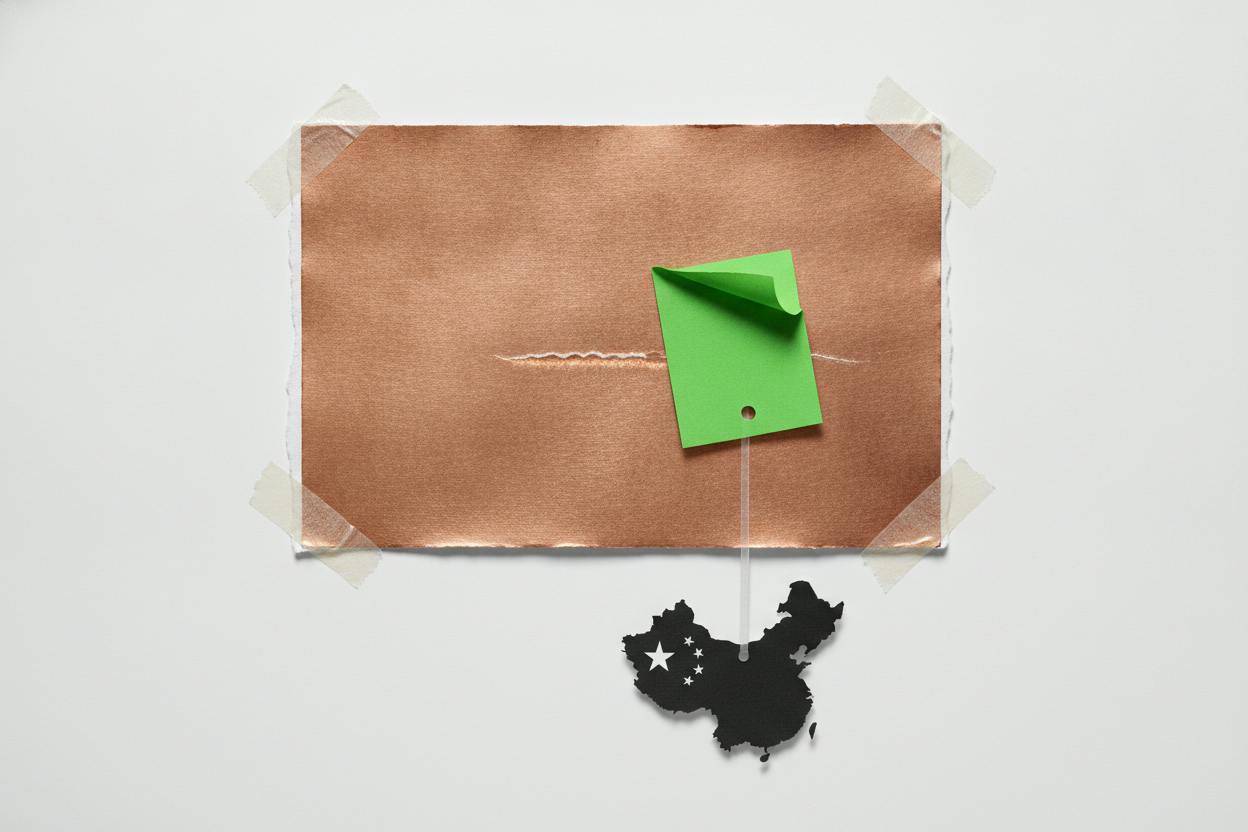
Chile's state-owned copper giant Codelco is trying to win back Chinese buyers by trimming the premiums it charges for refined copper cathodes in 2027. After setting a record $350 per ton premium for 2026, the company is now floating a range of roughly $250 to $280 per ton, according to reports. The move comes after the earlier high price sparked pushback from customers and contributed to a drop in shipments.
What are copper premiums and why do they matter?
Copper premiums are the extra amount buyers pay on top of the benchmark price on global exchanges, such as the London Metal Exchange. They cover the costs of shipping, handling, and local delivery, and they also reflect the balance of supply and demand in a particular market. When demand is strong or supply is tight, premiums tend to rise. When buyers have more options or demand weakens, premiums fall.
For Codelco, the world's largest copper producer, the premium it sets for China—the biggest consumer of the metal—is a key indicator of its pricing power. A high premium signals that buyers are willing to pay up for its metal, often because of its quality or reliability. But when the premium gets too high, buyers may look elsewhere, which appears to be what happened this year.
Why Codelco is cutting premiums
The record $350 per ton premium for 2026 was a bold move, but it didn't sit well with Chinese buyers. Many pushed back, and Codelco's shipments to China reportedly fell as a result. By offering a lower premium for 2027, the company is acknowledging that it may have overpriced its product and is now trying to rebuild its customer base.
This is not unusual in commodity markets. When a supplier raises prices too aggressively, buyers often reduce purchases or switch to alternative sources. In copper, there are plenty of other producers, including those from Peru, Australia, and Africa, as well as recycled copper. Codelco's decision to lower the premium is a pragmatic response to market realities.
What this means for copper prices and investors
For everyday investors, the premium cut is a signal about the state of the copper market. Copper is often seen as a barometer for global economic health because it is used in construction, electronics, and increasingly in electric vehicles and renewable energy infrastructure. A lower premium suggests that demand from China, the world's largest copper buyer, may be softening or that buyers are becoming more price-sensitive.
This could have implications for copper prices more broadly. If Codelco is willing to accept lower premiums, it may indicate that the market is becoming more competitive, which could put downward pressure on prices. That would be relevant for investors in copper miners, exchange-traded funds (ETFs) that track copper, or companies that use copper as a key input.
However, it's important to note that premiums are just one piece of the puzzle. The global copper market is also influenced by supply disruptions, inventory levels, and broader economic trends. For instance, China's key lending rates are expected to hold steady, which suggests policymakers are not rushing to stimulate the economy, potentially keeping copper demand in check.
Broader context: China's copper appetite
China accounts for more than half of global copper consumption, so any shift in its buying behavior has outsized effects. In recent years, Chinese buyers have become more sophisticated and more willing to negotiate on premiums, especially when global supply is ample. This has eroded the pricing power of traditional producers like Codelco.
The move also comes amid broader trade tensions between the US and China, which have affected various commodity flows. While copper itself is not directly targeted by tariffs, the overall uncertainty can influence buying decisions. For example, Hong Kong tech stocks have hit a 26-month low as US-China chip tensions escalate, highlighting the fragile trade relationship.
What investors should watch
For those following copper, the key question is whether Codelco's premium cut will be enough to win back Chinese buyers. If shipments recover, it could signal that the market is stabilizing. If not, it might indicate deeper demand weakness.
Investors should also keep an eye on other copper producers. If they follow Codelco's lead and lower their own premiums, that would confirm a broader trend. Conversely, if they hold premiums steady, it could suggest that Codelco's problem is specific to its own pricing strategy.
Another factor to watch is the global economic outlook. Copper prices are highly sensitive to industrial activity, and any signs of a slowdown in major economies could weigh on the metal. On the other hand, the push for green energy and electric vehicles is expected to support long-term demand, even if short-term fluctuations occur.
The bottom line
Codelco's decision to trim China copper premiums for 2027 is a clear acknowledgment that its record-high pricing didn't work. For investors, it's a reminder that commodity markets are cyclical and that pricing power can shift quickly. While this news may not directly move your portfolio, it's a useful indicator of the health of the copper market and the broader global economy.
As always, it's wise to consider the bigger picture. Copper is a long-term play on global growth and electrification, and short-term premium adjustments are just one part of that story. For those with exposure to copper-related assets, keeping an eye on these developments can help you understand the forces shaping your investments.



