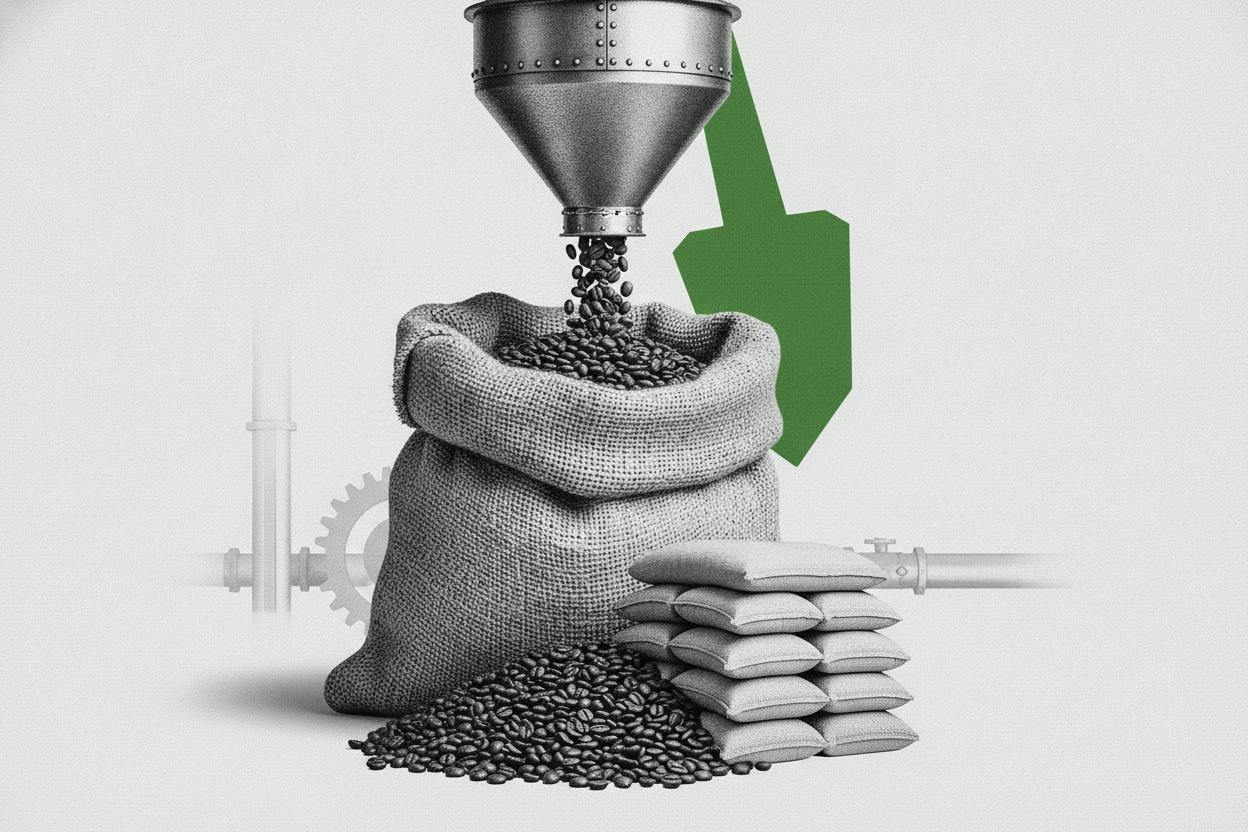
Coffee prices took a hit on Tuesday, with arabica futures sliding to a six-week low as traders positioned for a wave of supply from Brazil, the world's largest coffee producer. The move came as exchange-certified stockpiles continued to climb, adding to the bearish mood.
At the same time, cocoa and sugar prices rebounded from recent lows, offering a mixed picture across the soft commodities complex.
Why coffee is under pressure
The immediate driver is supply. Traders are looking ahead to Brazil's next harvest, and early signs point to a bumper crop. Coffee trader Sucafina said expectations for a “flood” of Brazilian coffee are weighing on prices, with crop conditions looking good in key growing regions.
That outlook stands in contrast to parts of Central America, where heat and drought have damaged crops. But Brazil's sheer size means its output tends to dominate global price moves, and the prospect of abundant beans has been enough to push arabica lower.
Adding to the pressure, ICE certified stocks—coffee that has passed exchange quality checks and is stored in approved warehouses—rose above 241,000 bags. Rising certified stocks are often seen as a sign that supply is ample, which can drag on prices.
Cocoa and sugar bounce back
While coffee slid, cocoa and sugar both rebounded from recent lows. These markets have been volatile in recent months, with cocoa still recovering from a historic supply crunch and sugar reacting to weather and policy shifts in major producers.
The bounce suggests that some traders see recent declines as overdone, or that fresh buying has emerged at lower levels. But the moves are modest compared with the swings seen earlier in the year.
What it means for investors
For everyday investors, coffee's slide is a reminder that commodity prices are driven by supply and demand fundamentals, not just headlines. When a major producer like Brazil looks set to deliver a large crop, prices tend to fall—even if other regions are struggling.
That can be good news for companies that buy coffee in bulk, such as roasters and café chains, since lower input costs can support profit margins. But it's a mixed signal for investors in coffee-producing countries or funds that track commodity prices.
For those with exposure to soft commodities through exchange-traded funds or futures, the key is to watch Brazil's weather and crop progress. A sudden frost or drought could quickly reverse the current bearish sentiment.
More broadly, the moves in coffee, cocoa, and sugar come against a backdrop of shifting inflation expectations. Recent US inflation data came in hotter than expected, which has revived bets on further Federal Reserve rate hikes. That has implications for the dollar, which in turn affects commodity prices, as most are priced in dollars.
Investors have also been watching how hotter US inflation is reviving Fed hike bets across global markets, a theme that has rippled through equities and bonds alike.
The bigger picture
Coffee remains one of the most traded agricultural commodities, with arabica and robusta beans used in everything from morning brews to instant coffee. Price swings can be sharp, driven by weather, currency moves, and shifts in global demand.
For now, the market is focused on Brazil. If the crop comes in as large as expected, prices could stay under pressure. But coffee is notoriously sensitive to weather, and any surprise could quickly change the narrative.
Investors should also keep an eye on how eurozone yields are easing as traders digest hot US inflation, as that can influence the dollar and, in turn, commodity prices.
In the meantime, cocoa and sugar are showing some resilience, but their rallies are tentative. Both markets have their own supply stories, and traders will be watching for updates from West Africa and Asia.
For the average investor, the takeaway is simple: commodity prices are volatile, and moves like Tuesday's coffee slide are part of the normal ebb and flow. Diversification remains key, and those with direct exposure should be prepared for swings.
As always, it's wise to focus on long-term trends rather than daily price moves. Coffee demand is steady, but supply can be unpredictable—and that's what keeps prices moving.



