US inflation came in cooler than expected, a development that typically eases pressure on the Federal Reserve to keep raising interest rates. But bond markets barely blinked: Treasury yields remained pinned near multi-year highs, underscoring how global forces are now driving the fixed-income landscape.
The latest inflation data showed price growth slowing more than analysts had forecast, prompting traders to trim the odds of another Fed rate hike this year. That usually sends yields lower, as expectations of fewer hikes reduce the appeal of longer-dated bonds. Instead, yields stayed stubbornly elevated, a sign that investors are looking beyond US borders for the next big catalyst.
Why yields aren't falling
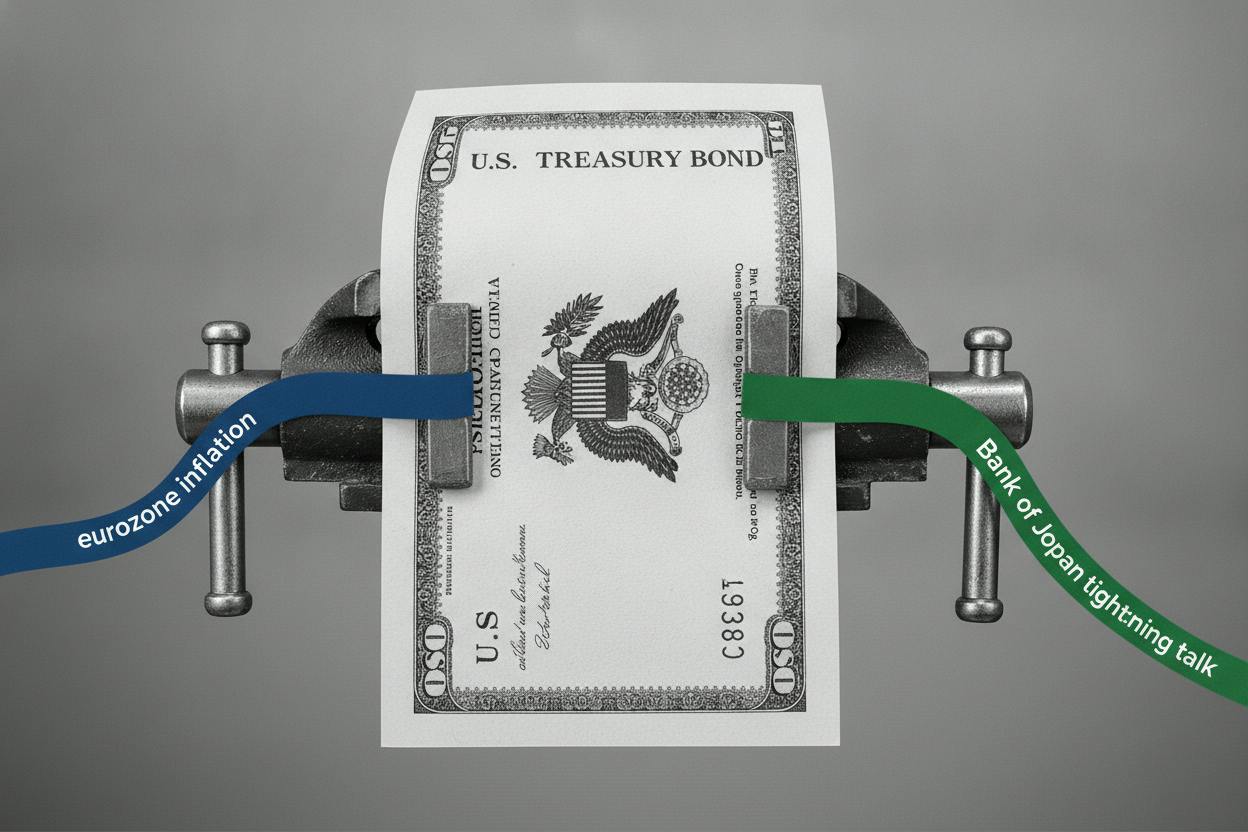
Two factors are keeping upward pressure on yields. First, fresh data from the eurozone showed price pressures reaccelerating, complicating the European Central Bank's path and reminding investors that inflation is not uniformly vanquished across developed economies. Second, the Bank of Japan has signaled it could tighten policy further, with policymakers hinting at faster rate hikes as inflation approaches its target.
Japan's situation is particularly important for global bond markets. For years, the BOJ has kept its policy rates ultra-low, and Japanese investors have been big buyers of foreign bonds, including US Treasuries. If the BOJ normalizes policy, those flows could reverse, pushing yields higher in the US and elsewhere. As BOJ policymakers signal faster rate hikes, the ripple effects are being felt across global fixed income.
Meanwhile, the eurozone's renewed price heat is a reminder that the ECB's fight against inflation is not over. Irish factory growth hit its fastest pace since March 2022 as inflation creeps back, a microcosm of the broader regional trend. That could keep European yields elevated, which in turn supports US yields as global investors demand higher compensation for holding longer-dated debt.
What it means for investors
For everyday investors, the key takeaway is that the relationship between inflation data and bond yields is not as simple as it once seemed. While cooler US inflation is generally good news for stocks and rate-sensitive sectors, the fact that yields are not falling suggests the market is pricing in a higher-for-longer rate environment globally.
Higher bond yields have real consequences. They raise borrowing costs for companies and consumers, which can weigh on corporate profits and economic growth. They also make bonds more attractive relative to stocks, potentially drawing money out of equities. As the dollar holds near a two-month high as long-term yields climb, emerging markets and other risk assets could face headwinds.
That said, the cooler inflation print did provide some relief. Stocks edged higher as cooler inflation cooled rate-hike bets, and rate-sensitive sectors like tech and real estate got a temporary boost. But the muted reaction in the bond market suggests investors are not ready to declare victory over inflation.
Looking ahead
The next major test will be the Fed's policy meeting, where officials will update their economic projections. Goldman Sachs has already delayed its next Fed hike call to December after the cool inflation data, but other banks may follow suit. The market is now pricing in a roughly 50% chance of a hike by year-end, down from higher odds before the data.
Investors should also keep an eye on the BOJ. Any concrete move toward tightening would be a seismic shift for global markets, given Japan's role as a major creditor nation. And with eurozone inflation still above target, the ECB is unlikely to cut rates anytime soon.
For now, the message from the bond market is clear: inflation may be cooling in the US, but the global picture remains messy. Yields are likely to stay elevated until there is convincing evidence that price pressures are easing everywhere, not just in America.