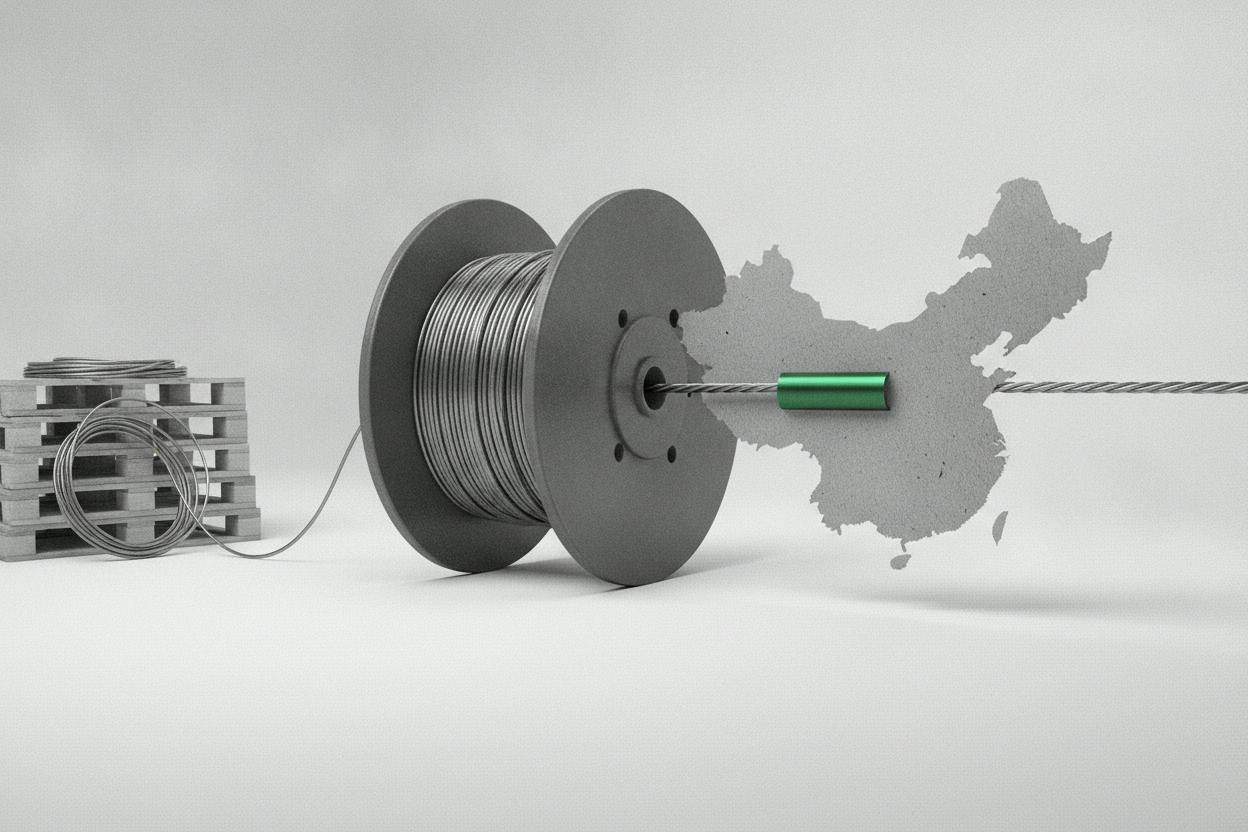
Copper prices remained firm this week, supported by a rebound in AI-related stocks and fresh signs that China, the world's largest buyer of the metal, is paying up for supply. The move comes as investors digest Anthropic's IPO filing, which has lifted sentiment across tech and industrial metals alike.
Two engines driving copper
Copper currently has two major demand drivers. The first is the so-called "AI buildout" story: data centers, power grids, and the extensive wiring needed to support artificial intelligence infrastructure. The second is everyday demand from China, which consumes roughly half of the world's copper. This week, the mood improved after US tech shares rebounded, helping keep industrial metals supported even without a major macroeconomic headline.
The AI angle is particularly relevant given Anthropic's IPO filing, which has renewed optimism about tech spending and infrastructure investment. That optimism has spilled over into copper, which is often seen as a bellwether for economic growth and industrial activity.
Physical market tells a tighter story
But the more telling signal is coming from the physical market. China's Yangshan copper premium—an extra fee that buyers pay to import refined copper—hit $178 a metric ton, its highest level since 2014. That premium is a real-time indicator of how urgently Chinese buyers need metal. At the same time, inventories tracked by the Shanghai Futures Exchange (SHFE) fell more than 25% in a week to 54,356 tons, as some smelters went into maintenance, leaving less metal immediately available.
This tightening can coexist with rising London Metal Exchange (LME) warehouse stocks, because what matters is where the metal is located. Recent LME inflows were largely in North America, which can still leave Asia comparatively short and keep global benchmark prices supported. In other words, even if headline inventories rise, the metal may be sitting in the "wrong" region to meet demand where it's strongest.
What it means for investors
For markets, China's $178 Yangshan premium is a stress test for copper supply. Import premiums and on-exchange inventories are the market's "right now" indicators: they reflect whether buyers can source deliverable metal without delay. With Yangshan at $178 a ton and SHFE stocks down to 54,356 tons, the tightness is showing up where demand is strongest.
When that happens, it usually firms up the front end of the futures curve—meaning near-term copper prices hold up better than longer-dated ones—and it encourages traders to move supply toward China. So even if headline LME stocks rise, copper can stay well supported if the added inventory sits in the wrong region and transportation or logistics turn that mismatch into a bottleneck.
For everyday investors, this is a reminder that commodity prices are driven not just by headlines but by physical supply and demand. Copper's dual role—as a proxy for AI infrastructure spending and as a gauge of Chinese industrial activity—means it can be sensitive to both tech sentiment and Chinese data. The recent bounce in AI stocks, which has lifted Asian markets, is one factor, but the physical tightness in China is a more concrete signal.
Investors should also note that copper is often seen as a leading indicator for global growth. When Chinese buyers are willing to pay a premium for immediate delivery, it suggests that industrial demand is robust, which can be a positive sign for the broader economy. However, the market remains sensitive to shifts in AI sentiment and Chinese policy, so it's worth watching both the tech sector and Chinese import data in the coming weeks.
Looking ahead
With Anthropic's IPO generating buzz and major financing deals backing AI infrastructure, the AI-copper connection is likely to stay in focus. At the same time, Chinese smelter maintenance and inventory drawdowns suggest that physical tightness could persist. Whether that translates into sustained price gains will depend on whether the rest of the world's supply can be redirected to where it's needed most.
For now, copper is holding firm, and the market is watching to see if the AI rally has legs and whether China's demand remains as strong as the premium suggests. As always, commodity prices can be volatile, but the current signals point to a market that is well-supported by real-world demand.