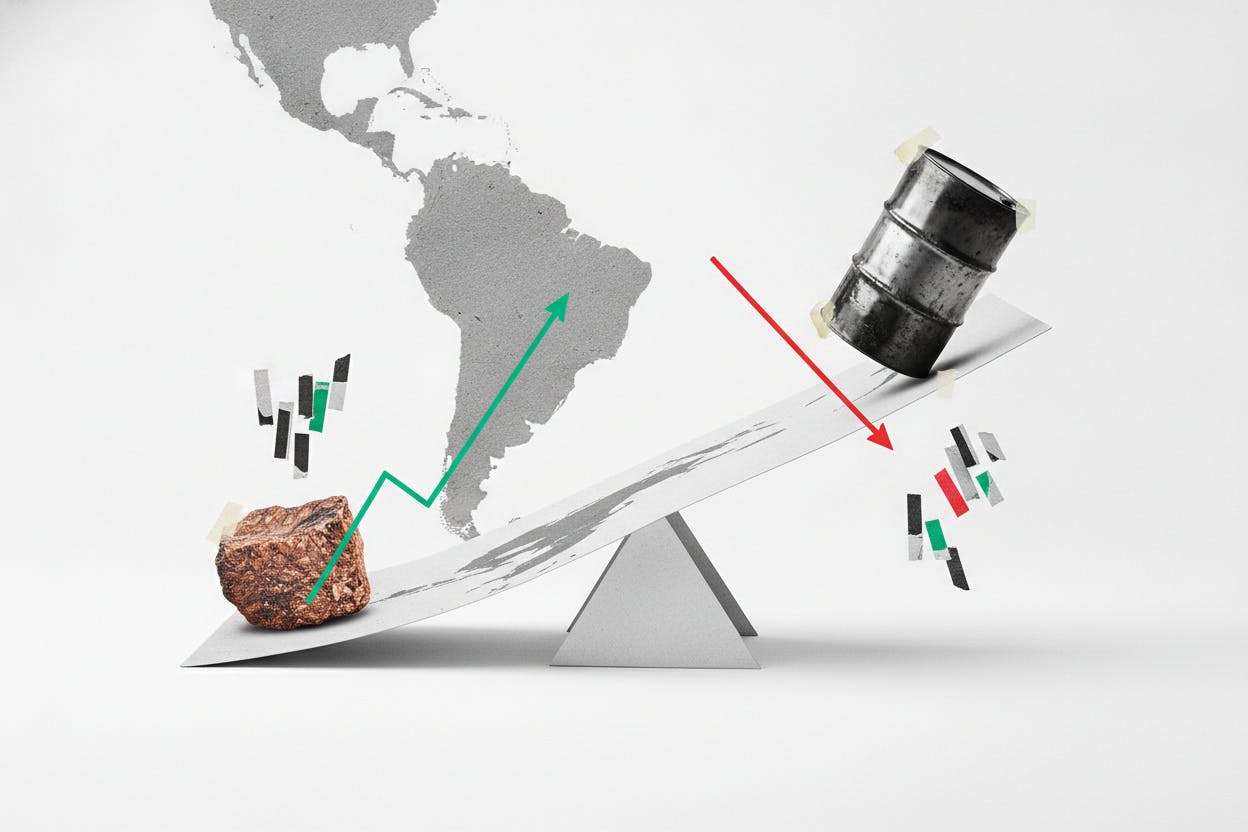
Latin American stock markets took divergent paths on Wednesday as a surge in copper prices boosted mining-heavy indexes in Chile and Mexico, while a sharp drop in oil weighed on Colombia's energy-focused market.
Copper climbed to its highest level in two months, lifting shares of miners across the region. Chile, the world's largest copper producer, saw its benchmark index rise as investors cheered the metal's strength. Mexico, which also has significant mining operations, followed suit. In contrast, Colombia's market fell as crude oil slid nearly 4%, hitting the country's energy companies, which dominate its stock index.
Why copper is rallying
Copper is often seen as a barometer for global economic health because it is used in everything from construction to electronics and electric vehicles. A two-month high suggests investors are growing more optimistic about demand, possibly due to hopes for stronger industrial activity or supply constraints.
For everyday investors, copper's rise is a reminder that commodity prices can have an outsized effect on certain stock markets. Countries like Chile and Mexico, where mining is a major part of the economy, tend to see their stock indexes move in tandem with metal prices. When copper does well, so do the companies that dig it out of the ground.
The rally also echoes broader trends seen in other markets. For instance, copper prices have also helped lift European stocks, showing that the metal's influence extends well beyond Latin America.
Oil's slide hits Colombia
On the other side of the ledger, oil prices fell sharply, with crude dropping about 3.9%. That was bad news for Colombia, whose stock market is heavily weighted toward energy producers. When oil prices fall, these companies' revenues and profits are expected to decline, so investors sell their shares.
The oil decline is part of a recent pattern of volatile energy prices. Oil and gas prices have been sliding, dragging energy stocks down in various markets. Geopolitical developments, such as hopes for a deal that could ease tensions in the Middle East, have also contributed to lower crude prices, as seen in US stocks rising on such hopes.
For investors in Latin American energy stocks, the lesson is that oil's swings can be just as powerful as copper's. A diversified portfolio that includes both mining and energy exposure can help balance these risks, but it also means being prepared for sharp moves in either direction.
What it means for investors
The split in Latin American markets underscores how dependent the region is on commodity prices. For those with money in Latin American stocks, it's important to understand which commodities drive each country's market.
- Chile and Mexico: Copper is a key driver. When copper prices rise, mining stocks tend to follow, as seen today.
- Colombia: Oil is the main engine. A drop in crude can quickly drag the market lower.
- Brazil and Argentina: These markets are more diversified, but still sensitive to commodity prices, including iron ore and soybeans.
For everyday investors, this means that tracking commodity prices can provide clues about how Latin American stocks might perform. It also highlights the importance of diversification—not just across countries, but across sectors.
While today's moves were notable, they are not unusual. Commodity-driven markets often experience such swings. The key is to stay informed and avoid making hasty decisions based on a single day's trading.
Looking ahead, investors will be watching whether copper can sustain its rally and whether oil prices stabilize. Any major shifts in global demand or supply could have ripple effects across the region. As always, it's wise to keep a long-term perspective and not overreact to short-term price movements.