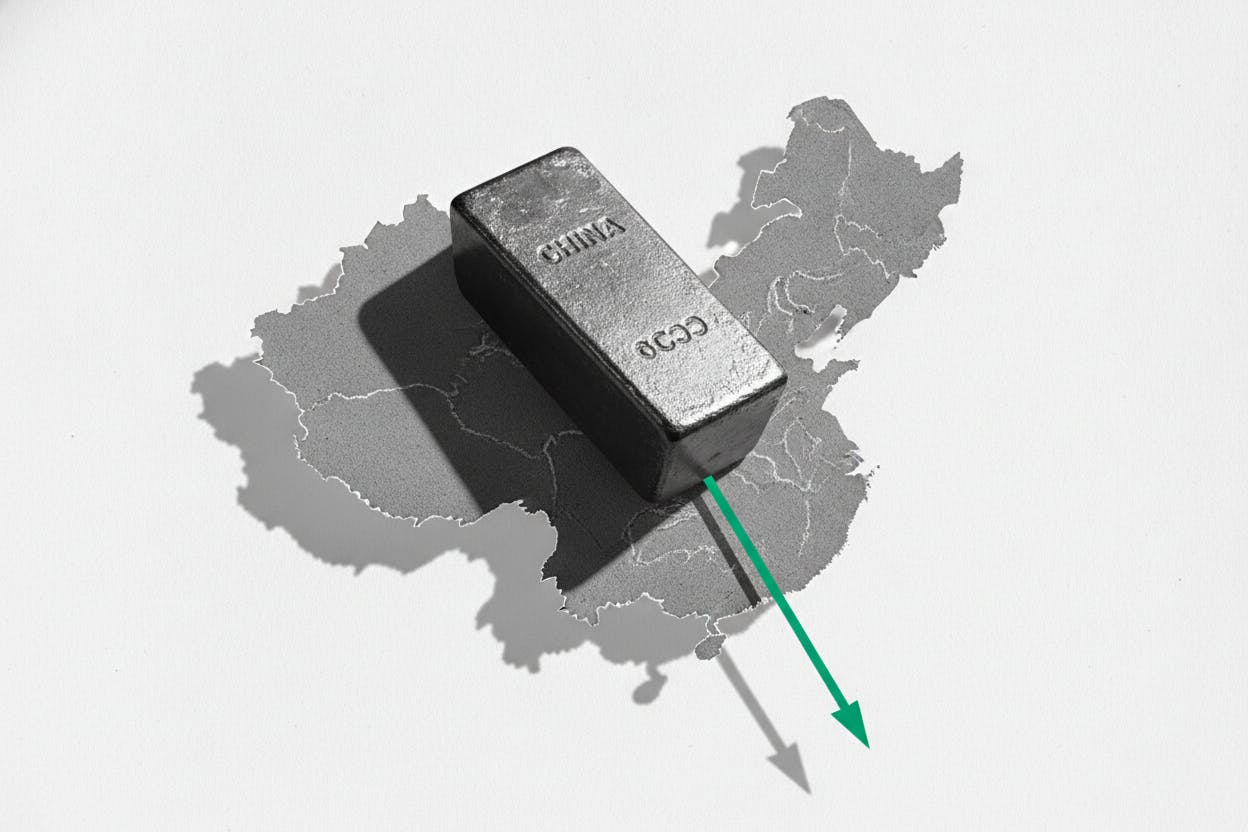
Copper prices slipped on Tuesday, easing from a six-month high as weaker-than-expected economic data from China—the world's largest consumer of the metal—prompted traders to reassess the demand outlook. London Metal Exchange (LME) three-month copper fell to $14,102 a metric ton, while Shanghai Futures Exchange copper dropped to 107,690 yuan ($15,972) per ton.
The pullback came after a run-up that had pushed prices to their highest level in half a year, driven by hopes of robust global demand. But fresh figures from Beijing showed factory output growth slowing and fixed-asset investment—which includes construction and infrastructure—falling more than anticipated. Those sectors are heavy users of copper, so softer spending can quickly dent expectations for real-world consumption.
Why copper is a bellwether
Copper is often called "Dr. Copper" because its price tends to move with the health of the global economy. The metal is used in everything from wiring and plumbing to electric vehicles and renewable energy systems. When factories are busy and builders are active, copper demand rises; when activity cools, prices often follow.
China accounts for roughly half of global copper consumption, so its monthly data releases are closely watched by commodity traders. The latest figures add to a picture of an economy that is still struggling to regain momentum, despite repeated government efforts to stimulate growth. As China's July data misses the mark, concerns about whether Beijing can hit its annual growth target of around 5% have resurfaced.
Investors are now looking to see if policymakers will step in with more support. Beijing has signaled more support in recent weeks, but the scale and timing of any new measures remain uncertain.
Geopolitical backdrop adds uncertainty
Adding to the cautious mood, the US-Iran truce ended without a longer-term deal. The brief ceasefire had offered some hope of reduced tensions in the Middle East, a region critical to global energy supplies. Its expiration leaves the door open to renewed instability, which can ripple through commodity markets and investor sentiment.
For copper, the geopolitical news is less directly impactful than Chinese demand, but it still matters. Any escalation could disrupt shipping routes or push energy prices higher, raising production costs for miners and manufacturers alike. It also adds a layer of uncertainty that tends to make traders more cautious.
What it means for investors
For everyday investors, copper's move is a reminder that commodity prices are not just about supply and demand—they are also a barometer of global economic expectations. When copper falls, it often signals that investors are worried about growth. That can have knock-on effects on stock markets, particularly in sectors like industrials, materials, and infrastructure.
If you hold a diversified portfolio, you may not need to react to daily copper swings. But it's worth paying attention to trends. A sustained decline in copper could hint at broader economic weakness, while a rebound might suggest that demand is holding up better than feared.
For those with exposure to copper-related stocks—such as miners or materials companies—the price action is more directly relevant. Lower copper prices can squeeze profit margins, while higher prices can boost earnings. However, individual company performance also depends on factors like production costs, project pipelines, and management decisions.
It's also useful to keep an eye on related developments. For instance, Mitsui Kinzoku plans to build a copper foil plant in Malaysia to supply the AI chip industry, highlighting that demand for copper is not just about traditional construction. The metal is increasingly central to high-tech sectors, from electric vehicles to data centers.
The road ahead
Traders will be watching for further Chinese data, including industrial production and retail sales, to gauge whether the slowdown is deepening. Any signs of a pickup could quickly reverse copper's slide. On the geopolitical front, developments in the US-Iran situation could also influence sentiment.
For now, the message from the copper market is one of caution. The metal's dip from its highs suggests that investors are not fully convinced that global growth is on solid footing. As always, the key is to stay informed and avoid making hasty decisions based on short-term price moves.