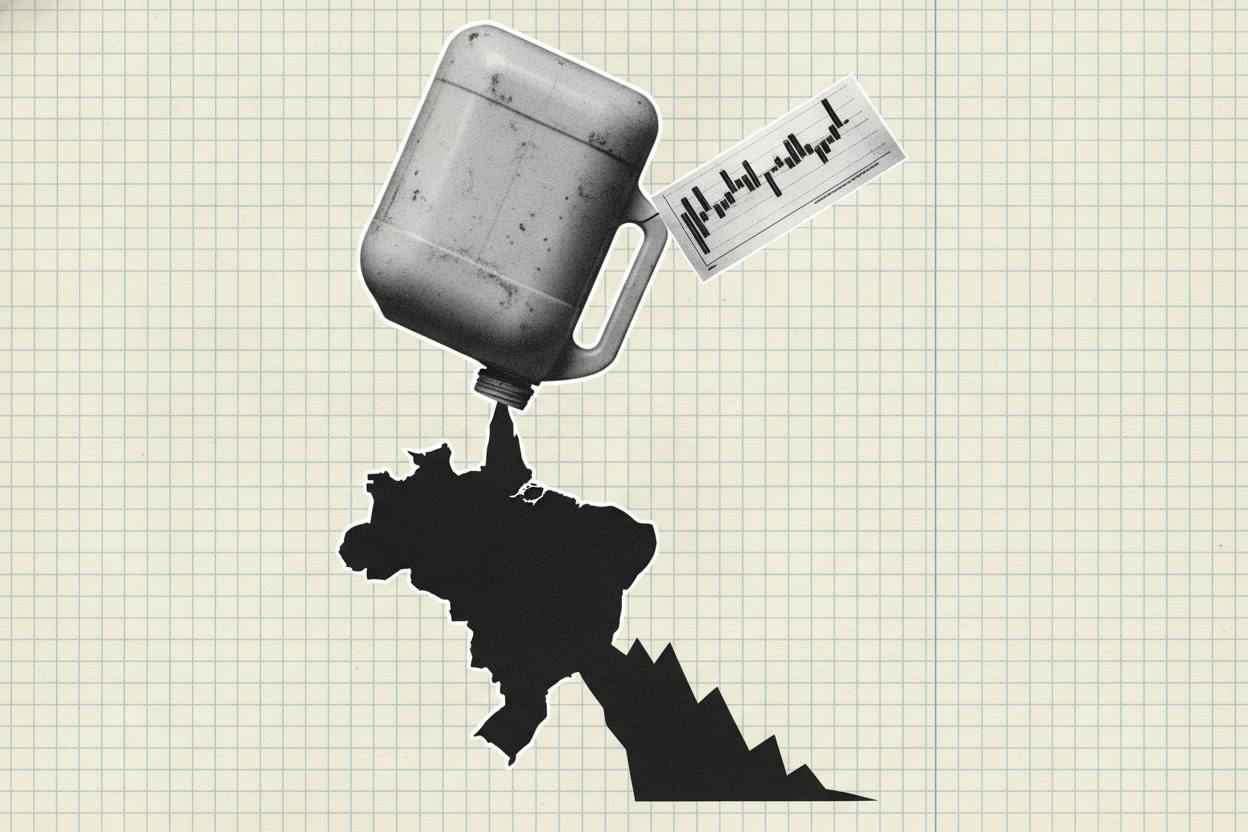
Corteva, one of the world's largest crop-protection companies, delivered a stark warning to investors on Tuesday: demand for its herbicides and fungicides is collapsing in Brazil, and the pain is worse than anyone expected. The company cut its full-year adjusted profit forecast to 76-80 cents per share, down from a previous range of $3.60-$3.80, and the stock plunged 22.8% in response.
The magnitude of the cut is striking. A drop of that size is not a routine tweak; it signals a fundamental shift in the company's near-term earnings power. For everyday investors, the key takeaway is that Corteva's business in Brazil—a critical agricultural market—has turned sharply weaker, and the company believes the problems will persist into next year.
What's behind the Brazil breakdown?
Corteva sells crop protection products like herbicides and fungicides, which farmers use to protect their yields. Brazil is one of the world's biggest agricultural producers, so it is a vital market for the company. But conditions there have deteriorated rapidly.
Management pointed to several interconnected problems: farmers are facing tighter liquidity, meaning they have less cash on hand to buy inputs. Borrowing costs are higher, making it more expensive for farmers to finance their purchases. And many are delaying orders until the last minute, hoping for better prices or clearer signs of what they'll need. That makes demand harder to predict and puts pressure on Corteva to discount its products to win business.
"When farmers delay orders and push for discounts, prices and volumes can fall quickly, but costs rarely drop at the same pace," explains a market analyst. That squeeze on operating leverage—where fixed costs stay high while revenue falls—can hit profitability hard. It's why a sharp cut in near-term profit often leads analysts to lower their longer-term forecasts as well.
A new, more cyclical company
The timing of this warning is especially important. Corteva recently spun off its seed-and-genetics unit into a standalone public company called Vylor. That means the remaining Corteva is now much more exposed to the ups and downs of the crop-protection cycle, with no seed business to cushion the blow.
For investors, that changes the risk profile. Previously, a weak year in crop protection might have been offset by stronger seed sales. Now, there's no such buffer. The company is essentially a pure-play on the health of global farming, and when that health deteriorates, the stock can suffer disproportionately.
Corteva also guided to 2026 adjusted operating EBITDA—a measure of profit before interest, taxes, depreciation, and amortization—of $1.1 billion to $1.125 billion. That is well below the $1.82 billion that analysts had been expecting, according to LSEG data. The gap suggests management sees a lower "run rate" for the business, not just a temporary dip.
What it means for investors
For shareholders, the immediate impact is clear: the stock fell 22.8% in a single session, erasing billions in market value. But the longer-term implications are more nuanced.
With the seed business now outside the company, Corteva's earnings are more cyclical. In good times, that can mean higher returns; in bad times, it means deeper losses. Investors may start valuing the company more like a cyclical business, where price-to-earnings multiples tend to shrink when visibility and pricing power fade.
The Brazil situation is also a reminder of how interconnected global markets are. Brazil's agricultural economy is heavily influenced by commodity prices, interest rates, and credit conditions. When those turn sour, the effects ripple through to companies like Corteva. Brazil's central bank has been holding rates at 13.75%, a level that makes borrowing expensive for farmers and businesses alike. That backdrop is likely a key factor in the demand weakness Corteva is seeing.
For investors, the lesson is to pay attention to the health of end markets, not just a company's own guidance. A company can do everything right internally, but if its customers are struggling, the results will show it.
Looking ahead
Corteva's revised outlook raises questions about the broader crop-protection industry. If Brazil is struggling, other companies with exposure to that market may face similar pressures. Investors should watch for updates from competitors and for any signs that the weakness is spreading to other regions.
The company's next earnings report will be closely scrutinized for evidence of whether the situation is stabilizing or worsening. For now, the message from Corteva is clear: the farm economy in Brazil is in trouble, and the company is bracing for a prolonged downturn.
As always, this is not a recommendation to buy or sell. It's a reminder that even well-established companies can face sudden, severe headwinds when their key markets turn. For those holding Corteva shares, the coming quarters will be critical.



