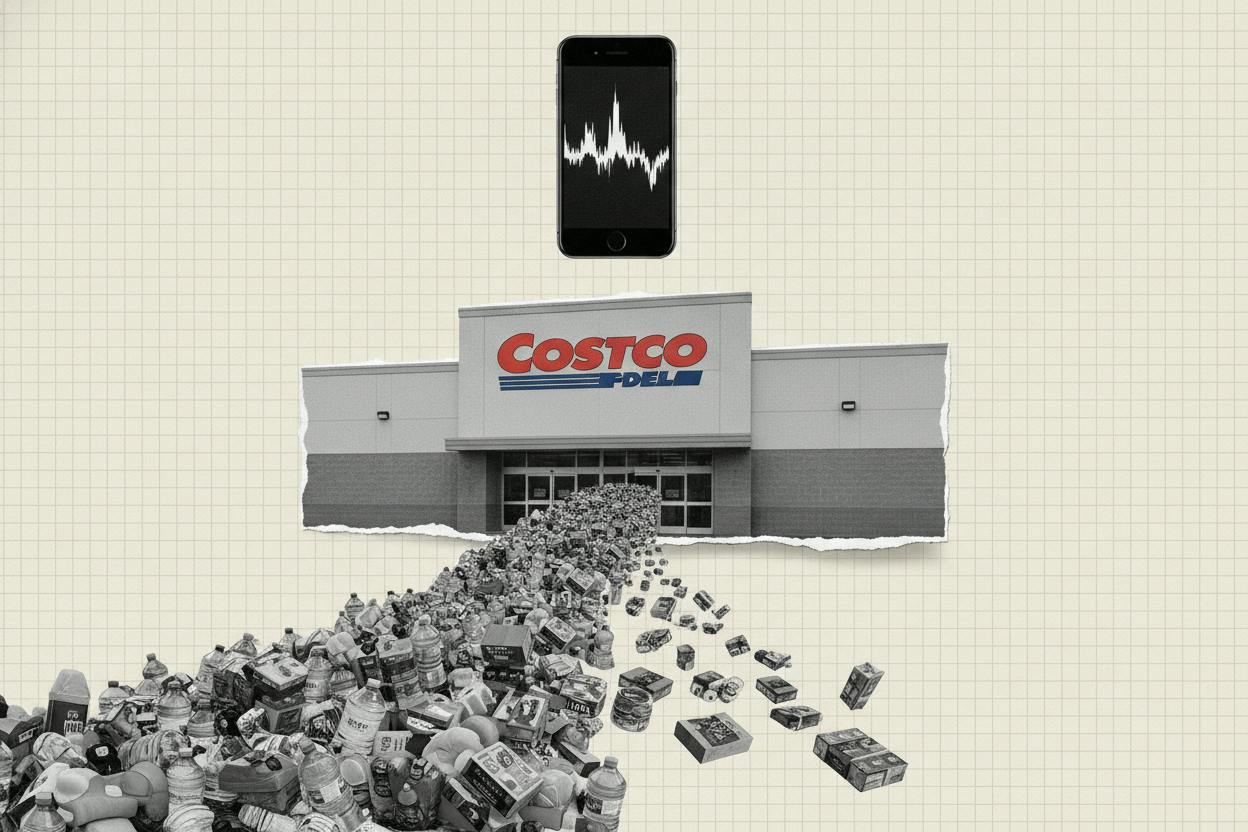
Costco Wholesale got a temporary sales boost in October as some US shoppers stocked up on essentials after a string of high-profile tech and infrastructure outages, according to Mizuho, an investment bank. The firm said the warehouse club's US comparable sales, excluding fuel, rose 8.1% last month, with the final week of October running at an even faster pace.
In a November 16 note, Mizuho analysts said their channel checks suggest the late-October momentum—which they estimate at an 11% to 12% comparable-sales growth rate—carried into early November. They linked the uptick to recent disruptions, including a global Microsoft outage, an air traffic control breakdown that triggered a nationwide ground stop, and separate tech problems at United Airlines and JPMorgan Chase that interrupted some services.
Why outages drive Costco trips
The analysts' point is less about Costco winning market share and more about timing. When people worry about outages, they tend to do emergency prep and pull everyday purchases forward. That can temporarily lift traffic and tilt baskets toward paper goods, water, and shelf-stable food—items that shoppers might otherwise buy later or in smaller quantities.
This pattern is familiar to retailers. After natural disasters or major disruptions, consumers often make a one-time surge of purchases to fill their pantries, then take a break. The question for Costco is whether the October spike simply borrowed demand from November and December, rather than representing a lasting change in household spending.
Mizuho's estimate of 11% to 12% comparable-sales growth in late October fits a classic pull-forward pattern. Shoppers buy sooner and buy more when they feel uncertain, then spend less for a stretch afterward. If that “payback” period shows up, Costco's next few US sales updates could look choppier than the underlying trend in household budgets.
What it means for investors
For investors, the key takeaway is that Costco's October numbers may not be a clean read on consumer health. The 8.1% growth is strong, but it may be inflated by one-off panic buying. If November sales slow as pantries refill, that could weigh on the stock in the short term, even if the company's long-term fundamentals remain solid.
Costco is often seen as a bellwether for consumer spending because of its large membership base and broad product range. But its results also matter for the broader retail sector. Big-box and discount retailers sell many of the same staples, so a brief pop—or an ensuing lull—could complicate how investors interpret upcoming results from Walmart, Target, Dollar Tree, and Dollar General. As we noted in our retail sales outlook, underlying demand may stay firm even if headline numbers cool.
Mizuho's note also highlights how sensitive consumer behavior can be to disruptions in everyday services. The outages at JPMorgan and other banks, for example, may have reminded shoppers of the fragility of digital systems, prompting them to stock up on physical goods. This is a reminder that even non-retail events can ripple through the economy.
For investors watching Costco, the next few monthly sales reports will be telling. If November comps come in below expectations, it could confirm the pull-forward theory. If they stay strong, it might suggest that consumers are more confident than feared. Either way, the October data should be viewed with caution.
In the meantime, Costco's stock remains a favorite among investors for its steady growth and loyal membership base. But as with any retailer, short-term sales volatility is normal. The key is to focus on the longer-term trend, not the monthly noise.
For those looking at the broader market, the outage-driven shopping spree is a reminder that unexpected events can create temporary winners and losers. While Costco may have benefited, other retailers could see a slowdown as consumers pause after their stock-up trips. Investors should keep an eye on how the holiday season shapes up, especially with retail sales expected to cool in the coming months.
Ultimately, Mizuho's analysis is a useful case study in how external shocks can distort retail data. For everyday investors, it's a reminder to look beyond the headline numbers and consider the context behind them.