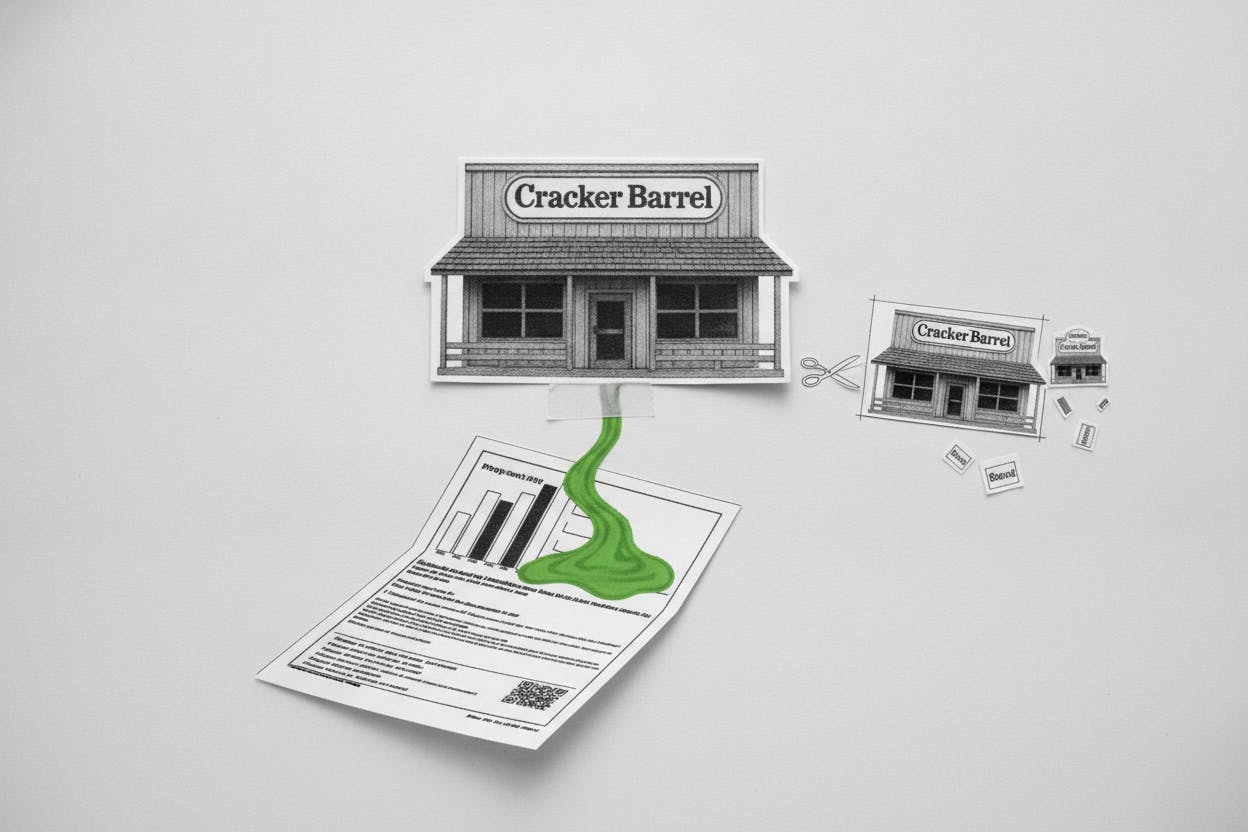
Cracker Barrel Old Country Store has raised its fiscal 2026 outlook after completing the sale of most of its Maple Street Biscuit Company (MSBC) business and generating roughly $77 million through a sale-leaseback of 26 of its own stores, according to a Reuters report.
The Tennessee-based restaurant and retail chain sold the MSBC trademark and 35 of its locations to Biscuit Belly, a fast-growing breakfast and brunch chain. Cracker Barrel also plans to close the remaining 16 Maple Street Biscuit locations, effectively exiting the brand it acquired in 2022.
What Happened with Maple Street Biscuit?
Maple Street Biscuit Company was a small, fast-casual breakfast chain known for its biscuit sandwiches and Southern-style comfort food. Cracker Barrel bought the chain in 2022 as part of an effort to diversify beyond its traditional sit-down restaurants and attract younger customers. However, the brand never grew into the major growth driver the company had hoped for.
By selling the bulk of the business to Biscuit Belly and closing the remaining stores, Cracker Barrel is effectively unwinding that experiment. The sale allows the company to focus on its core brand, which operates more than 660 locations across the U.S. and is known for its homestyle meals and country store merchandise.
The sale-leaseback of 26 Cracker Barrel stores is a separate but related financial move. In a sale-leaseback, a company sells its real estate to an investor and then leases the properties back from the new owner. This frees up cash that would otherwise be tied up in property, giving the company more liquidity to invest in operations, pay down debt, or return capital to shareholders.
What It Means for Investors
For everyday investors, the key takeaway is that Cracker Barrel is streamlining its business and strengthening its balance sheet. The $77 million from the sale-leaseback provides a cash infusion that can be used for debt reduction, store renovations, or share buybacks. The improved fiscal 2026 outlook suggests management expects these moves to boost profitability.
Exiting the Maple Street Biscuit brand removes a source of uncertainty and potential losses. The company can now concentrate on improving sales and margins at its core Cracker Barrel locations, which have faced challenges from rising food and labor costs and changing consumer habits.
Investors should watch for how Cracker Barrel uses the proceeds from these transactions. If the company focuses on paying down debt or buying back shares, it could boost earnings per share. If it invests in store upgrades or menu innovation, it could drive long-term growth.
The broader context is that many restaurant chains are reassessing their portfolios after a period of rapid expansion and diversification. Companies like Bright Horizons have also raised outlooks after focusing on core growth areas. Similarly, BASF recently got an upgrade after showing pricing power and lifting its outlook. These moves reflect a trend where companies are simplifying operations to improve financial performance.
What to Watch Next
Investors will want to see if Cracker Barrel can sustain its improved outlook through the rest of fiscal 2026. Key metrics to monitor include same-store sales growth, restaurant-level margins, and traffic trends. The company's next earnings report will provide more details on how the sale-leaseback and brand exit are affecting the bottom line.
Also worth watching is whether Cracker Barrel uses its newfound cash to accelerate store remodels or expand its core brand. The company has been testing new menu items and store formats to appeal to a broader audience, and the financial flexibility from these transactions could support those efforts.
For now, the market appears to view the moves positively, as they reduce complexity and improve the company's financial position. But as with any turnaround story, execution will be key. Cracker Barrel must demonstrate that it can grow its core business while managing the costs and competitive pressures that have weighed on the restaurant industry.