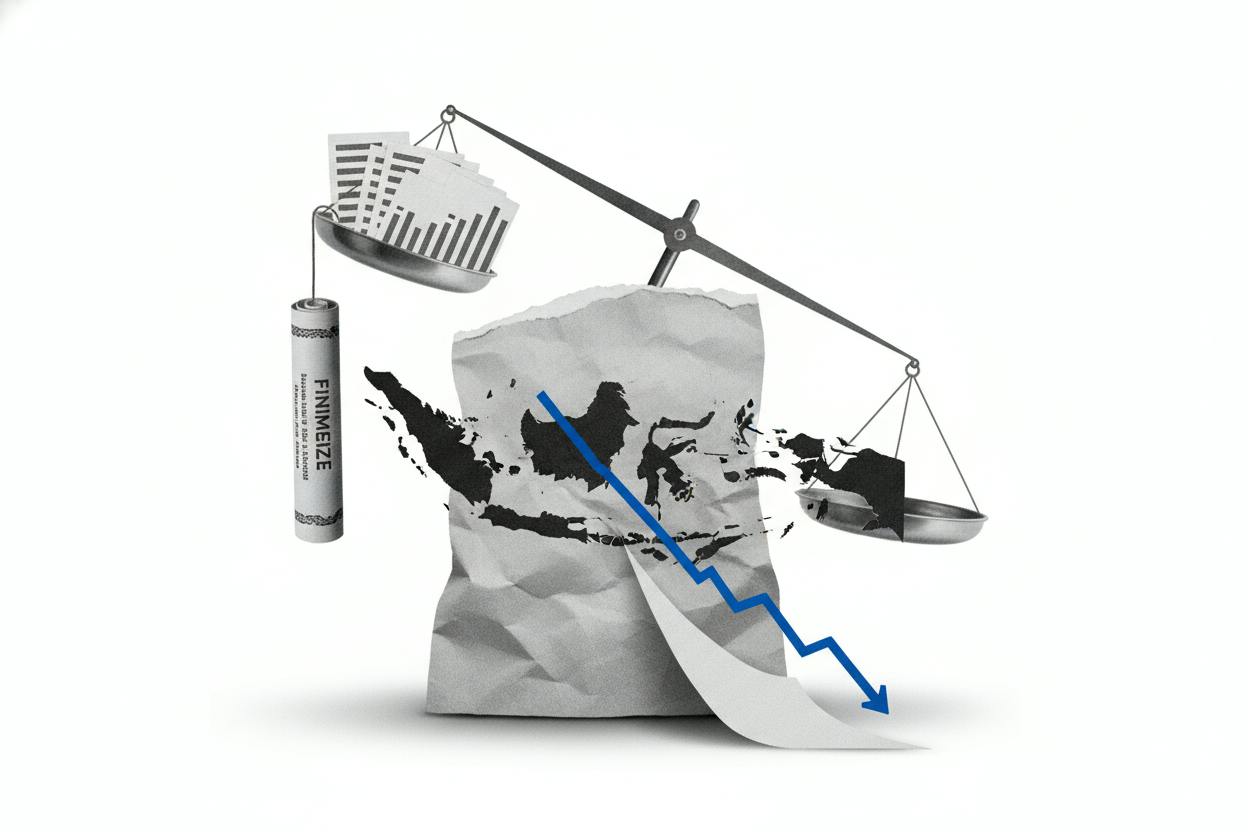
Indonesia's state-backed investment vehicle Danantara has signaled a significant miss on its 2026 profit target. At a parliamentary hearing on Tuesday, CEO Rosan Roeslani said Danantara Investment Management (DIM) expects net profit of 0.8 trillion rupiah (roughly $50 million) for 2026, far below the 3.4 trillion rupiah target it had set. The shortfall is largely attributed to losses in its publicly listed equity portfolio.
DIM is the investment arm of Danantara, Indonesia's sovereign wealth fund, which oversees state-owned enterprises and manages a range of assets. The unit's performance is a key indicator of how well the country is deploying its state capital.
Why the profit gap is so wide
The gap between the expected and targeted profit is stark. Roeslani explained that the losses in public equities—stocks traded on exchanges—dragged down overall returns. This is a reminder that even state-backed investors are not immune to market volatility.
A key metric here is return on average equity (ROAE), which measures how much profit a company generates for each unit of shareholder capital. DIM expects an ROAE of just 0.8% this year, a low figure that reflects the weak market performance. Management has pointed to targets of 4% next year and 8% by 2030, but the starting point is clearly challenging.
The structure of DIM's funding adds to the pressure. It is not financed solely by government equity. It also receives dividend flows from state-owned companies managed by a separate unit, Danantara Asset Management. Additionally, DIM has raised money by issuing bonds and borrowing from banks, which creates a steady interest bill that must be paid regardless of investment performance.
Balancing debt and long-term plans
DIM's strategy involves shifting more of its portfolio into longer-term private investments—assets like infrastructure, energy, and other projects that are not publicly traded. The plan is to have private investments reach 69 trillion rupiah by the end of 2026, with total private commitments through 2030 set at 164 trillion rupiah.
But if public-market returns stay weak, the fund may have to rely more heavily on dividend inflows from state-owned companies, or slow the pace of its private buildout, to keep profitability from lagging targets. This is a delicate balancing act: private investments can offer higher returns, but they are less liquid and take longer to pay off.
For investors watching Indonesia's state-backed capital vehicles, the key question is whether DIM can scale its private investments without taking on more debt. The alternative is leaning more on dividends from Danantara Asset Management, which could tie growth more tightly to the cash flows of state-owned enterprises.
What it means for investors
For everyday investors, this news is a reminder that even large, state-backed funds can face headwinds. DIM's use of leverage—borrowing to invest—means that its public-stock returns need to exceed its interest costs before they translate into meaningful net profit. When markets are soft, that interest bill acts like a hurdle, and leverage can turn a modest portfolio loss into a bigger drop in earnings.
This situation is not unique to Indonesia. Many investment funds and companies that rely on debt face similar challenges when markets turn. For example, Monash IVF recently warned of a profit fall as its market shrank, highlighting how external factors can hit earnings. Similarly, Australian banks are facing flat profits as the housing slowdown bites, showing that even diversified portfolios are not immune.
The broader lesson is that profitability targets are not guarantees. Investors should look at the underlying drivers—like market conditions, debt levels, and the mix of assets—when assessing a fund's prospects. For DIM, the path to its 2030 targets will depend on whether it can navigate the current market weakness and execute its private investment strategy effectively.
As always, this is not a recommendation to buy or sell any specific investment. It's simply a look at what the numbers mean for those with an interest in Indonesia's state investment vehicles.