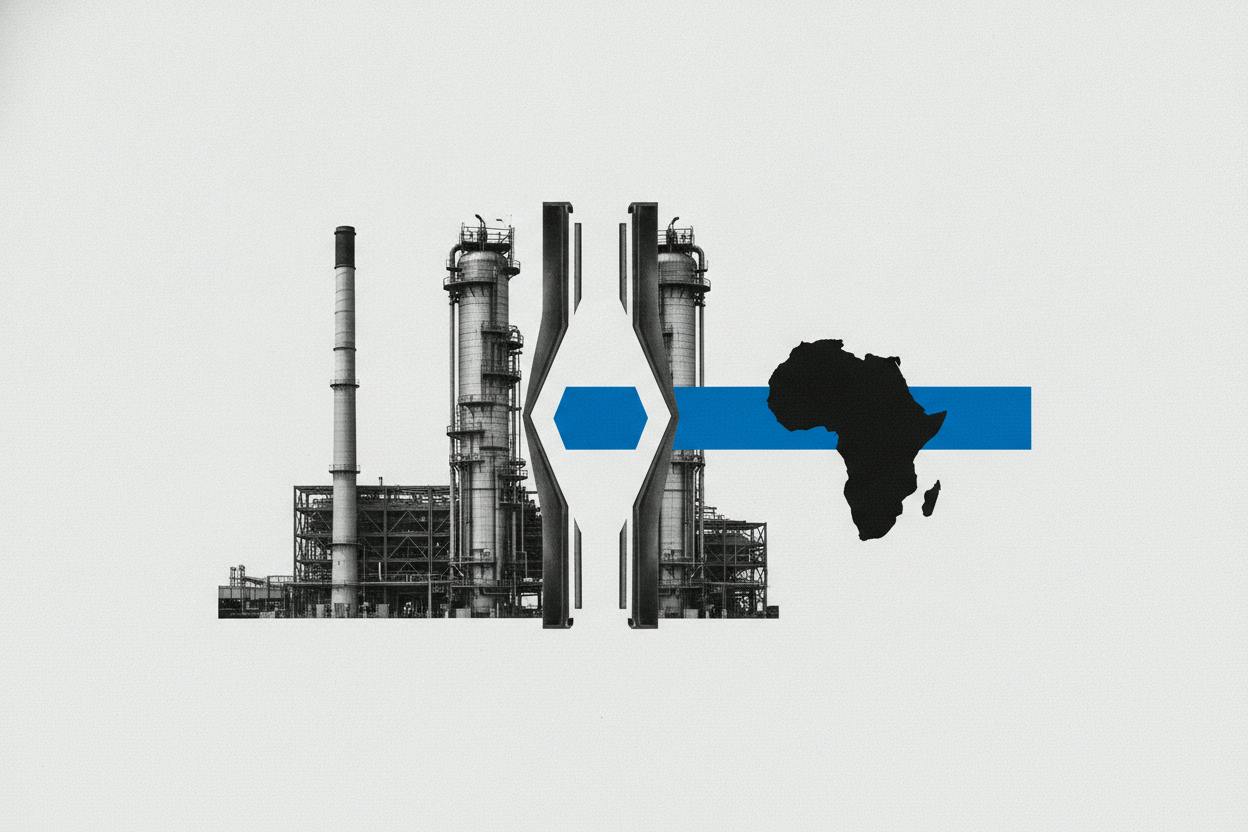
Aliko Dangote's massive Nigerian oil refinery has extended its initial public offering (IPO) by 10 days, giving investors from across Africa more time to join the share sale. The move, reported by Reuters, is aimed at pulling in retail investors from other African countries as the company seeks to raise up to $2.1 billion.
The share sale originally opened about a month ago and was scheduled to close on Tuesday. However, a company executive and a deal adviser told Reuters that the timeline has been pushed back to allow investors in other African nations to participate. Dangote is pitching the offer to the general public, targeting as many as 10 million retail investors for its 700,000-barrel-per-day refining complex.
If the company reaches its $2.1 billion target, Reuters said it would be Africa's largest share sale yet. The extension not only gives the refinery new capital but also serves as a test of how much cross-border demand exists for a high-profile Nigerian industrial asset.
What is the Dangote Refinery?
The Dangote Refinery, located in Nigeria's commercial capital Lagos, is a massive oil processing facility built by Aliko Dangote, Africa's richest man. The refinery has been touted as a game-changer for Nigeria, which has long relied on imported fuel despite being a major oil producer. The facility is designed to process up to 650,000 barrels per day (though the brief mentions 700,000 barrels per day), making it one of the largest in the world.
The IPO is a significant step for the refinery, which has faced years of construction delays and cost overruns. By going public, Dangote aims to raise fresh capital to support operations and reduce debt, while also giving ordinary Africans a chance to own a piece of a landmark industrial project.
Why extend the IPO?
Extending an IPO is not unusual, especially when a company wants to broaden its investor base. In this case, the extension is specifically designed to attract retail investors from other African countries. The company is betting that there is strong appetite for a high-profile Nigerian asset among investors across the continent, who may have been unable to participate in the initial window.
The move also reflects a broader trend of African companies seeking to tap into regional capital markets. As Africa's big funding week shows, the continent is seeing a wave of fundraising activity, with companies and governments alike looking to attract investment.
What it means for investors
For everyday investors, the extended IPO window is an opportunity to get in on a landmark share sale. But it also comes with risks. The refinery is a massive, complex industrial project, and its shares will be subject to the usual volatility of a newly listed company.
Keeping the offer open to reach retail investors outside Nigeria isn't only about raising more money: it can change the shareholder mix the refinery ends up with. A deal aimed at millions of small investors tends to create a more dispersed ownership base, where trading can be more sensitive to headlines and day-to-day flows than to a few long-only institutions holding for years. That matters most right after an IPO, when there's little market history to anchor what a 'fair' price is and the exchange is still discovering the clearing price.
So this extension doubles as a live test of whether Nigeria's market infrastructure can handle Africa-wide retail participation without making early price swings unusually sharp. For investors, that means the stock could be more volatile in its early days of trading than a typical IPO.
It's also worth noting that the IPO is happening against a backdrop of falling oil prices, which could affect the refinery's profitability. Lower oil prices generally mean lower refining margins, though the impact depends on global supply and demand dynamics.
Nigeria's Securities and Exchange Commission and the NGX Group had no immediate comment on the extension, and a Dangote spokesperson declined to comment, according to Reuters.
What to watch next
Investors will be watching how much demand the extended IPO generates, especially from outside Nigeria. If the offer is oversubscribed, it could signal strong confidence in the refinery's prospects. If not, it might raise questions about the valuation.
The listing will also be a test for Nigeria's capital markets, which have seen local investors offset foreign selling in other emerging markets. A successful IPO could encourage other African companies to list on local exchanges, while a weak debut could dampen enthusiasm.
For now, the extended window gives investors across Africa a chance to participate in what could be a historic share sale. But as with any IPO, it's important to do your own research and understand the risks before investing.