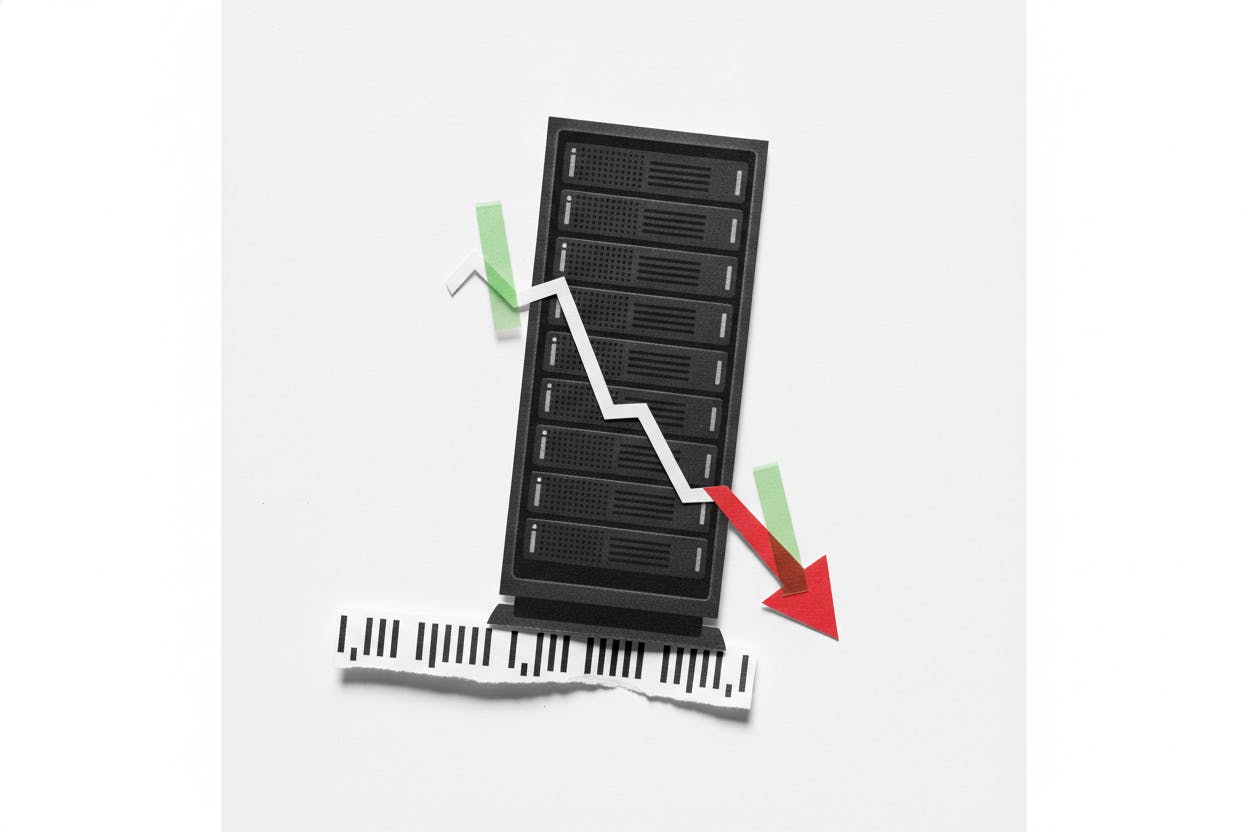
Datadog, the New York-based cloud monitoring and security software company, delivered a second-quarter earnings beat and lifted its full-year revenue guidance on Thursday. Yet Wall Street's reaction was decidedly negative: shares tumbled more than 15% in premarket trading after the company guided to slower growth in the third quarter.
The market's response highlights a familiar tension for high-growth tech stocks: even when a company clears the bar it set for itself, investors are quick to punish any hint that the pace of expansion is decelerating.
What Datadog reported
For the second quarter, Datadog posted revenue of $1.12 billion, comfortably ahead of the $1.08 billion analysts had expected, according to LSEG data. Adjusted earnings came in at 65 cents per share, topping the 59-cent consensus estimate.
Management also raised its full-year revenue target to a range of $4.45 billion to $4.47 billion, up from the previous guidance of $4.30 billion to $4.34 billion. That upward revision signals that the company's core business remains healthy and that demand for its services is still growing.
But the stock's slide suggests that the market was looking past the strong quarter and focusing on what comes next. The company's forecast for the third quarter pointed to slower growth than analysts had modeled, and for a stock trading at a premium valuation, any sign of a cooling trajectory can be enough to trigger a sell-off.
Why Datadog matters
Datadog helps companies monitor their IT infrastructure and applications, spotting performance issues and security threats before they become major problems. Its software is used by developers and operations teams to keep digital services running smoothly, making it a bellwether for spending on cloud infrastructure and digital transformation.
When businesses are confident about their own growth, they tend to spend more on tools like Datadog's. Conversely, when companies tighten budgets, software spending is often among the first areas to be trimmed. That makes Datadog's results a useful barometer for the broader health of the cloud software market.
The company's guidance for slower growth in the third quarter could reflect a few things: tougher year-over-year comparisons, customers being more cautious with spending, or simply the natural maturation of a business that has grown rapidly for years. Investors will be watching to see whether this is a temporary blip or the start of a longer-term slowdown.
What it means for investors
For everyday investors, Datadog's move is a reminder that beating expectations is not always enough. When a stock is priced for perfection, even a small miss on forward guidance can lead to a sharp decline. This dynamic is common among high-growth technology companies, where valuations often bake in years of future growth.
It's also worth noting that Datadog's situation is not unique. Other software and tech firms have seen similar reactions when their outlooks disappointed, even if their current results were strong. For example, EPAM beat Q2 estimates but trimmed its 2026 outlook, and its shares slid as a result. And Siemens Energy's strong quarter still left analysts cautious on valuation, showing that even solid results can be overshadowed by concerns about what's ahead.
Investors should also consider the broader context. Datadog's growth is closely tied to cloud spending, which has been a major driver of the tech sector's performance in recent years. If companies are starting to pull back on cloud investments, that could have ripple effects across the industry. On the other hand, the company's raised full-year guidance suggests that management still sees plenty of demand ahead.
For those who own Datadog shares, the premarket drop is a stark reminder of the volatility that comes with high-growth stocks. For those considering an entry point, the sell-off could present an opportunity—but it also carries risk if the slowdown proves more pronounced than expected.
As always, it's important to look beyond the headline numbers and understand the underlying drivers. Datadog's core business appears solid, but the market's reaction shows that investors are increasingly focused on the sustainability of growth, not just the latest quarter's results.