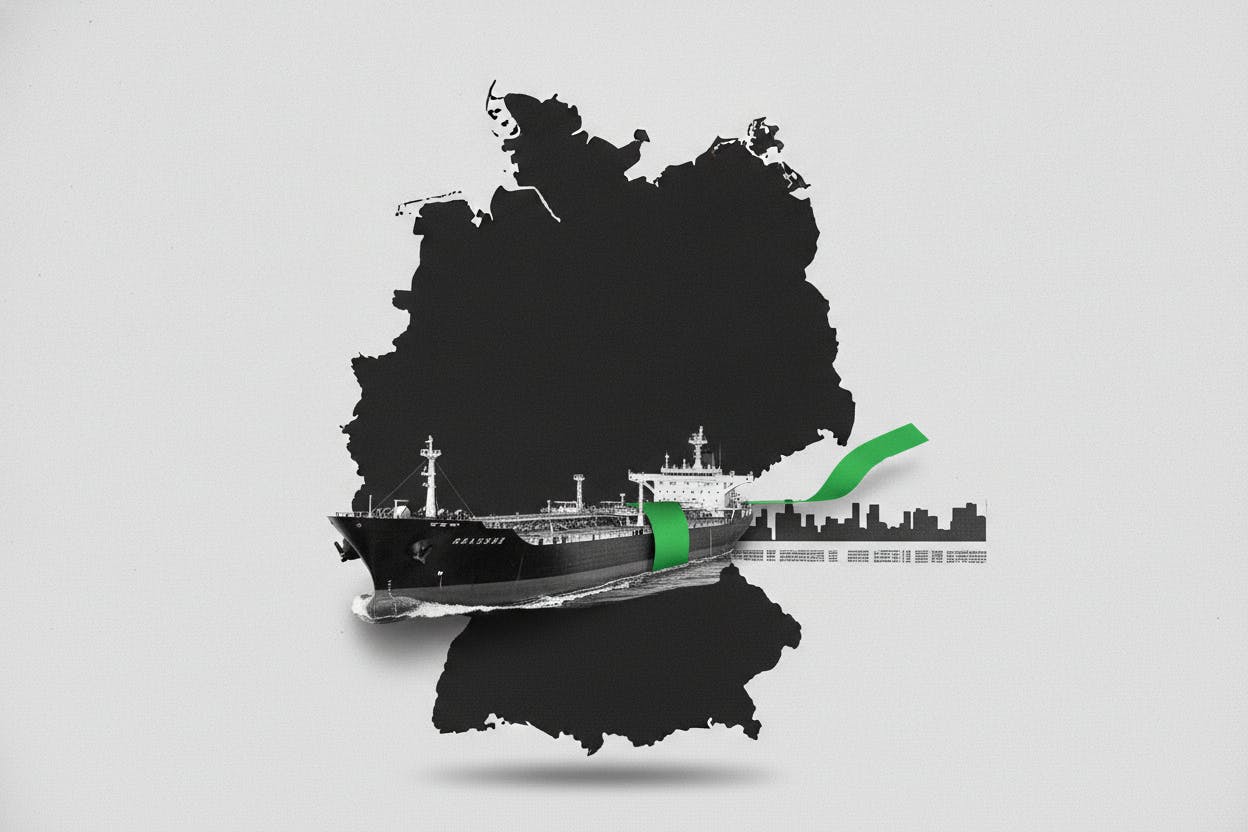
Germany's benchmark DAX index slipped 0.29% on Wednesday, as investors weighed reports of a potential temporary arrangement to ease tensions in the Strait of Hormuz. The modest decline came despite some positive domestic data and a strong earnings report from healthcare group Fresenius.
According to a report from Axios, the United States is pushing for a 60-day, fee-free transit arrangement between Iran and Oman that would allow ships to pass through the strategic waterway without paying tolls. Under the proposed plan, traffic would be split between Iranian and Omani waters, potentially reducing the risk of disruption to one of the world's most critical oil shipping lanes.
However, market participants remained cautious. Deutsche Bank Research noted that the conflict has seen "plenty of false dawns," and traders are waiting for a confirmed deal with workable details before betting heavily on the headlines. This skepticism helps explain why the DAX's decline was relatively contained, and why the clearest positive moves were seen in specific stocks rather than the broader index.
What's behind the Hormuz deal talk?
The Strait of Hormuz is a narrow waterway between Iran and Oman that connects the Persian Gulf to the Gulf of Oman and the open sea. Roughly 20% of global oil consumption passes through it, making it a chokepoint for energy markets. Any threat to shipping there can send oil prices higher and unsettle global markets.
Recent attacks on tankers and heightened tensions between the US and Iran have raised fears of supply disruptions. A temporary arrangement, even if limited to 60 days, could ease those fears by providing a clear framework for safe passage. But as Deutsche Bank Research points out, previous diplomatic efforts have failed to produce lasting results, so investors are reluctant to assume this time will be different.
The proposed plan would reportedly involve Iran and Oman jointly managing traffic, with ships moving through either Iranian or Omani waters. The fee-free element is notable because Iran has threatened to impose tolls on ships using the strait in the past. Removing that threat, even temporarily, would be a meaningful step toward de-escalation.
PMI data and Fresenius earnings offer some support
Amid the geopolitical headlines, Germany's July Purchasing Managers' Index (PMI) returned to expansion territory. The PMI is a survey-based indicator that tracks activity in the manufacturing and services sectors. A reading above 50 signals growth, while below 50 indicates contraction. The return to expansion suggests that Europe's largest economy may be stabilizing after a period of weakness.
That positive data helped cushion the DAX's decline, as did a strong earnings report from Fresenius, a diversified healthcare company. Fresenius shares jumped after the company reported results that beat expectations, providing a bright spot in an otherwise cautious session. The company's performance underscores how individual stock news can drive moves even when the broader market is subdued.
What it means for investors
For everyday investors, the key takeaway is that geopolitical headlines can move markets, but they don't always tell the full story. The DAX's modest decline suggests that investors are not yet convinced that the Hormuz situation is resolved. Instead, they are waiting for concrete evidence—such as a signed agreement or visible changes in shipping patterns—before adjusting their portfolios.
This cautious approach is typical in situations where diplomatic efforts have failed before. Markets often price in the possibility of a deal, but they also leave room for disappointment. As a result, volatility in oil prices and energy stocks could continue until there is more clarity.
For those with diversified portfolios, the impact of such geopolitical events is usually limited in the long run. Short-term swings in indices like the DAX are common, but they rarely change the fundamental outlook for companies or economies. Instead, investors should focus on underlying fundamentals, such as earnings growth and economic data, which ultimately drive returns over time.
The return of Germany's PMI to expansion is a positive sign for the European economy, and Fresenius's earnings beat shows that individual companies can still deliver strong results even in uncertain times. These factors may provide more durable support for the DAX than any temporary geopolitical arrangement.
As the situation in the Strait of Hormuz evolves, investors will be watching for confirmation of the deal and its details. Until then, expect continued caution in markets, with oil prices and energy stocks likely to remain sensitive to headlines. For those looking to understand the broader picture, keeping an eye on how other global markets react—such as Asian stocks or US stocks—can provide additional context.
Ultimately, the DAX's dip on Wednesday is a reminder that markets don't like uncertainty. While the prospect of a Hormuz deal is encouraging, investors are right to be skeptical until they see concrete progress. In the meantime, a focus on fundamentals and a diversified approach remains the most prudent strategy for most people.