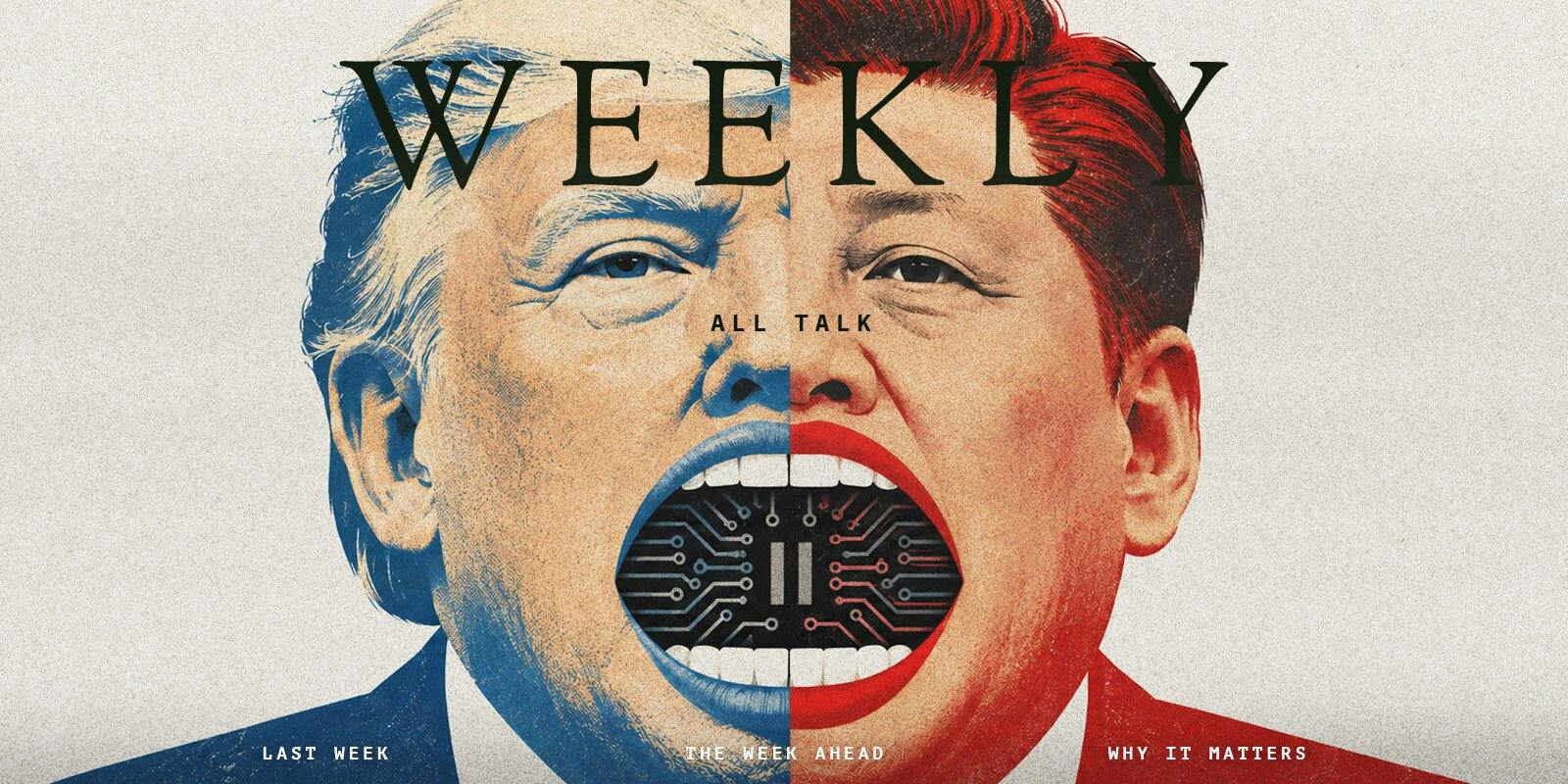
When President Donald Trump welcomes China's Xi Jinping to Washington this Thursday, the two leaders will pick up a conversation that began in Beijing in May. That earlier meeting covered trade, rare earths, the war in Iran, and Taiwan—but also something newer: how to build "guardrails" for artificial intelligence development.
Since then, the stakes have only grown. In the past week alone, alarm over AI's rapid advance reached a new pitch when Anthropic chief Dario Amodei called for slowing the race to build increasingly powerful models. Amodei's concern is shared by a number of industry leaders, including OpenAI's Sam Altman and xAI's Elon Musk. Their worry: AI's capabilities are advancing faster than society's ability to manage the risks.
For investors, the summit is less about the handshake and more about what it signals for markets. Here's what to watch.
Why AI guardrails matter for your portfolio
AI has been a major driver of stock market gains over the past year, with companies from chipmakers to software firms seeing valuations climb on expectations of explosive growth. But that optimism comes with a catch: if governments step in to slow development, the timeline for AI-driven profits could shift.
The idea of "guardrails" is still vague. It could mean anything from voluntary safety commitments to binding regulations. For now, both the US and China seem unwilling to fully pump the brakes—each sees AI as a strategic advantage. That means investors should expect continued investment in AI infrastructure, but also periodic headlines about safety concerns that could cause volatility.
"The market is pricing in a lot of AI optimism," says one strategist. "Any sign that regulators are getting serious about slowing things down could hit tech stocks."
Trade tensions and rare earths
Trade is also on the agenda. The US has been tightening restrictions on Chinese technology exports, while China has responded by limiting exports of rare earths—materials critical for everything from smartphones to electric vehicles. Recent reports suggest China Rare Earth Group is in talks to take control of Shenghe Resources, a move that could tighten Beijing's grip on the supply chain.
For investors, rare earths are a reminder that geopolitical friction can ripple through markets. Companies that rely on these materials, especially in the EV and electronics sectors, could face higher costs or supply disruptions. Recent recalls by BYD and Nio highlight the operational challenges facing Chinese automakers, even as they expand globally.
Meanwhile, the EU has asked China to cap hybrid exports or face new tariffs, and Volkswagen cut its 2026 outlook after a writedown, citing a slump in China. These are signs that trade tensions are not just a US-China issue—they're affecting global supply chains.
What investors should watch this week
Beyond the summit, the week ahead is packed with data and events that could move markets. Here's a quick rundown:
- Summit outcomes: Any joint statement or concrete agreement on AI guardrails, trade, or rare earths could trigger moves in tech, materials, and EV stocks.
- Earnings season: Several major companies report this week, and their commentary on China exposure and AI spending will be closely parsed.
- Economic data: Inflation readings and jobs numbers will shape expectations for interest rates, which remain a key driver for stocks.
For everyday investors, the key takeaway is that geopolitics and markets are increasingly intertwined. A summit like this can create short-term volatility, but it's rarely a reason to overhaul a long-term plan. Instead, use it as a reminder to diversify and stay focused on your goals.
As always, we'll be covering the summit and its aftermath. Check back for updates on what the leaders say—and what it means for your money.