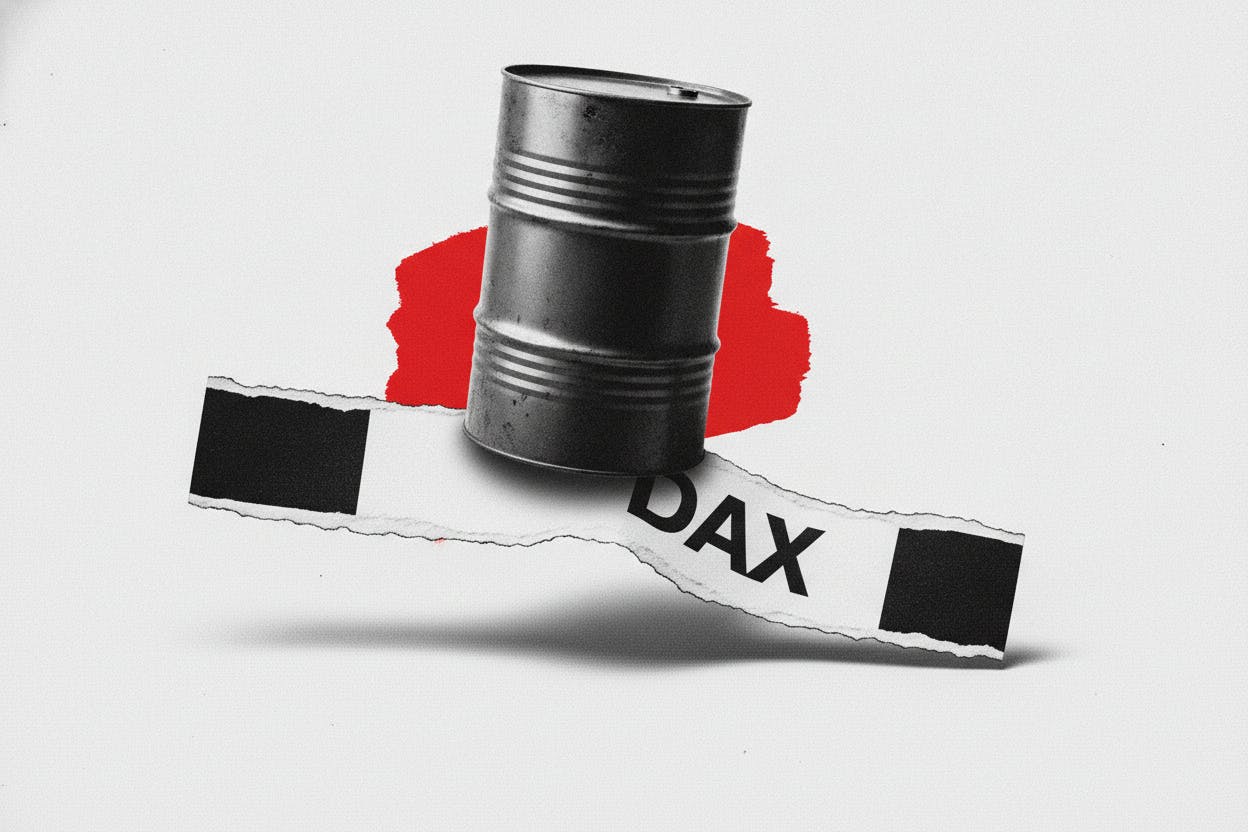
Germany's DAX index slipped on Monday, as investors weighed firmer oil prices following the expiration of the temporary US-Iran ceasefire, while company-specific news around RWE and Deutsche Telekom kept attention on individual stocks.
With a light economic calendar, geopolitics did most of the macro work. Danske Bank, a Danish lender, noted that Brent crude was trading above $88 a barrel as markets digested the end of the ceasefire and slow-moving talks to reopen the Strait of Hormuz, a critical chokepoint for global oil shipments. Even if actual flows continue, the risk of disruption can add a 'supply-risk premium' to oil prices, which then feeds into Europe's energy bills and broader inflation pressures.
Oil's ripple effect on markets
Oil prices have been a key driver for global markets in recent weeks. When crude rises, it typically boosts energy stocks but can weigh on the broader market, as higher fuel costs squeeze corporate margins and consumer spending. For Germany, a major importer of energy, elevated oil prices can be a particular drag on its export-heavy economy.
The Strait of Hormuz is one of the world's most important oil transit routes, with a significant share of global crude passing through it. Any threat to that route—whether from military conflict or diplomatic standoffs—tends to make traders nervous, and that nervousness often shows up in the price of oil. The expiration of the ceasefire means the situation remains fluid, and investors are watching for any signs of escalation or progress in negotiations.
For everyday investors, the key takeaway is that oil prices are not just a commodity story. They influence everything from the cost of petrol at the pump to the price of goods shipped around the world. When oil stays elevated, it can also make central banks more cautious about cutting interest rates, as they worry about inflation. That dynamic has been a recurring theme in markets this year, and it's worth keeping an eye on.
RWE and Deutsche Telekom: two sides of the same market
On the company front, RWE, Germany's largest power producer, saw its shares rise on upbeat guidance talk. The company has been a beneficiary of the energy transition, with a growing portfolio of renewable assets. While the brief doesn't specify the exact guidance, positive commentary from management often signals confidence in future earnings, which can attract investors looking for growth in the utilities sector.
Meanwhile, Deutsche Telekom agreed to a €1 billion deal to expand its fiber network in Poland. This is a significant investment for the telecom giant, which has been focusing on expanding its high-speed internet infrastructure across Europe. Fiber networks are seen as a long-term growth area, as demand for data and connectivity continues to rise. For Deutsche Telekom, this deal could strengthen its position in the Polish market and provide a steady stream of revenue for years to come.
These two stories highlight a broader trend in European markets: while macro factors like oil and geopolitics set the tone, individual company news can still move stocks. For investors, that means paying attention to both the big picture and the details of specific companies they hold or are considering.
What it means for investors
For the average investor, the DAX's slip on Monday is a reminder that markets are influenced by a mix of global and local factors. Oil prices, geopolitical tensions, and company-specific news all play a role. While it's impossible to predict short-term moves, understanding these drivers can help you make more informed decisions.
If you hold energy stocks or funds, firmer oil prices might be a positive, as they can boost profits for producers. On the other hand, if you're invested in sectors that are sensitive to energy costs—like airlines, manufacturing, or consumer goods—higher oil could be a headwind. Similarly, the Deutsche Telekom deal is a reminder that telecom companies are investing heavily in infrastructure, which could be a long-term growth story.
As always, it's important to keep a diversified portfolio and not overreact to daily market movements. The DAX's slip is a minor blip in a longer-term trend, and the fundamentals of the companies you own matter more than any single day's trading.
Looking ahead, investors will be watching for any developments in the Middle East, as well as economic data that could influence central bank policy. For now, the market seems to be in a wait-and-see mode, with oil prices and deal activity providing the main talking points.