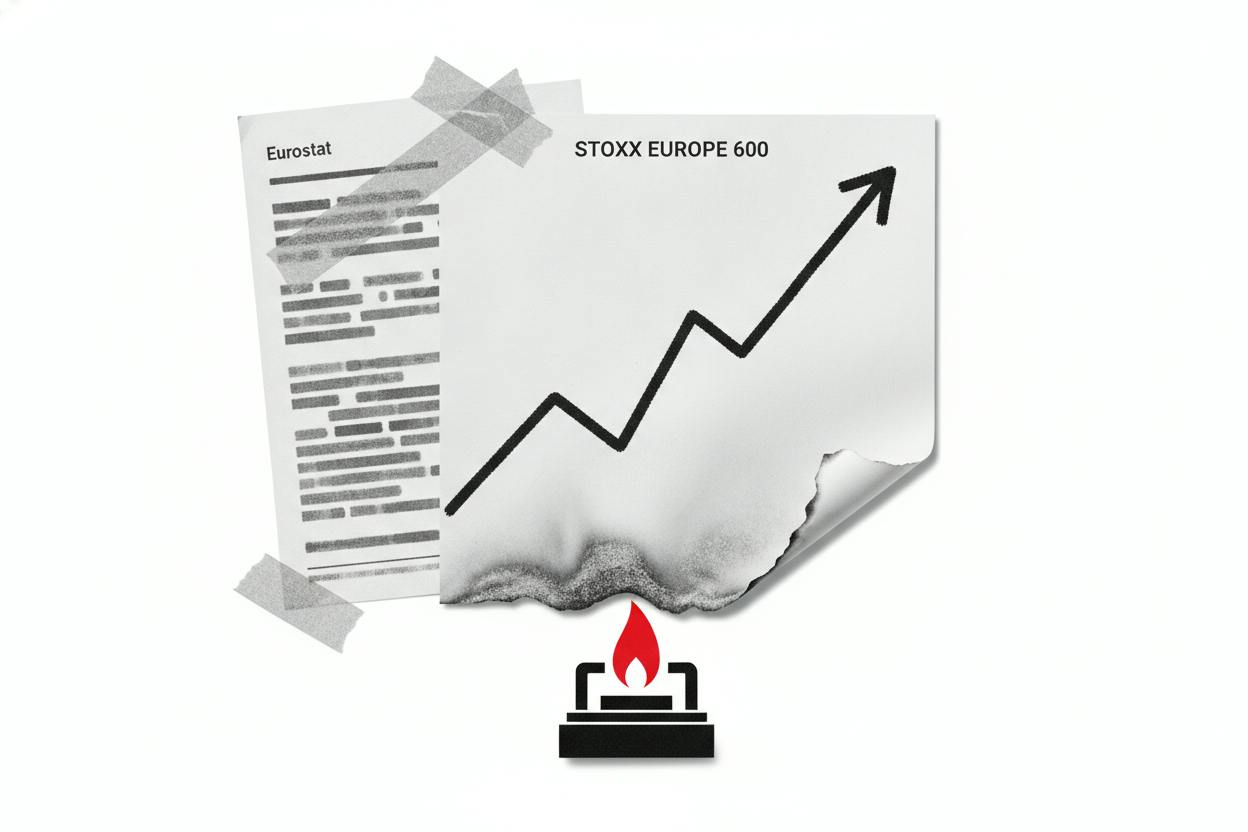
European stocks closed the week on a positive note, with the Stoxx Europe 600 index rising 1% on Friday. The gains came despite a hotter-than-expected inflation reading from the euro zone, a combination that might seem surprising at first glance.
Eurostat, the European Union's statistics agency, estimated that consumer prices in the 20-country currency bloc rose 3.8% in September compared with a year earlier, up from 3.2% in August. That was slightly above the 3.7% that economists had forecast.
Why inflation didn't derail the rally
Typically, a higher inflation number is bad news for stocks because it can prompt central banks to keep interest rates elevated for longer. Higher rates make borrowing more expensive for companies and consumers, which can slow economic growth and weigh on corporate profits.
But investors looked past the headline figure and focused on the details. The jump was almost entirely driven by energy prices, which surged 18.8% year-on-year in September, up from 14.3% in August. That reflects the recent spike in oil and gas costs, partly due to geopolitical tensions and supply concerns.
Core inflation, which strips out volatile food and energy prices, appeared to be less alarming. While the brief doesn't give a specific core number, the fact that the rise was concentrated in energy suggests that the broader price pressures may not be as widespread as the headline suggests.
Investors also received a reassuring signal from the labor market. Eurostat reported that the euro area unemployment rate held steady at 6.4% in August, a historically low level. That suggests the economy is still creating jobs, which supports consumer spending and corporate earnings, even as inflation remains above the European Central Bank's 2% target.
What this means for your investments
For everyday investors, the key takeaway is that not all inflation is created equal. A spike driven by energy costs can be painful at the pump, but it may not force the ECB to slam the brakes on the economy the way a broad-based price surge would.
Still, the inflation reading is a reminder that the battle against rising prices is far from over. The ECB has been raising interest rates to cool inflation, and a higher-than-expected number could keep pressure on the central bank to maintain its hawkish stance.
That said, the market's positive reaction suggests investors are betting that the ECB will not need to become even more aggressive, especially if energy prices eventually stabilize. The recent easing in bond stress and a slight pullback in oil prices have helped calm nerves.
For those with European exposure, the resilience of stocks in the face of hot inflation is a good sign. It shows that markets are becoming more nuanced in how they interpret economic data, focusing on the underlying drivers rather than reacting to headlines alone.
What to watch next
Investors will be keeping a close eye on the ECB's next policy meeting, scheduled for later this month. Any hints about the future path of interest rates will be crucial. Also, the final inflation data for September, due in a few weeks, could revise the flash estimate.
Energy prices remain the wild card. If oil and gas costs continue to climb, inflation could stay elevated, forcing the ECB to act. On the other hand, if energy prices ease, the inflation spike could prove temporary, giving the central bank room to pause.
The broader market context is also important. European stocks have been navigating a tricky environment of high inflation, rising rates, and geopolitical uncertainty. The recent strength of the dollar and currency swings have added to the complexity for international investors.
For now, the message from the market is clear: investors are willing to look past the inflation headline as long as the underlying picture remains manageable. But that could change quickly if energy prices keep surging or if core inflation starts to accelerate.
As always, it's wise to stay diversified and keep a long-term perspective. Short-term market reactions to data can be unpredictable, but the fundamentals of your portfolio should be built to weather various economic scenarios.