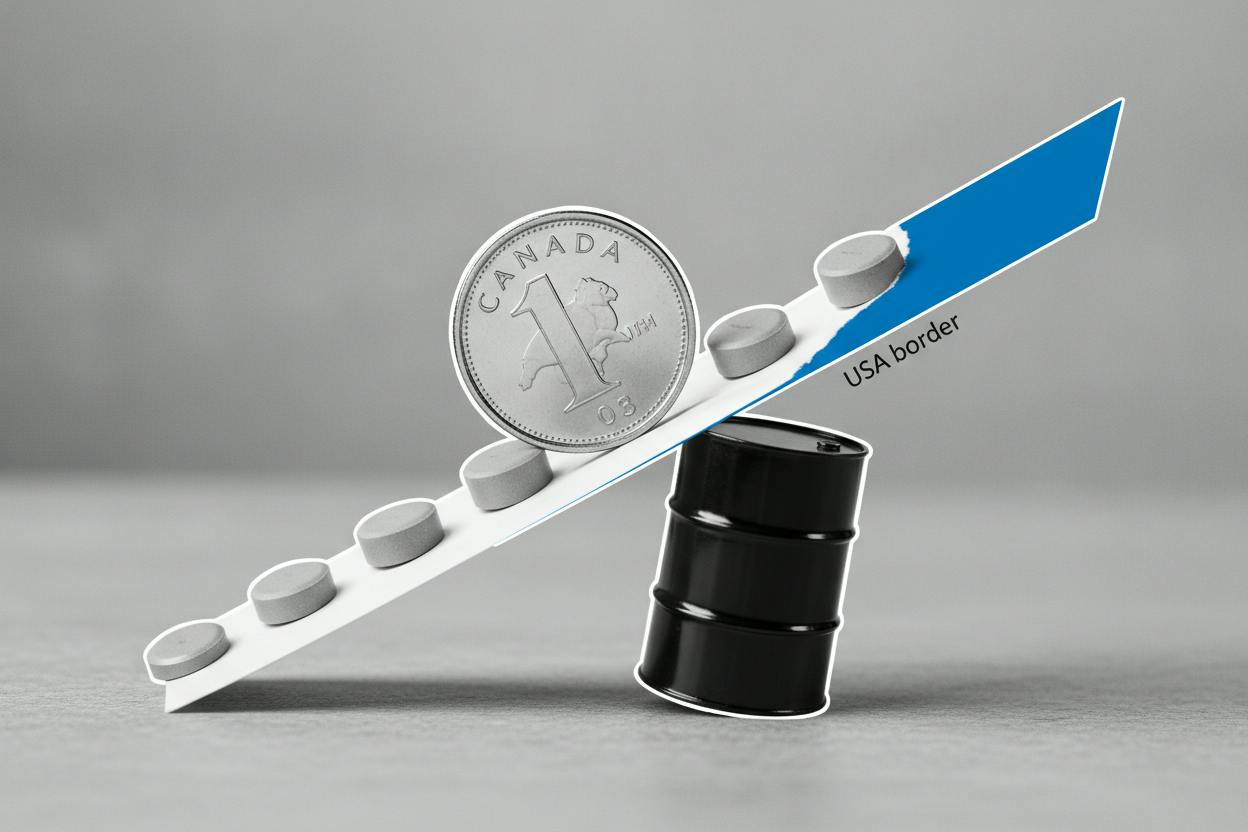
The Canadian dollar extended its recent slide on Tuesday, pressured by a dip in crude prices and a widening interest-rate gap between Canada and the United States. The loonie hovered near an 18-month low against the greenback, as both key supports for the currency—higher oil and competitive Canadian rates—moved in the wrong direction.
What's behind the move?
Canada's currency often strengthens when crude prices rise, because oil is one of the country's biggest exports. It also tends to benefit when Canadian interest rates look attractive relative to US rates, drawing capital into Canadian assets. This time, both forces leaned against the loonie.
US crude fell 1.6% to $91.40 a barrel after the Group of Seven nations agreed to release 100 million barrels from emergency reserves. The move is designed to ease near-term fuel prices, but it also signals softer demand expectations, which typically weighs on oil-sensitive currencies like the Canadian dollar.
At the same time, the yield on Canada's 2-year government bond slipped further below its US counterpart, widening the gap to about 157 basis points—the largest since February. A basis point is one-hundredth of a percentage point, so the gap means US 2-year yields are 1.57 percentage points higher than Canada's. That gap makes US assets more attractive to yield-seeking investors, pulling money away from Canada and pressuring the loonie.
Why the yield gap matters
The 2-year yield is closely watched because it reflects market expectations for central bank policy over the next couple of years. When the US Federal Reserve is expected to keep rates higher for longer than the Bank of Canada, the gap widens, and the US dollar tends to strengthen against the loonie.
This dynamic has been a recurring theme in currency markets recently. As US yields have climbed, many currencies, not just the Canadian dollar, have felt the pressure. The loonie's slide is part of a broader pattern where higher US rates attract global capital, lifting the dollar broadly.
For Canadian investors, a weaker loonie has mixed implications. It makes imports more expensive, which can feed into inflation, but it also makes Canadian exports more competitive and boosts the value of foreign investments when converted back to Canadian dollars.
What to watch next
Investors will be watching oil prices and any signals from the Bank of Canada about its rate path. The central bank has been cautious about further hikes, especially with concerns about housing affordability—a topic the Bank of Canada has said interest rates alone cannot solve.
Meanwhile, US economic data, particularly the jobs report, could influence the Fed's next move. Strong jobs numbers would likely keep US yields elevated, further widening the gap and adding to the loonie's woes. Conversely, softer data could ease pressure on the currency.
The recent soft US jobs data that lifted some Latin American currencies didn't provide the same relief for the loonie, as oil and the yield gap took center stage.
What it means for investors
For everyday investors, the loonie's weakness has practical effects. If you're planning a trip to the US, your Canadian dollars won't stretch as far. If you hold US stocks or funds, the currency move can boost your returns when measured in Canadian dollars.
But it's important to remember that currency movements are normal and often reverse. The loonie has been through similar stretches before, and oil prices can rebound quickly. The G7's reserve release is a one-time measure, and crude could recover if supply concerns resurface.
For those with a long-term investment horizon, short-term currency swings are usually less important than the underlying performance of your investments. Still, keeping an eye on the yield gap and oil prices can help you understand why the loonie is moving and what might change its direction.
As always, diversification remains a key strategy. Holding a mix of Canadian and international assets can help balance the effects of currency fluctuations on your portfolio.