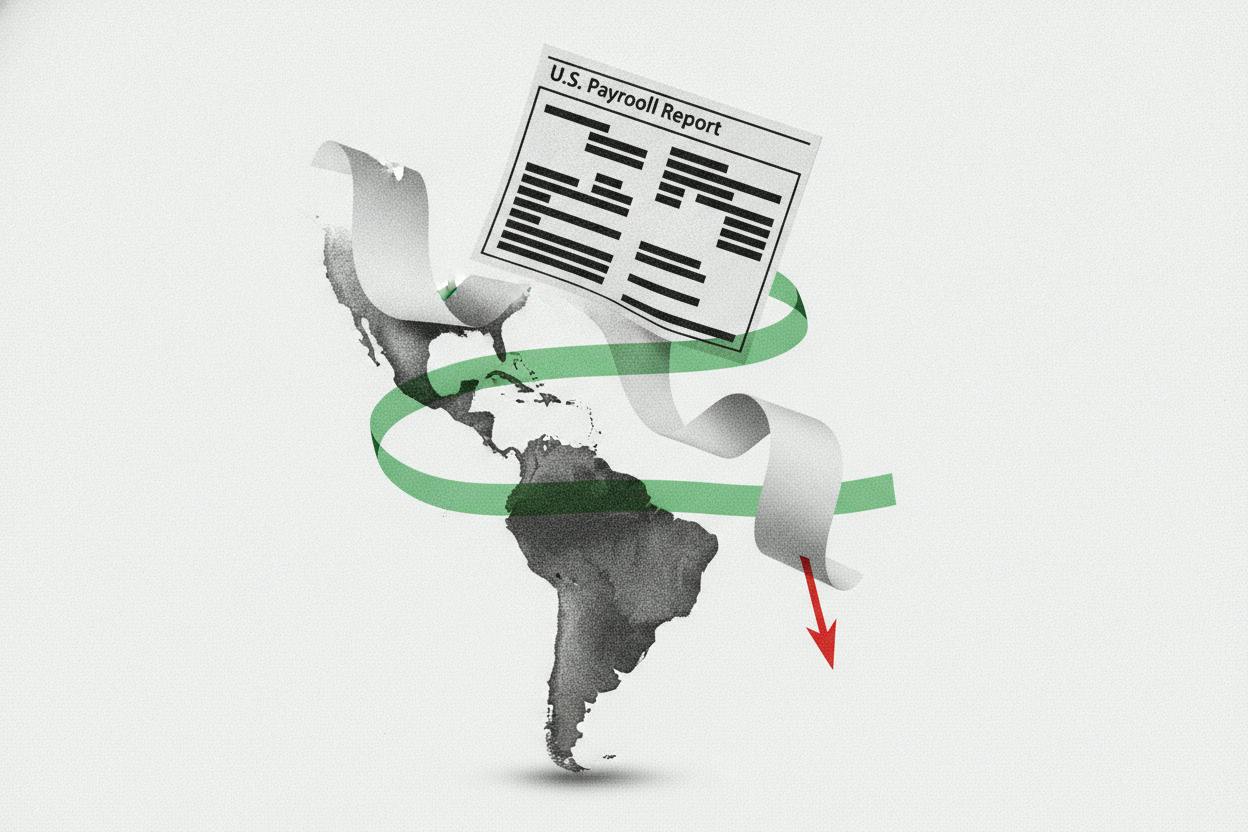
Latin American currencies caught a tailwind on Friday after a weaker-than-expected US jobs report dampened expectations for another Federal Reserve interest-rate hike this month. But the relief was not universal: Brazil's real bucked the trend, easing as investors braced for Sunday's presidential election and the fiscal signals it could send.
What the jobs report changed
The US economy added just 29,000 jobs in September, far below the 90,000 that economists had forecast. The unemployment rate ticked up to 4.2% from 4.1% in August. For markets, the message was clear: the Fed may not need to tighten policy as aggressively as feared.
Traders responded by trimming the implied probability of an October rate hike to 17% from 22% before the data, according to CME Group's FedWatch Tool. US 10-year Treasury yields slipped again, extending a recent pullback from multi-year highs.
That combination—lower rate expectations and softer yields—tends to weaken the dollar and make emerging-market assets more attractive. When US rates look like they might peak sooner, investors are more willing to take on risk in higher-yielding currencies.
Latin American currencies: a mixed picture
MSCI's regional currency index rose 0.33% on the day. Mexico's peso led the advance, climbing 0.7%, while Colombia's peso jumped 1.2%. Both currencies are sensitive to US rate expectations and oil prices, and the softer dollar gave them room to breathe.
But Brazil was the outlier. The real fell 0.3% even as its regional peers gained. The reason: politics. Sunday's first-round presidential vote is too close to call, and investors are worried about what the outcome could mean for government spending and debt.
A Datafolha poll showed President Luiz Inacio Lula da Silva ahead of Senator Flavio Bolsonaro by 3 percentage points—but that is effectively a tie within the poll's margin of error. UBS warned that the currency could react sharply depending on the fiscal signal in the result.
Why Brazil is different
Brazil's real falling while the rest of the region rises is a reminder that local politics can overpower a 'weaker dollar' day. If the vote points to looser fiscal policy—more spending, higher debt—investors may demand a bigger risk premium for holding Brazilian assets.
That risk premium is essentially extra return to compensate for Brazil-specific uncertainty. It can show up quickly in higher local interest-rate volatility and pricier currency hedges, making the real's 'carry' appeal less dependable. Carry refers to the strategy of borrowing in a low-yielding currency and investing in a higher-yielding one to pocket the difference.
The upshot: USD/BRL could see larger one-day swings, and Brazil's local bond yields could be choppier around Sunday's first round and any runoff. A runoff would extend the uncertainty for another month.
What it means for investors
For everyday investors, the takeaway is that currency moves are not just about US data. Even when global conditions improve, local politics can dominate. If you hold emerging-market funds or Brazilian assets, expect volatility around elections and fiscal news.
The softer US jobs report also has broader implications. It reduces the odds of an October rate hike, which could support risk assets globally. But the Fed is still data-dependent, and officials remain split on rate hikes as oil gains keep inflation in focus. So the relief may be temporary.
For those watching Latin America, the key is to separate the global tide from the local currents. A weaker dollar helps, but it cannot fully offset domestic political risk. As recent weeks have shown, when US yields spike, Latin American assets can slide quickly. Friday's bounce is a reminder that the reverse can also happen—but only when local conditions allow.
Investors should also keep an eye on the broader emerging-market picture. Emerging-market currencies have been under pressure from high US yields, and any sustained decline in yields could provide a tailwind. But the Fed's next move is far from certain, and the jobs report is just one data point.
In the meantime, Brazil's election remains the wildcard. If the result signals fiscal discipline, the real could recover. If not, expect more turbulence. Either way, the market will be watching closely.