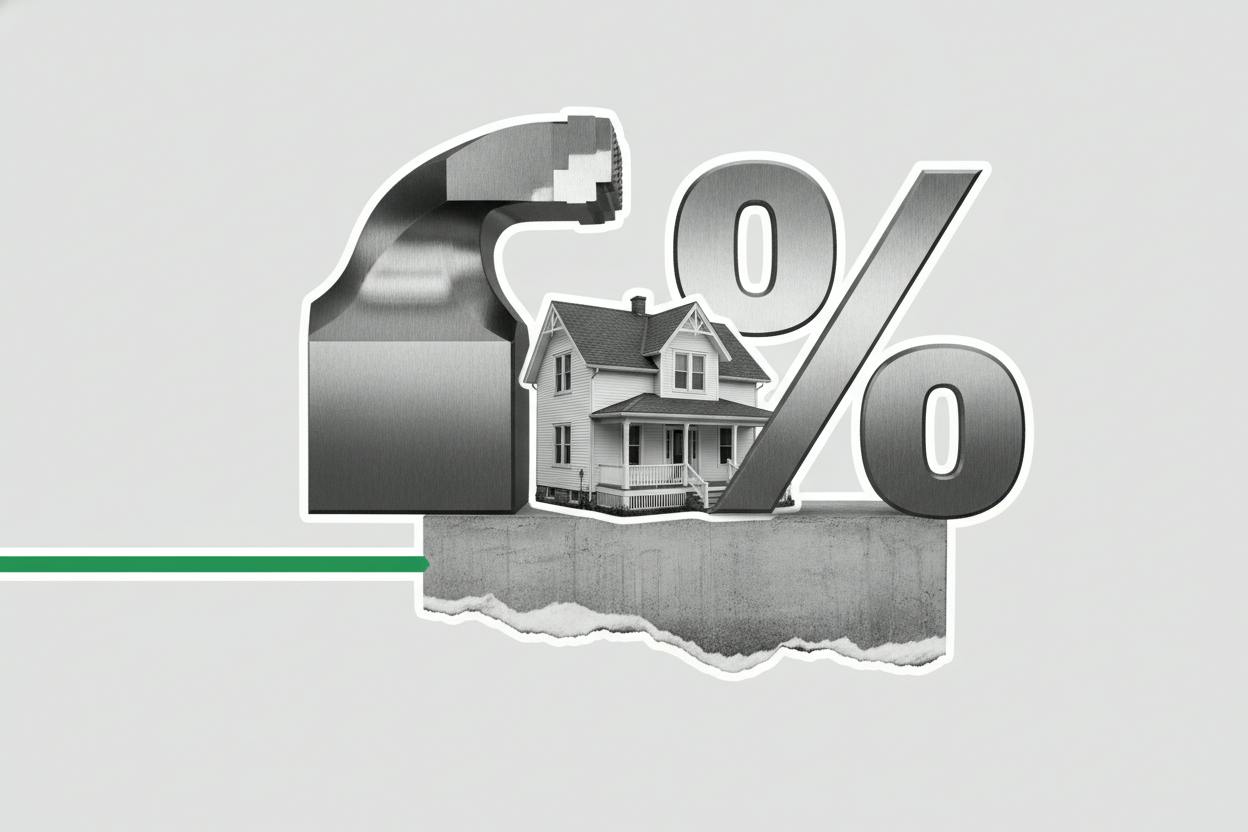
A senior Bank of Canada official has poured cold water on the idea that interest rate decisions can solve the country's housing affordability crisis. Senior Deputy Governor Carolyn Rogers said monetary policy is a blunt tool, and that lasting progress on housing depends on factors the central bank does not control: more supply, better planning, and infrastructure investment.
The comments matter because housing has become one of the most politically and financially sensitive issues in Canada. For millions of households, the cost of buying or renting a home has climbed far faster than incomes over the past decade. Many Canadians have looked to the Bank of Canada — and its benchmark interest rate — as the lever that could bring prices back down. Rogers' message is that this expectation is misplaced.
Why rates can't fix housing on their own
Interest rates influence housing demand, not supply. When the central bank raises its policy rate, borrowing costs rise across mortgages, lines of credit and construction loans. That cools demand by making it more expensive to carry a mortgage, which can put downward pressure on prices in the short term. But it does nothing to build more homes, speed up permitting, or lay the pipes, roads and transit that new neighbourhoods need.
That distinction is central to Rogers' argument. Monetary policy is a broad instrument that affects the entire economy — inflation, employment, consumer spending and the currency. It cannot be aimed surgically at one sector. Using it to try to engineer a specific housing outcome risks collateral damage elsewhere, such as slower hiring or a weaker economy.
Canada's housing shortage has deep structural roots. Population growth, driven in part by immigration, has outpaced the pace of homebuilding for years. Zoning rules in many cities restrict what can be built and where. Development charges and approval timelines add cost and delay. Skilled-labour shortages in construction slow projects further. None of these problems respond to a change in the overnight rate.
The supply side is where the real work sits
Rogers pointed to supply, planning and infrastructure as the areas that can actually move the needle. That framing aligns with a growing consensus among economists and policymakers: affordability improves when the number of homes catches up with the number of households that need them.
Building more homes requires coordination across all levels of government. Municipalities control zoning and permits. Provinces set land-use frameworks and fund some infrastructure. The federal government influences immigration levels, housing programs and financing. Infrastructure — transit, water, electricity, roads — is often the bottleneck that determines whether new housing can actually be occupied.
For investors, this has several practical implications. First, it suggests the Bank of Canada will not try to use rate policy as a housing affordability tool. Rates will continue to be set with an eye on inflation and the broader economy, not on home prices specifically. That means housing markets should expect to respond to rates rather than be managed by them.
Second, it puts the spotlight on companies and sectors tied to housing supply. Homebuilders, building-materials producers, engineering and construction firms, and infrastructure operators are all part of the chain that would need to expand for affordability to improve. Investors watching this theme may want to follow permitting data, housing starts and government housing policy announcements rather than rate decisions alone.
Third, it is a reminder that rate-sensitive assets — from real estate investment trusts to highly indebted companies — remain exposed to whatever the central bank does next. Expectations around the path of interest rates have swung sharply in recent years, and markets have priced in a range of outcomes. As seen in other economies, shifts in rate expectations can ripple through mortgage markets and bond yields quickly, as when UK mortgage rates jumped on surging long-term borrowing costs.
What investors should watch next
The Bank of Canada's next rate decisions will still matter enormously for markets. But Rogers' comments suggest investors should broaden their focus. Key things to track include:
- Housing starts and building permits, which show whether supply is actually increasing.
- Government policy at the federal, provincial and municipal levels, especially zoning reform and infrastructure spending.
- Construction costs and labour availability, which determine whether projects are viable.
- Inflation and employment data, which drive the Bank of Canada's rate path.
Canada is not alone in grappling with this. Other developed economies face similar tensions between tight housing supply and rate policy. In Australia, for instance, the housing slump has deepened as rates climbed, illustrating how rate hikes can cool demand without solving underlying shortages.
For everyday investors, the takeaway is straightforward: don't expect the Bank of Canada to rescue housing affordability through rate cuts or hikes. The forces that determine whether homes become more affordable are largely structural, and they move slowly. Rate policy will keep shaping the cost of borrowing and the value of rate-sensitive investments, but it is not a housing strategy. Investors who understand that distinction will be better positioned to interpret the headlines — and to separate what the central bank can do from what it cannot.