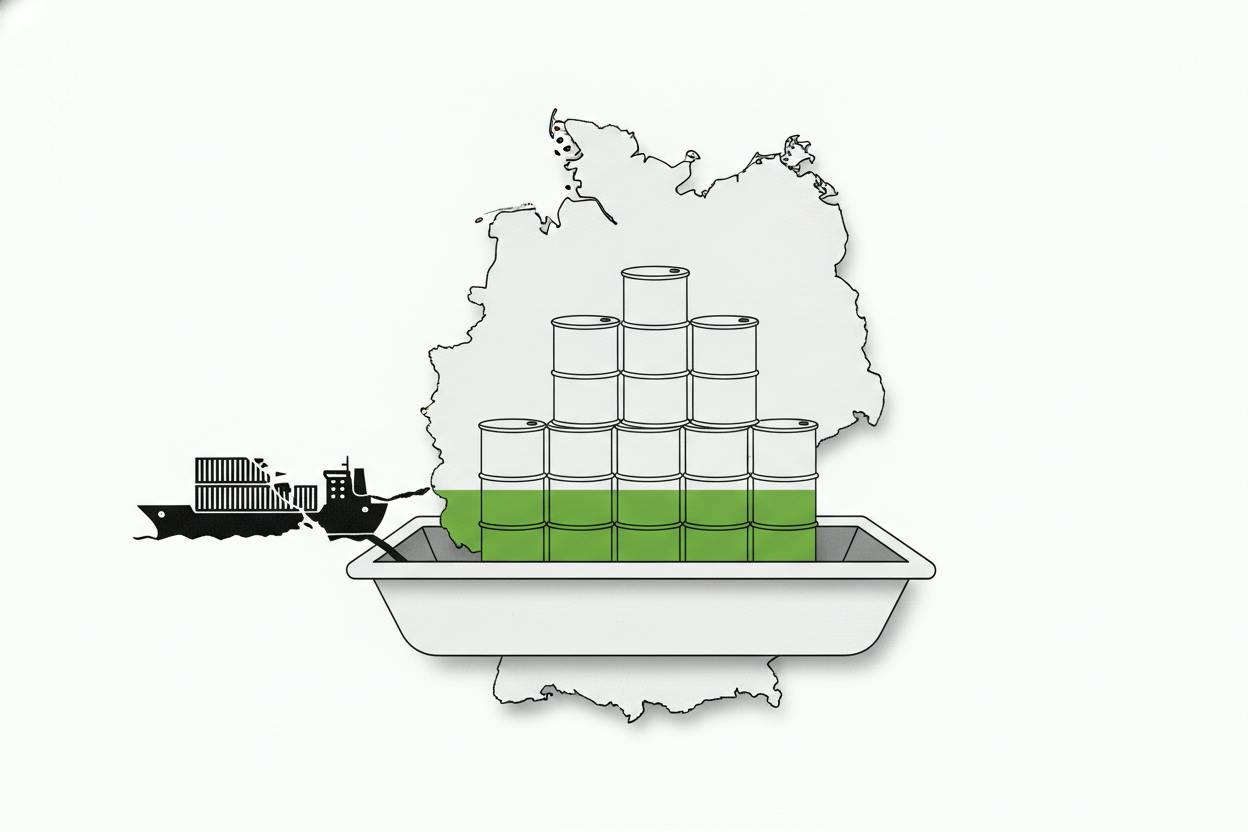
Germany's chemical industry is feeling more upbeat for the first time this year. The Ifo Institute's business climate index for the sector rose to 5.5 points in September from minus 2.6 in August, marking the first positive reading of 2025. The Munich-based research group attributed the improvement to supply chain disruptions that have prompted customers to rebuild inventories, even at higher prices.
"Buyers in Germany and abroad are still rebuilding inventories and are willing to pay higher prices," said Ifo analyst Anna Wolf. She noted that logistics snags linked to the Middle East have made reliable supply more valuable, giving chemical producers rare pricing power after a long stretch of weak demand.
Why the chemical sector matters for Europe's largest economy
Chemicals are a foundational industry in Germany, supplying inputs to automakers, construction firms, pharmaceutical companies and agriculture. When chemical output slows, it often signals broader weakness in the country's manufacturing base. Conversely, a pickup in chemical orders can be an early sign that industrial demand is stabilising.
The sector has struggled for much of the past two years, weighed down by high energy costs, soft global demand and competition from lower-cost producers abroad. Germany's economy has also been sluggish, with manufacturing output constrained by weak export markets and structural challenges. Against that backdrop, a single month of improving sentiment is notable but not yet a turnaround.
Ifo's index is based on surveys of companies in the chemical industry, asking them to assess current conditions and their expectations for the coming months. A reading above zero indicates more positive than negative responses. The swing from minus 2.6 to 5.5 is a meaningful jump, but it comes off a low base and follows months of pessimism.
Supply disruptions cut both ways
The same supply chain problems that are pushing customers to restock can also be a double-edged sword. While they support prices in the short term, they can disrupt production and raise input costs for chemical makers themselves. Middle East-linked logistics issues, including shipping delays and higher freight costs, have added uncertainty to global trade routes.
Wolf cautioned that the upswing may prove temporary. Once customers finish rebuilding inventories, demand could soften again unless end-user consumption picks up. The recovery remains fragile, she said, and the sector is not yet on a stable growth path.
For investors, the key question is whether this is the start of a genuine recovery or just a short-lived restocking bounce. Chemical companies are often cyclical, meaning their earnings rise and fall with the broader economy. A sustained upturn would require stronger demand from key customers, particularly in construction and automotive, as well as more predictable energy costs.
Germany's energy situation remains a concern. Although prices have come down from their peaks, they are still elevated compared with pre-pandemic levels and with competitors in the US and Asia. That puts German chemical producers at a cost disadvantage, especially for energy-intensive processes.
What it means for investors
Investors watching European equities may see this as a tentative positive for German industrial and chemical stocks. However, it is important not to overinterpret a single survey. Ifo's index is a sentiment gauge, not a hard measure of output or profits. It can shift quickly based on geopolitical events or energy market moves.
For those with exposure to the chemical sector, the report suggests that pricing power may be returning in some segments, at least temporarily. That could support margins in the near term. But the broader challenges — weak global growth, competitive pressures and high energy costs — have not disappeared.
Investors should also consider the ripple effects on other industries. Chemical products are used throughout manufacturing, so a sustained recovery would be a positive signal for German industrials more broadly. Conversely, if the bounce fades, it could reinforce concerns about the health of Europe's largest economy.
Related market themes include German stocks and energy costs, which have been a drag on sentiment, and copper's steadying after supply shocks, another indicator of global industrial demand. For now, the chemical sector's improvement is a small but welcome sign that supply chain dynamics are shifting — even if the foundation for a durable recovery remains uncertain.
Next, investors will watch whether the positive sentiment translates into actual orders and production increases in the coming months. They will also monitor energy prices, global trade flows and any further supply chain disruptions that could alter the picture. As always, diversification and a long-term perspective are prudent when navigating cyclical industries.