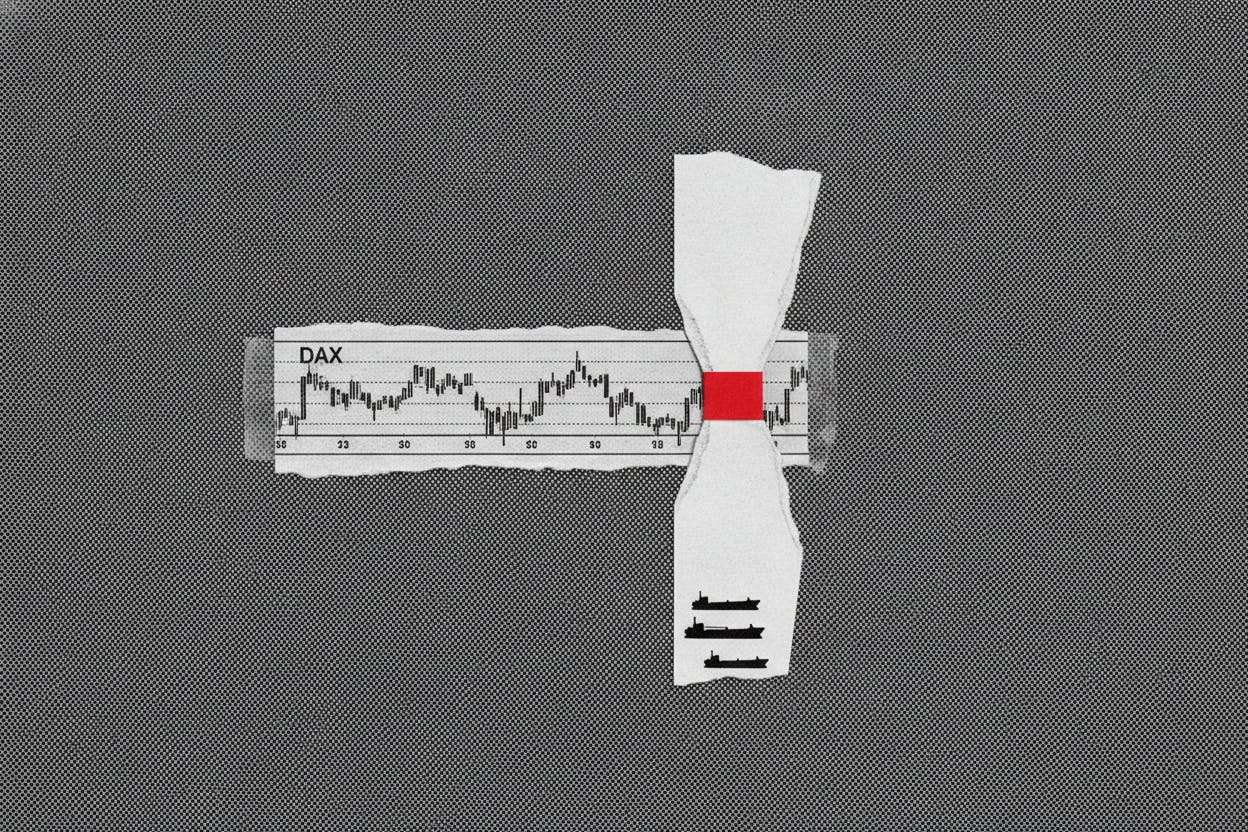
Germany's blue-chip DAX index slipped 0.18% on Monday, as investors digested news that US and Iranian technical teams are set to meet in Doha on Tuesday to discuss tensions around the Strait of Hormuz. The narrow waterway is a critical chokepoint for global oil shipments, and any signs of disruption tend to ripple through energy markets and investor sentiment.
According to Reuters, citing a source familiar with the discussions, the talks aim to lower tensions and manage traffic through the strait, which carries a meaningful share of the world's seaborne oil. Deutsche Bank, one of Europe's largest lenders, noted in a memo that both sides are "standing down for now," meaning oil flows have continued, but unresolved issues remain—including who controls transit and what fees might be charged.
Why the Strait of Hormuz Matters for Investors
The Strait of Hormuz is a narrow passage between Iran and Oman that connects the Persian Gulf to the Gulf of Oman and the open ocean. Roughly 20% of the world's oil passes through it daily, making it one of the most strategically important energy routes on the planet. When geopolitical tensions rise in the region, oil prices often incorporate a "Hormuz premium"—a risk cushion reflecting the possibility of supply disruptions.
Deutsche Bank flagged that Brent crude was up 0.71% in early trading on Monday, a modest move that nonetheless signals the market is pricing in some uncertainty. Even if the benchmark only edges higher, the delivered cost of oil can rise through higher shipping insurance and freight rates, which eventually filters into energy-intensive sectors like manufacturing and transportation.
This dynamic is especially relevant for European investors, given the region's reliance on imported energy. The DAX, which includes major industrial and automotive companies, is sensitive to energy costs that can squeeze margins and weigh on economic growth.
Inflation Data Adds to the Mix
European investors are also watching this week's inflation data closely. Flash June readings for Germany are due on Tuesday, followed by eurozone-wide figures on Wednesday. Energy costs are a key component of inflation calculations, and any sustained rise in oil prices can quickly influence near-term inflation expectations.
If inflation prints come in hotter than expected, it could keep pressure on the European Central Bank to maintain higher interest rates for longer. That would be a headwind for rate-sensitive assets like stocks, including the DAX, which has been trying to find its footing after a volatile period.
For context, the DAX has been trading in a relatively narrow range in recent weeks, as investors weigh mixed economic data, geopolitical risks, and the outlook for monetary policy. Monday's small decline fits that pattern of caution.
What It Means for Everyday Investors
For ordinary investors, the key takeaway is that geopolitical events like the US-Iran talks can create subtle but real ripples in markets. The 0.71% move in Brent crude may seem small, but it reflects a broader reassessment of risk. When oil prices rise, it can increase costs for companies across the economy—from airlines to manufacturers—and potentially slow consumer spending if fuel prices climb.
Investors should also be aware that the impact isn't always immediate. Shipping insurance and freight rates can rise before oil prices themselves move sharply, meaning the cost of goods could increase over time. That's why markets are paying close attention to the Doha talks and any follow-up developments.
Relatedly, the broader geopolitical backdrop includes other factors that can affect trade and commodity flows. For instance, aluminum prices recently hit a four-month low as Strait of Hormuz tensions eased, showing how quickly sentiment can shift. Similarly, Hong Kong stocks surged 1.6% as US-Iran talks eased oil disruption fears, highlighting the global nature of these dynamics.
For European markets specifically, the combination of oil uncertainty and inflation data means the coming days could set the tone for the rest of the quarter. European stocks were flat recently as tech rebounded and oil and the ECB Sintra meeting were in focus, underscoring the delicate balance markets are trying to strike.
Looking Ahead
Investors will be watching the Doha talks for any concrete outcomes. If the two sides reach a framework for managing traffic through the strait, the risk premium in oil could fade, potentially providing a tailwind for equities. On the other hand, if talks stall or tensions escalate, oil prices could spike, adding to inflationary pressures and weighing on stock markets.
For now, the DAX's modest decline reflects a market that is pricing in uncertainty but not panic. The next few days will be crucial in determining whether the Hormuz premium expands or contracts, and how that feeds into the broader investment landscape.