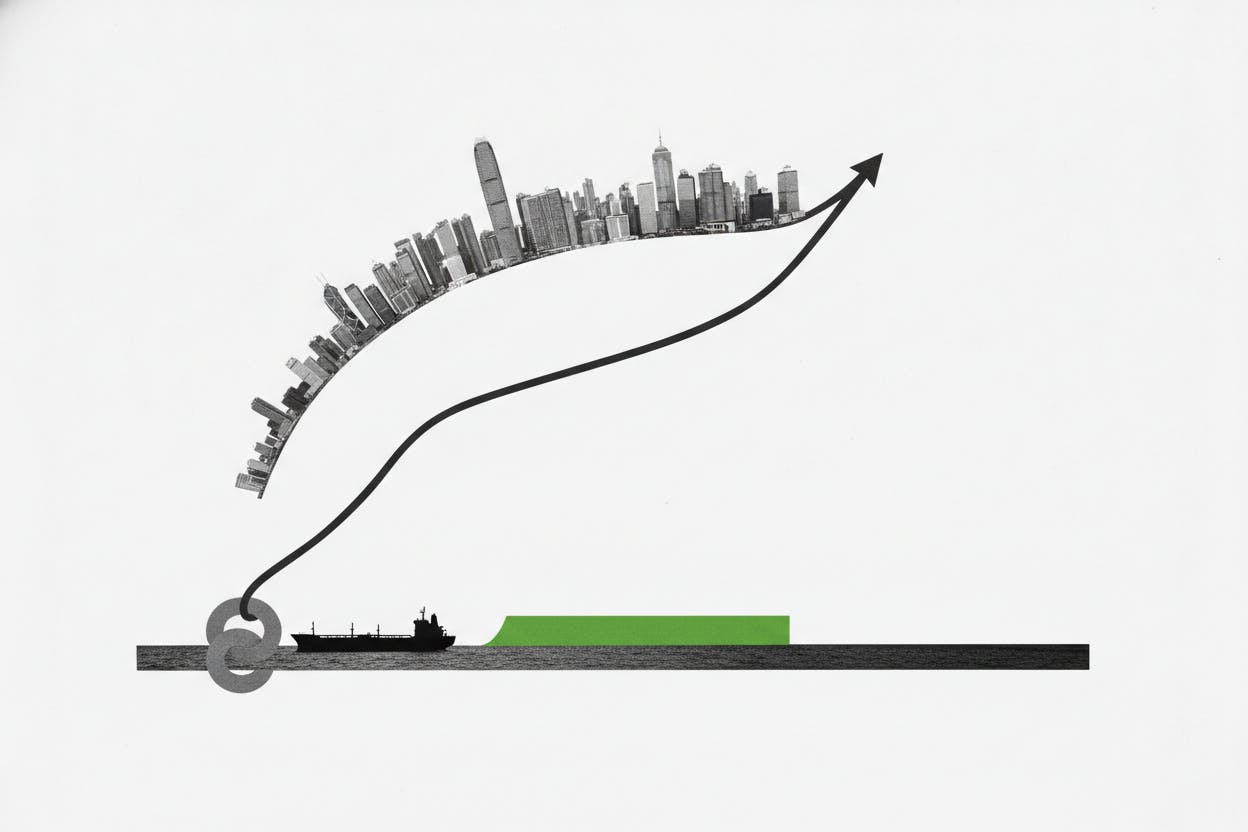
Hong Kong stocks bounced back sharply on Monday, with the Hang Seng index rising 1.6%, after the United States and Iran agreed to halt attacks and allow vessels to pass freely through the Strait of Hormuz. The agreement, which also includes a restart of diplomatic talks, calmed fears that the vital oil shipping route could be disrupted, sending a wave of relief through Asian markets.
What happened?
The breakthrough came after weeks of heightened tensions in the Middle East, where the Strait of Hormuz—a narrow waterway through which about 20% of the world's oil passes—had become a flashpoint. The US and Iran had been exchanging attacks, raising the risk of a broader conflict that could choke off oil supplies and send energy prices soaring.
Under the reported deal, both sides agreed to a cessation of hostilities and to ensure safe passage for commercial vessels. The move effectively removes an immediate threat to global oil flows, which had been hanging over markets since the escalation began.
For Hong Kong, a major financial hub with deep ties to China and global trade, the news was a clear positive. The Hang Seng index, which had been under pressure in recent sessions, rallied as investors piled back into stocks that had been sold off on geopolitical fears.
Why the Strait of Hormuz matters
The Strait of Hormuz is one of the world's most critical energy chokepoints. Located between Iran and Oman, it connects the Persian Gulf to the open ocean. Any disruption there can quickly push up oil prices, hitting import-dependent economies like China, Japan, and India.
When tensions flared, traders had been bracing for potential supply cuts. Oil prices had edged higher, and stocks in sectors sensitive to energy costs—like airlines and shipping—had taken a hit. Monday's agreement reversed some of that anxiety, at least for now.
This is not the first time the region has seen such brinkmanship. Past standoffs have often ended in last-minute deals, but the uncertainty alone can rattle markets. The latest agreement suggests both sides see value in de-escalation, at least in the short term.
What it means for investors
For everyday investors, the key takeaway is that geopolitical risk can create sudden swings in markets—and just as quickly, a resolution can spark a rebound. Monday's move in Hong Kong is a reminder that headlines matter, but so does the underlying economic logic.
The Hang Seng's 1.6% gain was broad-based, with energy, shipping, and financial stocks all participating. Investors who had been sitting on the sidelines may have seen this as a signal to re-enter, especially after a period of uncertainty.
That said, the deal does not eliminate all risks. The US and Iran remain deeply divided on many issues, and the ceasefire could prove fragile. Markets will be watching closely for any signs of a breakdown in talks or renewed hostilities.
For now, the focus shifts back to other drivers: China's economic recovery, corporate earnings, and central bank policy. The recent rally in Chinese stocks on strong industrial profits shows that domestic factors are also supporting sentiment.
Broader market context
Hong Kong's bounce comes after a period of mixed performance across Asia. While Indian stocks held steady as traders weighed the same US-Iran news, other markets like Japan and South Korea saw more muted moves. The Hang Seng's outsized gain reflects its sensitivity to global trade flows and China's economic health.
Oil prices themselves dipped slightly on the news, as the immediate supply risk receded. But analysts caution that the underlying tensions in the Middle East are far from resolved. A full normalization of relations would require broader diplomatic progress, which remains uncertain.
For investors with exposure to Hong Kong stocks, Monday's rally is a welcome reprieve. But the lesson from this episode is clear: geopolitical events can create both risks and opportunities, and staying diversified across regions and sectors remains a prudent strategy.
What to watch next
Markets will now turn their attention to the next round of US-Iran talks, as well as other economic data releases. In China, investors are watching for signs that the recovery is broadening beyond manufacturing. The rotation out of AI stocks into healthcare and consumer staples suggests some caution about tech valuations.
Globally, the focus remains on central banks and inflation. The European Central Bank's Sintra meeting and US Federal Reserve signals will be key for interest rate expectations. For now, the Strait of Hormuz deal has bought some calm, but the underlying currents remain choppy.