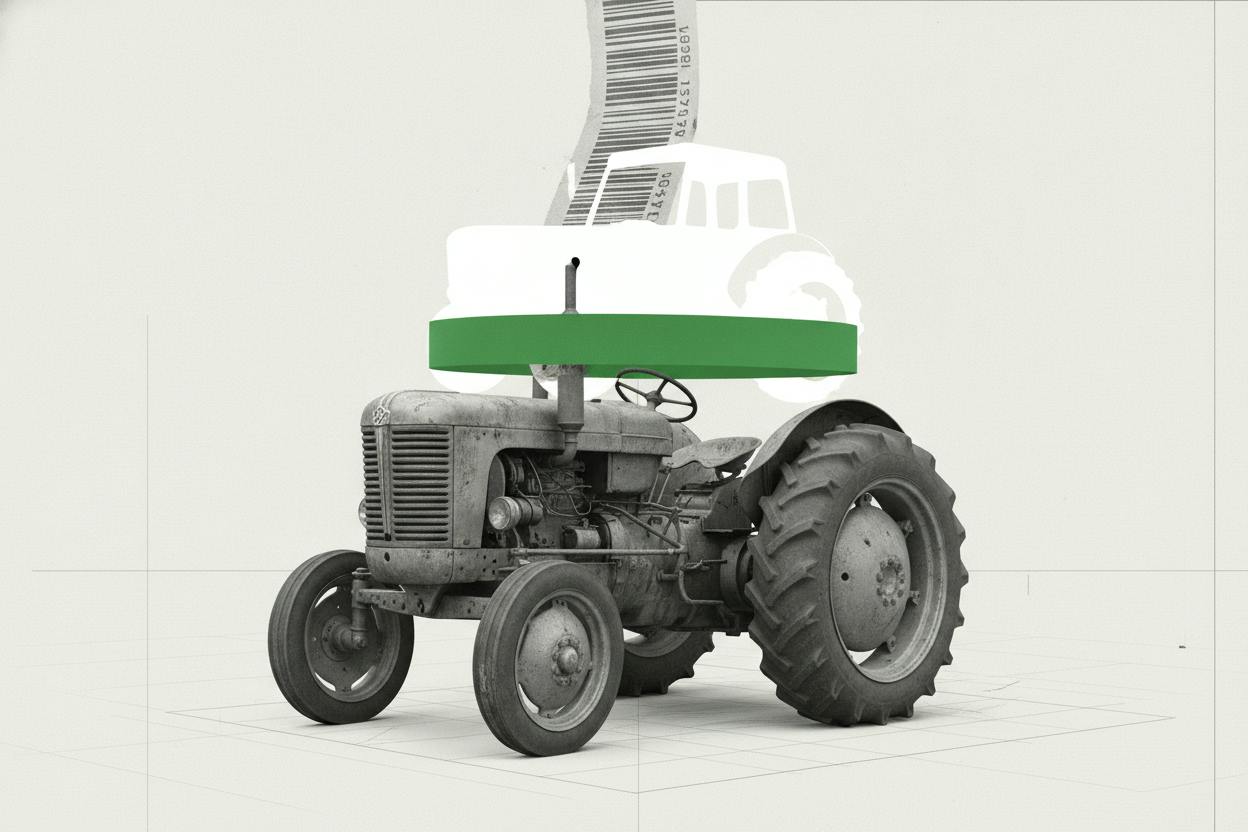
Deere & Co. reports its fiscal fourth-quarter earnings on Wednesday, but the market's attention is already shifting to a longer horizon: fiscal 2027. That forward-looking focus comes as the farm equipment maker's shares fell more than 3% on Tuesday, closing at $610.75, after RBC Capital Markets reiterated its bullish stance with a $752 price target.
RBC analysts said the key for many Deere watchers will be the company's first official guidance for fiscal 2027, particularly for its large agriculture segment. The bank believes a recovery in that business could be driven by "replacement demand"—farmers and contractors swapping out aging machines—as equipment fleets get older and dealer inventories return to more normal levels.
That matters because it suggests the upturn wouldn't need a big boost from crop prices, which can be volatile. Instead, the cycle could be supported by the simple need to replace worn-out equipment. RBC also pointed to rental "re-fleeting" in construction, where large rental companies refresh their equipment on a planned schedule, as a steadier source of demand.
Why fiscal 2027 matters more than Q4
For a company like Deere, the fiscal year runs from November through October. So the Q4 report covers the final months of fiscal 2025, but the real news for investors is likely to be the initial outlook for fiscal 2027, which begins in November 2026. That's an unusually long-range view, but it reflects how the market is trying to gauge the timing and strength of the next agricultural equipment upcycle.
Deere has been navigating a downturn in farm income and crop prices, which has pressured demand for new tractors and combines. But RBC argues that the replacement cycle could provide a floor. As equipment ages and dealer lots clear out, farmers and contractors eventually need to buy new machines—regardless of what corn or soybean prices are doing.
That dynamic is important because it means Deere's recovery could be less dependent on the whims of commodity markets and more tied to the physical need for new equipment. For a manufacturer, that kind of volume growth can be especially profitable. Many of Deere's costs—factories, logistics, engineering—don't rise one-for-one with output, so when production turns up, profits can swing more than sales.
Brazil and construction: two wildcards
RBC also noted that a replacement-driven recovery could help offset uncertainty in Brazil, one of Deere's key markets. In Brazil, interest rates and currency swings can change what buyers can afford, making demand harder to predict. If the U.S. replacement cycle is strong enough, it could cushion any weakness south of the border.
On the construction side, rental "re-fleeting" refers to companies like United Rentals or Sunbelt regularly updating their fleets. These are large, scheduled purchases that can provide a more predictable stream of orders than the thousands of individual farm decisions that drive agricultural sales. That mix—replacement demand in ag plus planned rental refreshes in construction—could give Deere a more balanced recovery.
What it means for investors
For everyday investors, the takeaway is that Deere's stock may react more to the shape of its initial fiscal 2027 volume and production assumptions than to the Q4 results themselves. If management signals a confident recovery, the market could reward the stock. If they're more cautious, shares could stay under pressure.
RBC's $752 price target implies significant upside from Tuesday's close of $610.75, but that's just one analyst's view. The broader market will be listening to Deere's conference call for any hints about dealer inventory levels, order books, and how management views the replacement cycle.
For context, Deere's fortunes are closely tied to the agricultural economy, which has been soft recently. But as we've seen with other industrial names, a turn in the cycle can come quickly. Investors who want to understand Deere's future should focus on what management says about fiscal 2027, not just the rearview mirror of Q4.
In the meantime, Deere's stock remains a bellwether for the broader farm economy. If RBC is right, the next phase of Deere's story could be less about crop prices and more about the simple math of aging equipment. That's a narrative that could support the stock even if commodity markets stay weak.