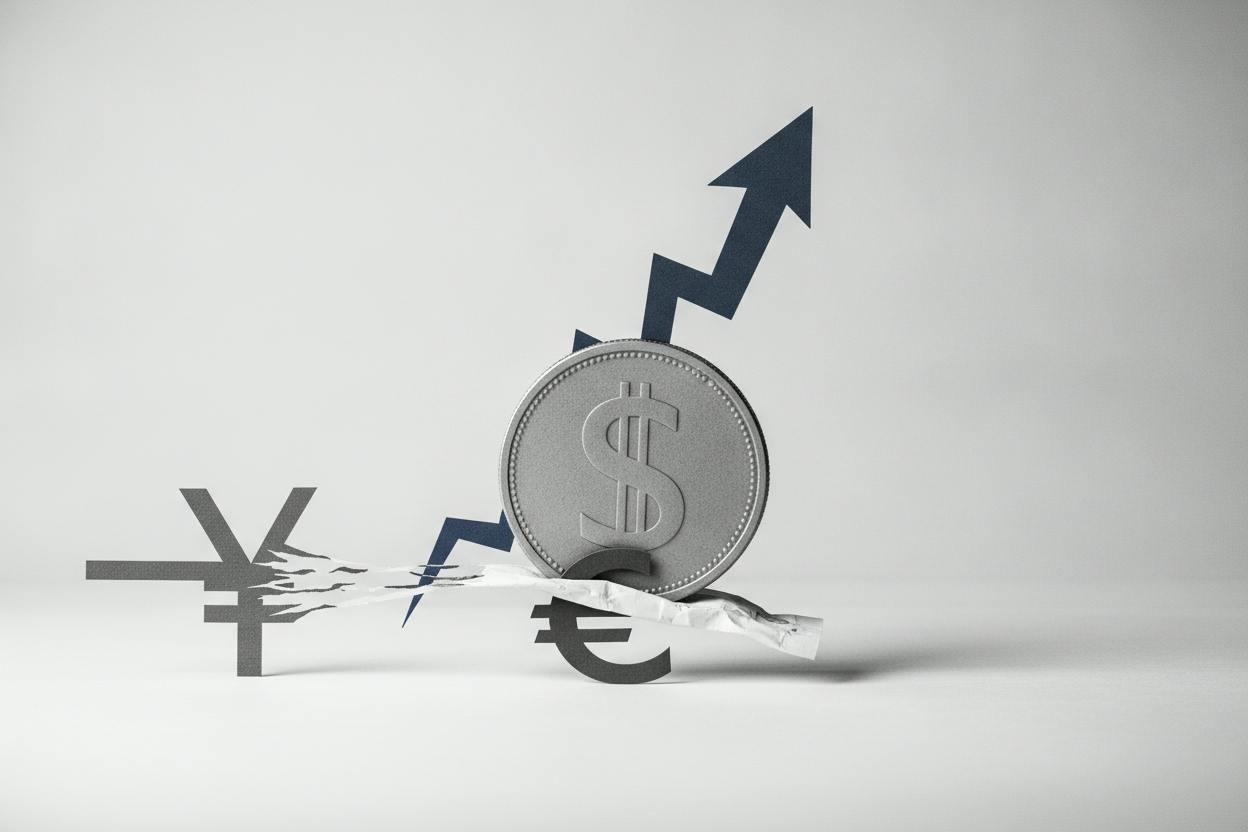
The US dollar climbed to its strongest level in 19 months on Tuesday, as a hotter-than-expected inflation report and hawkish comments from Federal Reserve officials pushed Treasury yields higher and revived market bets on another interest rate hike.
The move was broad-based: the euro slid to its weakest level since April 2025, and the dollar also gained against the Swiss franc. Currency markets have been trading almost entirely on interest rate expectations this week, and the latest data tilted the scales firmly toward the US.
What's driving the dollar higher?
The immediate catalyst was a stronger-than-expected US inflation report, which reinforced comments from Fed officials that price pressures are still sticky. That combination lifted short-dated Treasury yields, which tend to move in tandem with expectations for the central bank's policy rate.
When US yields rise relative to those in other countries, the dollar becomes more attractive to yield-seeking investors. That dynamic has been the dominant force in currency markets for months, and this week it has pushed the greenback to multi-month highs against several major currencies.
The euro's drop to its weakest level since April 2025 highlights how much of the move is about relative interest rates. The European Central Bank has been cutting rates more aggressively than the Fed, and any sign that the Fed might pause or reverse its easing cycle widens the gap further.
What does this mean for investors?
For everyday investors, a stronger dollar has ripple effects beyond currency trading. It can weigh on US multinational companies that earn a large share of revenue overseas, because those foreign profits are worth less when converted back into dollars. It can also make imported goods cheaper for US consumers, which could help offset some inflation pressure.
On the flip side, a stronger dollar tends to put pressure on emerging market currencies and assets. Countries that borrow in dollars face higher debt servicing costs, and commodities priced in dollars, like oil and gold, become more expensive for buyers using other currencies.
The renewed rate hike bets are also a reminder that the Fed's fight against inflation is not over. While many investors had expected the central bank to start cutting rates this year, the latest data suggests that could be delayed or even reversed if price pressures persist.
What to watch next
Traders will be closely watching upcoming US economic data and any further comments from Fed officials for clues about the path of interest rates. A string of strong data could push yields higher and extend the dollar's rally, while a cooler inflation print could quickly reverse the move.
The eurozone is also in focus, as eurozone bond yields have eased while traders digest the implications of the hot US inflation reading. Meanwhile, the dollar's strength is being felt across global markets, with the Australian dollar hitting a seven-month low and the South African rand slipping as the greenback gains ground.
For now, the message from the market is clear: interest rates are the main driver of currency moves, and the US is still in the driver's seat. Investors should keep an eye on inflation data and Fed speeches, as any shift in tone could quickly change the direction of the dollar and, with it, the fortunes of assets around the world.