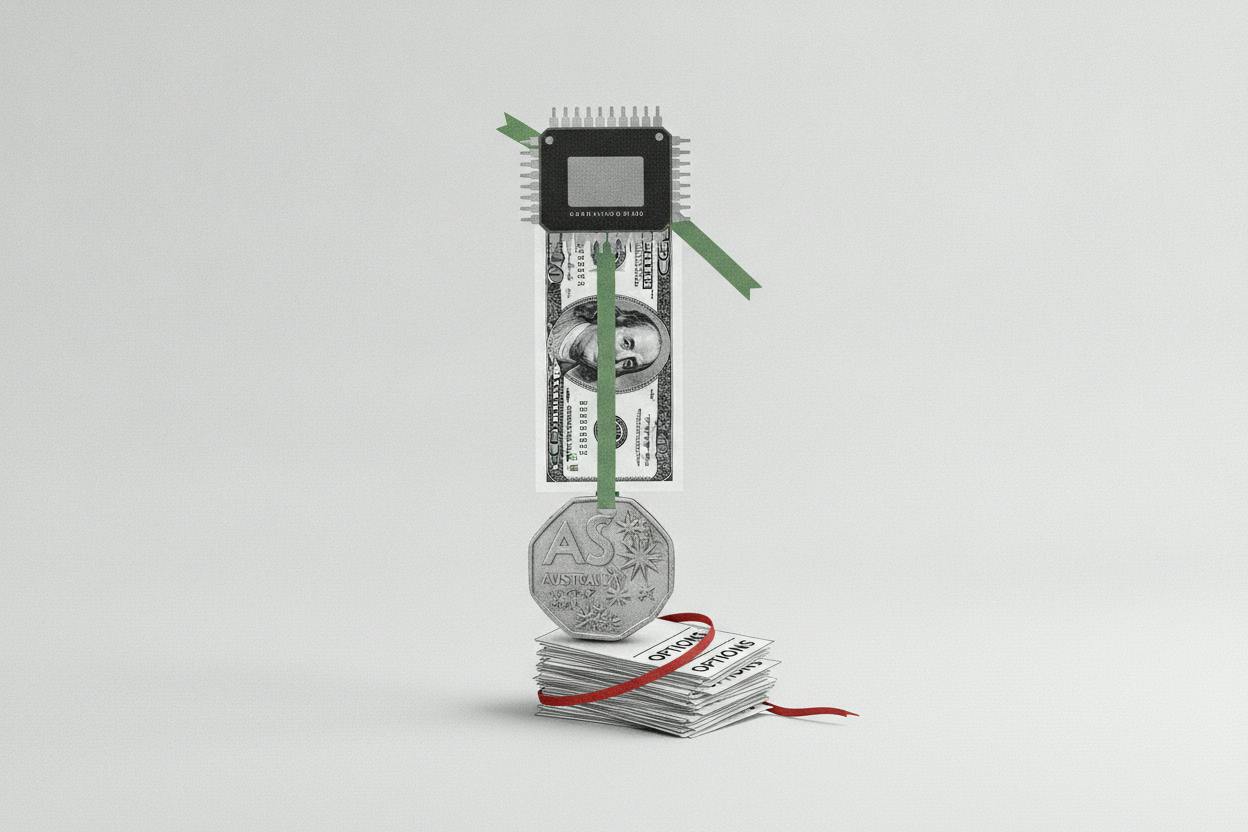
The US dollar remained near a 20-month high on Tuesday, as a rebound in the artificial-intelligence trade—sparked by Nvidia's CEO returning to his role—helped lift sentiment toward US tech stocks and, in turn, the greenback. The dollar index hovered around 104.32, close to its recent peak, while the euro and pound stayed under pressure.
The renewed enthusiasm for AI-related assets also shifted expectations for US monetary policy. According to CME Group's FedWatch tool, traders now fully price in a 25-basis-point rate hike at the Federal Reserve's next meeting, a reversal from earlier weeks when those odds had cooled following a softer patch for technology shares.
Why the dollar is strengthening
A stronger AI trade tends to pull global capital toward large US technology companies, which can boost US stock markets and increase demand for dollars. When investors buy US assets, they typically need to convert other currencies into dollars, supporting the greenback.
At the same time, the prospect of another Fed rate hike makes dollar-denominated assets more attractive, as higher interest rates generally offer better returns to holders of US bonds and cash. That combination—strong tech sentiment and a hawkish Fed—has kept the dollar elevated.
The catalyst for the latest move was Nvidia's CEO returning after an 11-day absence, which reignited the AI narrative that had driven markets for much of the past year. The news sparked a sharp rally in tech and chip ETFs, and lifted stock indices globally, including Australia's ASX and Japan's Nikkei.
The Australian dollar's crowded trade
While the dollar's strength is broad-based, the most lopsided positioning may be in the Australian dollar. The Aussie traded around $0.6627, near an 11-month low, and J.P. Morgan, a major US bank, said bearish AUD/USD bets have built up to "extreme levels in some cases." Australian-dollar "put" options—contracts that profit if the currency falls—have outweighed "calls" for months.
This crowded positioning matters because when many traders are on the same side of a trade, markets can behave unpredictably. If most potential sellers have already sold, a piece of bad news may not push the currency much lower. But any positive surprise—such as a US dollar pullback or better-than-expected Australian data—could trigger a rapid scramble to close short positions, driving the Aussie sharply higher.
Options dealers, who often hedge their exposure, may also need to buy Australian dollars to rebalance their books, amplifying any upward move. That's why AUD/USD can see sharper, faster counter-trend rallies even if the broader trend still favors a firm dollar.
What it means for investors
For everyday investors, the dollar's strength has several implications. A higher dollar can weigh on US multinational companies that earn revenue overseas, as their foreign profits are worth less when converted back to dollars. It can also put pressure on commodities priced in dollars, such as oil and gold, making them more expensive for buyers using other currencies.
For those with international exposure, a strong dollar means foreign investments—like European or Australian stocks—may deliver lower returns when converted back to US dollars. Conversely, US investors holding foreign assets could see a currency drag on their portfolios.
The fully priced Fed hike suggests that markets expect the central bank to act again next month, which could keep short-term interest rates elevated. That affects borrowing costs for consumers and businesses, and can influence everything from mortgage rates to credit card interest.
As always, it's important to remember that currency markets are volatile and positioning can shift quickly. The current crowded trade in the Australian dollar is a reminder that when everyone is on the same side, the risk of a sudden reversal rises. For most investors, a diversified portfolio that accounts for currency fluctuations is a prudent approach.
Looking ahead, traders will be watching for any comments from Fed officials, as well as economic data that could influence the rate decision. The AI trade's durability will also be key—if Nvidia's rally fades, the dollar could lose some support. For now, the greenback remains firmly in control.