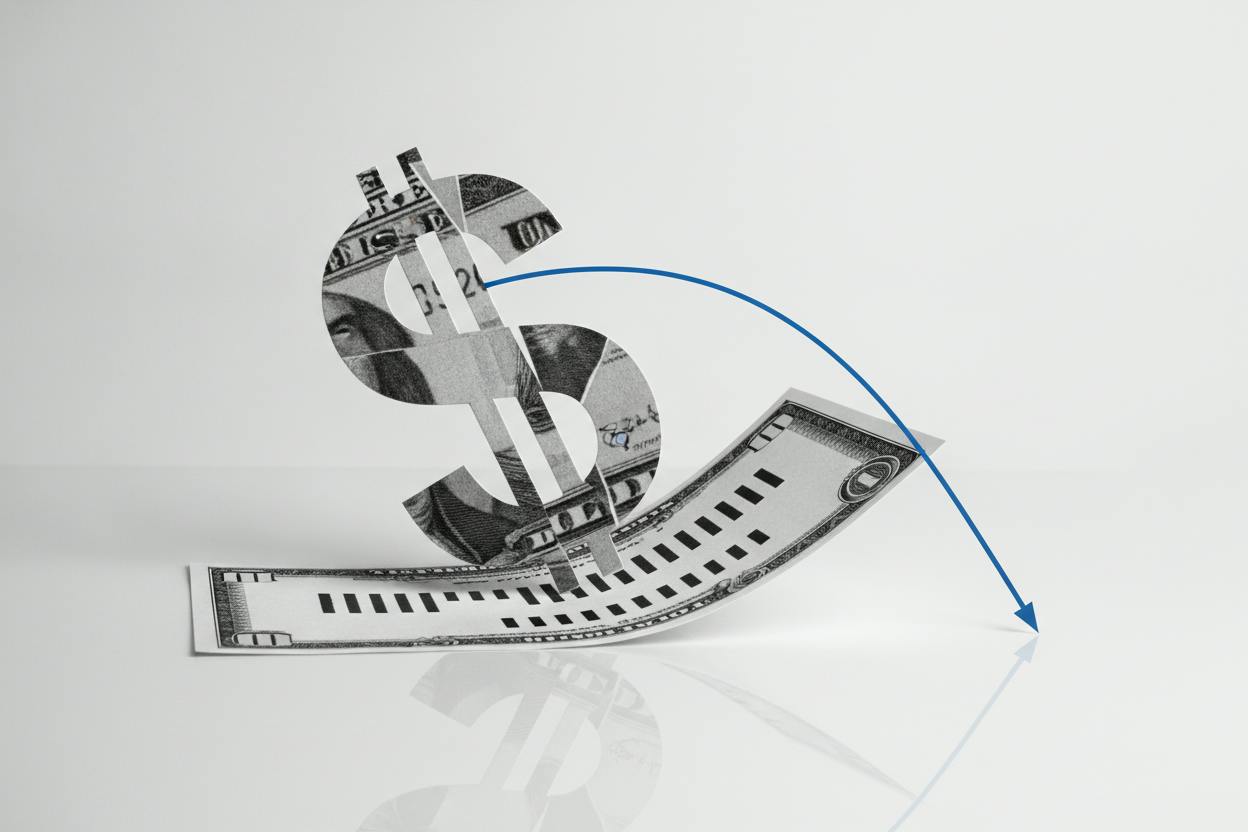
The US dollar stepped back from an 18-month high on Wednesday, as a rally in US government bonds pulled Treasury yields down and gave the euro and pound room to recover. The move came even after a hotter-than-expected inflation report, which initially suggested the Federal Reserve might need to keep interest rates higher for longer.
The action was centered in the bond market. The 10-year Treasury yield fell to 5.0933% and the 30-year yield slid to 5.4462%, both hitting three-week lows. Rodrigo Catril, a strategist at National Australia Bank, said that drop in long-term yields was the main reason “the dollar has gone down in a hurry.”
Why Treasury Yields Matter for the Dollar
For everyday investors, the relationship between Treasury yields and the dollar is a key piece of the global financial puzzle. When US government bond yields rise, foreign investors often shift money into dollar-denominated assets to capture those higher returns, which tends to strengthen the dollar. When yields fall, that attraction fades, and the dollar can weaken.
That is exactly what happened this time. The bond rally—which pushes yields down—reduced the dollar's appeal, allowing the euro and pound to bounce back from recent weakness. The fact that the dollar had been sitting at an 18-month high made the pullback more noticeable.
The inflation report, which came in hotter than expected, would normally be a reason for the dollar to strengthen, as it raises the odds of the Fed keeping rates elevated. But the market's focus shifted to the bond market's reaction, where long-term yields dropped sharply. That suggests investors may be betting that the inflation spike is temporary or that the Fed's next move could still be a cut later this year.
What This Means for Investors
For investors, the dollar's movement has ripple effects across portfolios. A weaker dollar can be a tailwind for international stocks and emerging market assets, as it makes them cheaper for US investors and boosts the value of foreign earnings. It can also support commodity prices, since many commodities are priced in dollars.
On the flip side, a weaker dollar can make imported goods more expensive for US consumers, potentially adding to inflation pressures. That is a delicate balance for the Fed, which is trying to bring inflation down without tipping the economy into recession.
The bond market's reaction also matters for anyone with savings or investments in fixed income. When yields fall, bond prices rise, which can be good news for bondholders. But it also means that new bonds issued now offer lower yields, which could affect income-focused investors.
For those with exposure to currencies, the euro and pound's bounce is a reminder that currency markets can be volatile, and that moves are often driven by shifts in interest rate expectations rather than just economic data.
Looking Ahead
Investors will be watching to see whether the dollar's pullback is a temporary blip or the start of a broader trend. The Fed's next policy meeting and any comments from officials will be closely scrutinized for clues about the path of interest rates. If the Fed signals that it is still leaning toward cutting rates, the dollar could weaken further. If it sounds more hawkish, the dollar could regain its footing.
The bond market's direction will also be key. If yields continue to fall, that could support risk assets like stocks and emerging market currencies. But if inflation proves sticky and yields rebound, the dollar could resume its climb.
For now, the dollar's retreat from its highs offers a bit of relief for other currencies and for investors with international exposure. But as always, the situation remains fluid, and the next inflation report or Fed speech could easily shift the picture.