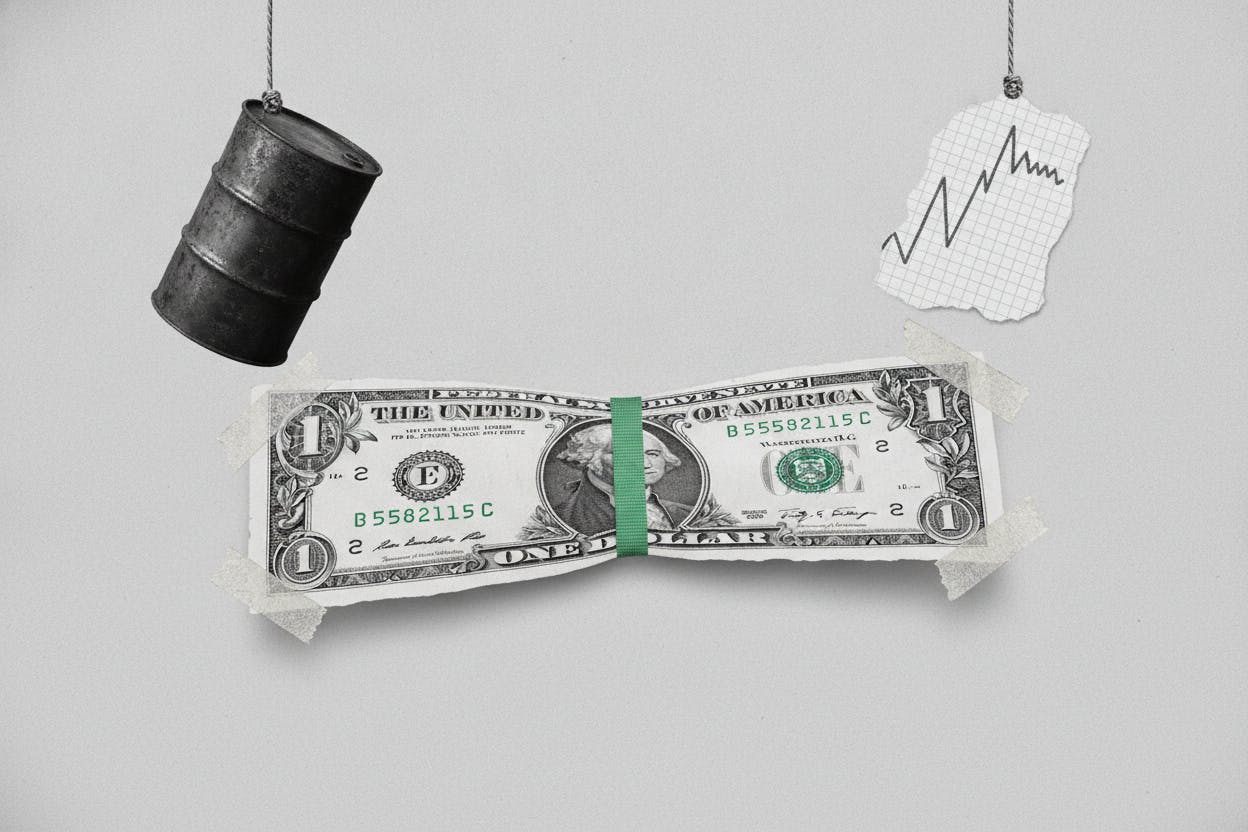
The US dollar held steady on Wednesday as traders weighed two opposing forces: fresh US military strikes on Iran that pushed oil prices to a one-month high, and a cooler-than-expected June inflation report that reduced the odds of a near-term Federal Reserve rate hike.
The greenback barely budged in currency markets, reflecting the tug-of-war between geopolitical risk and shifting monetary policy expectations. Typically, heightened tensions in the Middle East support the dollar as investors seek safe-haven assets, while higher oil prices can also benefit the US by hurting energy-importing economies more. But the inflation data pointed in the opposite direction, dampening the case for higher US interest rates.
What the inflation data showed
US consumer prices fell 0.4% in June compared to May, marking the first monthly decline since April 2020. On an annual basis, inflation slowed to 3.5%, down from 4.0% in May. The softer reading surprised many economists and suggested that the Federal Reserve's aggressive rate hikes are beginning to cool the economy.
The data reduced market expectations for another rate hike at the Fed's next meeting. Higher interest rates tend to strengthen a currency by attracting foreign capital, so a lower probability of a rate hike typically weighs on the dollar. However, the dollar's resilience on Wednesday showed that other factors were also at play.
Geopolitical tensions support oil and the dollar
Fresh US strikes on Iran added to geopolitical uncertainty in the Middle East, a region that accounts for about a third of the world's oil production. Oil prices climbed to their highest level in a month, with Brent crude trading near $86 a barrel. The rise in oil prices can have a mixed impact on the dollar: while it may hurt energy-importing economies like Japan and Europe, the US is a major oil producer and less vulnerable to supply disruptions.
Investors often turn to the dollar during times of geopolitical stress, viewing it as a safe haven. This dynamic helped offset the downward pressure from the inflation data, keeping the dollar in a narrow range against major currencies.
What it means for investors
For everyday investors, the standoff between these two forces creates uncertainty. A softer inflation reading is generally positive for stocks and bonds, as it reduces the likelihood of further rate hikes that could slow the economy. Lower interest rates also make borrowing cheaper for companies and consumers, which can boost corporate profits.
However, rising oil prices and geopolitical tensions are a headwind. Higher energy costs can eat into consumer spending and increase production costs for businesses, potentially squeezing margins. Energy stocks may benefit from higher oil prices, but broader market gains could be limited if tensions escalate further.
Investors should watch for further developments in the Middle East and any signals from the Fed about its next policy move. The central bank has indicated it will remain data-dependent, meaning future inflation and employment reports will be key.
Broader market context
The dollar's steadiness comes amid a mixed picture for global markets. In the bond market, US Treasury yields edged lower as traders scaled back rate hike bets. The 10-year yield, which influences mortgage rates and other borrowing costs, fell slightly. Meanwhile, stock markets were subdued, with investors cautious about the geopolitical outlook.
In currency markets, the euro and yen both traded in tight ranges against the dollar, reflecting the lack of a clear direction. The British pound also held steady as traders awaited UK inflation data later this week.
The oil market remains a key focus. If tensions between the US and Iran escalate further, oil prices could rise more sharply, potentially reigniting inflation fears and complicating the Fed's policy path. Conversely, a de-escalation could see oil prices retreat, removing one source of upward pressure on the dollar.
For now, the dollar appears to be in a holding pattern, with traders waiting for the next catalyst. The combination of geopolitical risk and softer inflation creates an unusual dynamic, and the outcome will depend on which force proves more dominant in the weeks ahead.



