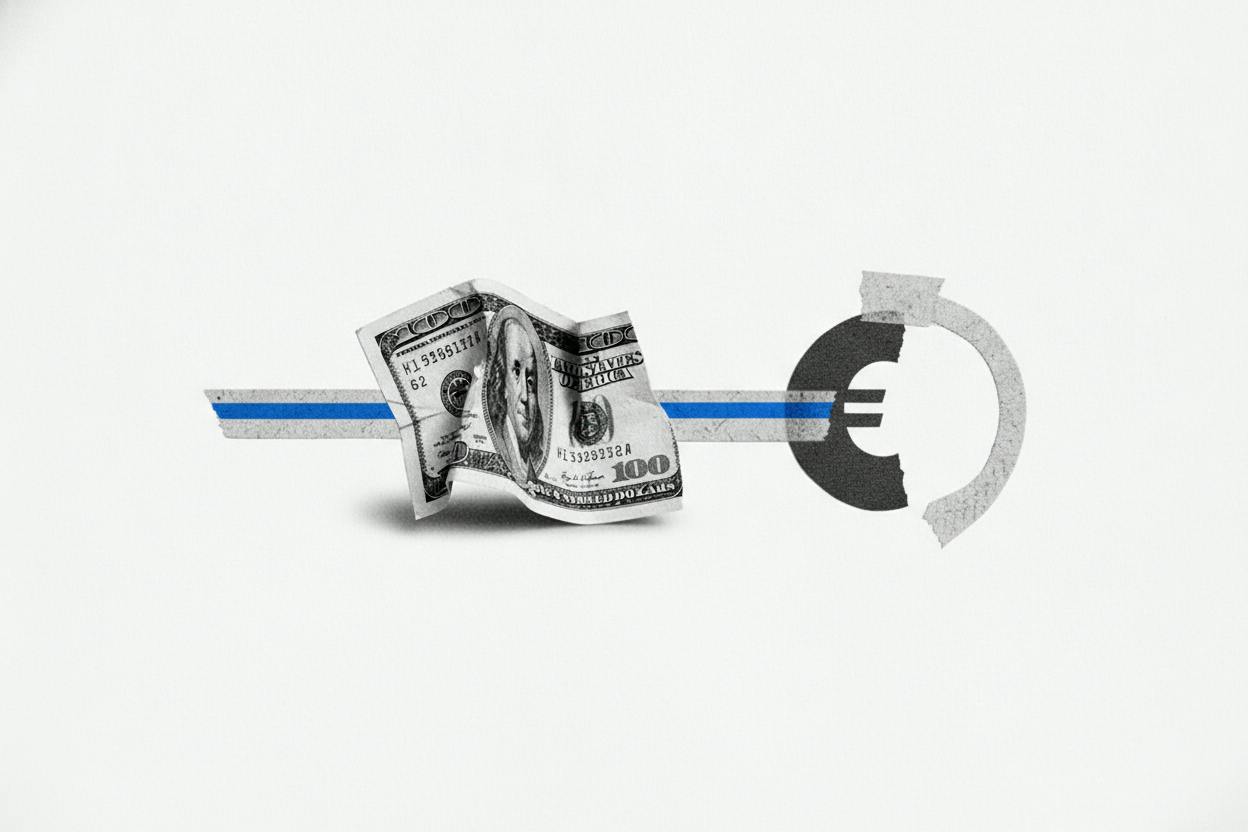
The US dollar steadied on Friday after a brief slide, as currency traders turned their attention to a busy stretch of central-bank meetings next week. The greenback's pause came after a period of strength, with investors still broadly positioned for the dollar to keep climbing.
Sterling, the Canadian dollar (known as the loonie), and the Australian dollar (the Aussie) all held near multi-week highs. The euro, meanwhile, remained pinned around $1.12 against the dollar, a level it has struggled to break away from.
Why the dollar took a breather
The dollar's recent resilience is largely tied to the US economy. It has held up better than many of its peers, which tends to keep US interest rates higher for longer. That makes dollar-denominated assets more attractive and supports the currency.
But this week's resilience in other currencies suggests some traders have trimmed their bullish dollar bets ahead of next week's decisions from the Federal Reserve, the European Central Bank, and the Bank of Japan. When a big event is looming, investors often reduce risk and adjust positions, which can cause a currency to pause or even pull back.
For everyday investors, currency moves matter because they affect the value of international investments, the cost of imported goods, and the returns on foreign assets. A steadier dollar, for example, can be a relief for emerging markets that borrow in dollars, but it can also mean less of a boost for US exporters.
The euro's stalemate
Europe is the clearest example of how positioning can sometimes overpower headlines. The euro has hovered above $1.12 even as Reuters highlighted France's fiscal strains and French 10-year government bond yields climbed to their highest since 2022. Typically, such bad news would weigh on a currency, but the euro has not budged much.
Brent Donnelly at Spectra Markets, a currency research firm, described the situation as a "stalemate" in which bad news is met by already-heavy selling. When a narrative becomes consensus, fresh negativity often moves prices less, because it's already reflected in who owns what.
In other words, many traders have already sold the euro as a way to bet on US outperformance. This makes the euro a popular "proxy short" for expressing dollar bullishness. Because so many players are already positioned for euro weakness, incremental bad news—like worries about French public finances—gets absorbed without much additional selling.
What to watch next week
The risk shifts to next week's central-bank outcomes. If the Fed, ECB, and Bank of Japan mostly deliver what markets already expect—firm language without a new hawkish surprise—some traders may unwind crowded shorts. That short-covering can push EUR/USD up faster than the underlying Europe story would suggest, making the post-decision reaction more about positioning than policy.
For investors, this means the euro's fate may hinge less on economic data and more on how central banks phrase their statements. A surprise hawkish tilt from the ECB, for instance, could spark a sharp euro rally. Conversely, a dovish Fed could weaken the dollar.
Currency volatility can also spill into other markets. For example, a stronger euro could pressure European stocks, while a weaker dollar often supports commodities like gold and oil. Investors with international exposure should keep an eye on these cross-currents.
As always, it's important to remember that currency markets are complex and driven by many factors. While positioning can explain short-term moves, longer-term trends are shaped by interest rate differentials, economic growth, and geopolitical events.
For now, the dollar's breather looks like a pause before a potentially pivotal week. Whether the greenback resumes its climb or gives way to a broader correction will depend on what central bankers say—and how traders react.