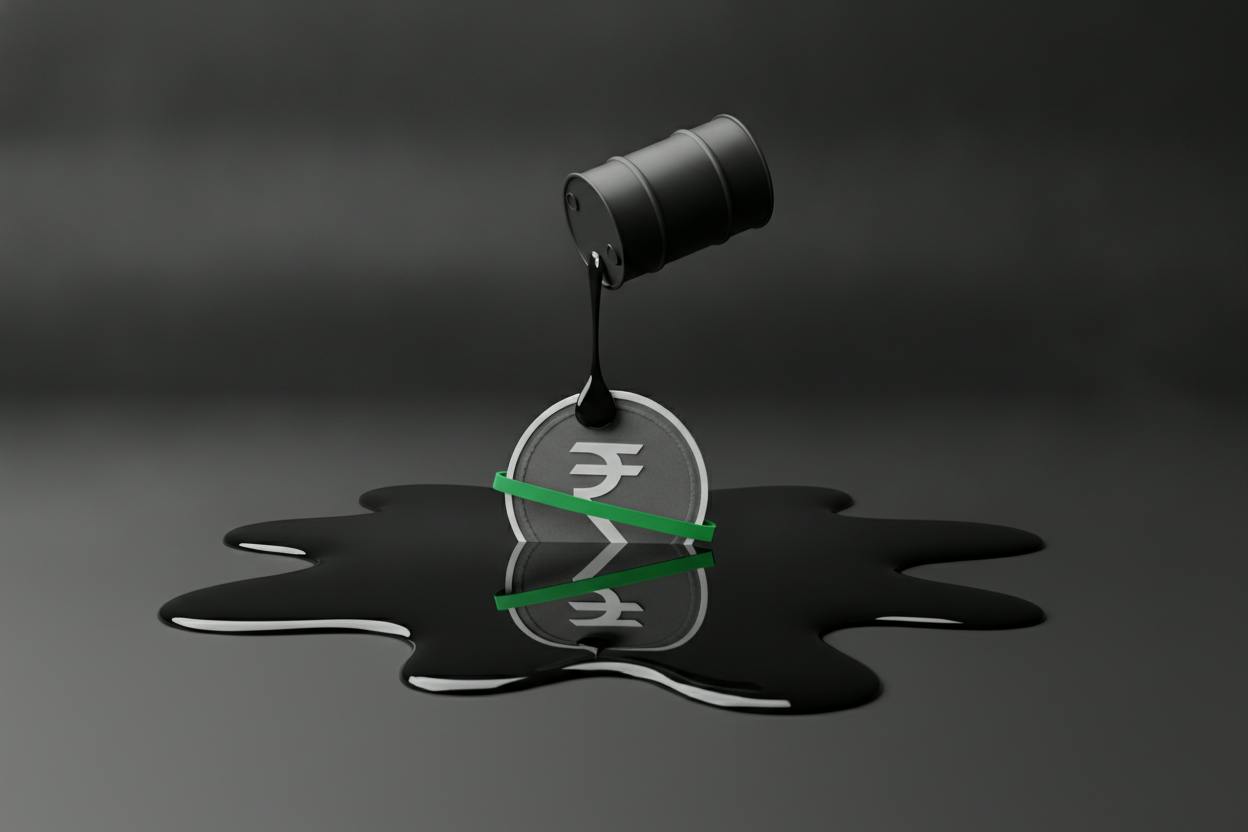
Indian equities are poised for a softer start on Thursday, with early signals pointing to a lower open after Brent crude oil climbed back above $110 a barrel. The move follows fresh Houthi attacks linked to Saudi Arabia, adding fresh uncertainty for energy-importing economies like India.
Reuters reported that GIFT Nifty futures, a key indicator of how the Nifty 50 index may open, pointed lower against Wednesday's close. Traders were digesting another jump in energy costs, which have become a persistent headache for markets worldwide.
Why oil matters so much for India
India imports the vast majority of the oil it consumes, so every dollar rise in crude prices directly inflates the country's import bill. When the cost of imports rises faster than exports, the current-account deficit—the gap between money flowing into the country and money flowing out—tends to widen. That dynamic often puts pressure on the rupee, as more dollars are needed to pay for the same amount of oil.
A weaker rupee can then feed into domestic inflation, because imported goods—from fuel to machinery to raw materials—become more expensive in local currency terms. This is a particular concern for the Reserve Bank of India (RBI), which has been trying to bring price pressures under control.
Minutes from the RBI's recent rate-setting meeting showed that members still see a case for further interest rate hikes to contain prices. But they are also wary of tightening too much, which could dent economic growth. This balancing act becomes trickier when oil prices spike, as they add to inflation pressures while also potentially slowing demand.
What the oil spike means for markets
When Brent rose 1.3% to $110.3 a barrel, the first market stress point wasn't necessarily energy shares, but the currency. Reuters cited the rupee trading around 94.4600 per US dollar, a level traders watch closely because of its link to oil-driven import costs.
If the rupee weakens further, an oil spike can morph into broader "imported inflation." That can keep interest-rate expectations firm even if the growth outlook cools. For Indian equities, this often creates a tug-of-war: higher rates can weigh on valuations, while a softer currency can also steer foreign flows and set the tone for the Nifty 50's next open, as reflected by GIFT Nifty.
For everyday investors, the key takeaway is that oil prices are not just a commodity story. They ripple through the economy, affecting everything from the price of petrol at the pump to the returns on your equity portfolio. When oil stays elevated, it can keep inflation sticky and limit how much room the central bank has to support growth.
What to watch next
Investors will be watching whether oil prices can hold above $110 or if they retreat. Any further escalation in the Middle East could push prices higher, while a de-escalation could provide some relief. Also on the radar is the RBI's next policy move, as well as any signs of how the rupee is holding up against the dollar.
For those with exposure to Indian stocks, the immediate focus is likely to be on sectors that are sensitive to oil prices, such as airlines, paints, and other industries with high fuel or raw material costs. Conversely, energy producers and oil marketing companies may see some benefit from higher crude prices.
As always, it's important to remember that markets are volatile and short-term moves can be driven by sentiment as much as fundamentals. Keeping a long-term perspective and diversifying across sectors and asset classes remains a prudent approach for most investors.
For more on how oil prices are affecting global markets, you can read about oil prices slipping despite tanker attacks and energy stocks slipping premarket. Also, check out how tech and chip ETFs led US stocks higher as energy slipped, and the latest on New Zealand's inflation cooling.