Indian equities extended their slide on Thursday morning, with the benchmark indices opening lower as global oil prices climbed past $110 a barrel. The trigger: fresh attacks by Houthi militants in the Red Sea region, which traders read as a sign that supply disruptions in the Middle East could persist. By 9:15 a.m. IST, the Nifty 50 was down 0.54% and the Sensex had fallen 0.5%, with most sectors trading in the red.
The pain was broader than the headline indices suggested. Both the small-cap and mid-cap indexes were off 1.3%, a sharper drop that reflects how higher oil prices and the prospect of tighter monetary policy tend to hit smaller companies hardest.
Why oil matters so much for India
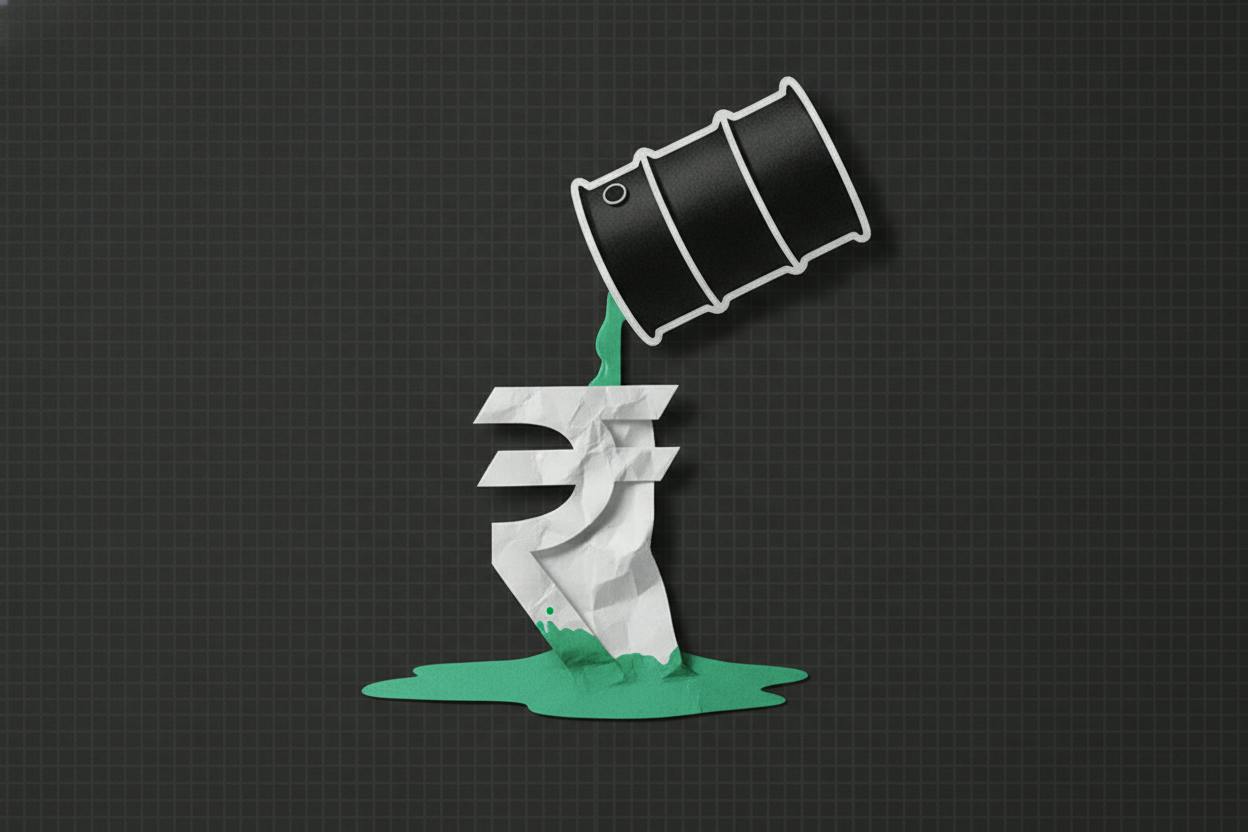
India is one of the world's largest importers of crude oil, buying the vast majority of the energy it consumes from abroad. That makes the country unusually sensitive to swings in global oil prices. When Brent crude rises, the cost of transportation, manufacturing, and many consumer goods tends to follow, feeding what economists call "imported inflation."
On Thursday, Brent futures rose 1.6% to $110.6 a barrel after the latest Houthi attacks. The attacks, which have targeted shipping in the Red Sea, have raised concerns about the security of key trade routes. While the immediate impact on physical supply may be limited, the market is pricing in a higher risk premium for any disruption that could delay deliveries or force ships to take longer, costlier routes.
For India, the knock-on effects are twofold. First, a higher import bill can widen the country's trade deficit—the gap between what it buys from abroad and what it sells. Second, costlier energy can keep domestic prices sticky, making it harder for inflation to cool on its own.
RBI minutes point to more rate hikes
Adding to the pressure, minutes from the Reserve Bank of India's latest policy meeting showed that rate-setters still see room to raise interest rates further to contain inflation. Even as they acknowledged risks to economic growth, the tone suggested that the central bank is not ready to pause its tightening cycle.
That combination—rising import costs and a central bank that may keep borrowing costs higher for longer—creates an uncomfortable backdrop for investors. When the RBI signals it could hike again, markets typically start demanding higher yields on Indian government bonds. That, in turn, tightens financial conditions across the economy, making loans more expensive for businesses and consumers.
What it means for investors
For everyday investors, the key takeaway is that higher oil prices and the prospect of more rate hikes tend to weigh most heavily on smaller and mid-sized companies. These firms often rely more on fresh financing to grow, and their valuations are more sensitive to expectations of future profits. When borrowing costs rise and the economic outlook becomes cloudier, investors often rotate out of these riskier assets first.
That dynamic helps explain why the small-cap and mid-cap indexes fell by 1.3% on Thursday morning, even as the headline benchmarks dropped by less. The Nifty 50 and Sensex are dominated by large, established companies that may have more pricing power and better access to capital, making them relatively more resilient in times of stress.
For those with diversified portfolios, the current environment is a reminder that oil prices and central bank policy are closely watched by markets for good reason. A sustained rise in crude could keep inflation elevated, prompting the RBI to act more aggressively. That would likely keep bond yields up and put continued pressure on rate-sensitive sectors like real estate, autos, and small-cap stocks.
At the same time, investors should note that the RBI's minutes also flagged risks to economic growth. That suggests the central bank is walking a tightrope, trying to tame inflation without choking off expansion. If growth concerns start to dominate, the pace of future hikes could slow—something markets would likely welcome.
For now, the immediate focus remains on oil. As long as Brent stays above $110, the risk of further market volatility is high. Traders will be watching for any signs of de-escalation in the Middle East, as well as any new data on Indian inflation and industrial output that could influence the RBI's next move.
In the meantime, investors may want to keep an eye on how the rupee behaves. A weaker currency would make imports even more expensive, adding to inflationary pressures. Conversely, if oil prices retreat and the RBI signals a pause, Indian equities could find some relief.
As always, the best approach for most investors is to stay diversified and avoid making impulsive decisions based on short-term market moves. The current dip is a reminder that global events—like conflicts in the Middle East—can have outsized effects on markets far from the headlines.