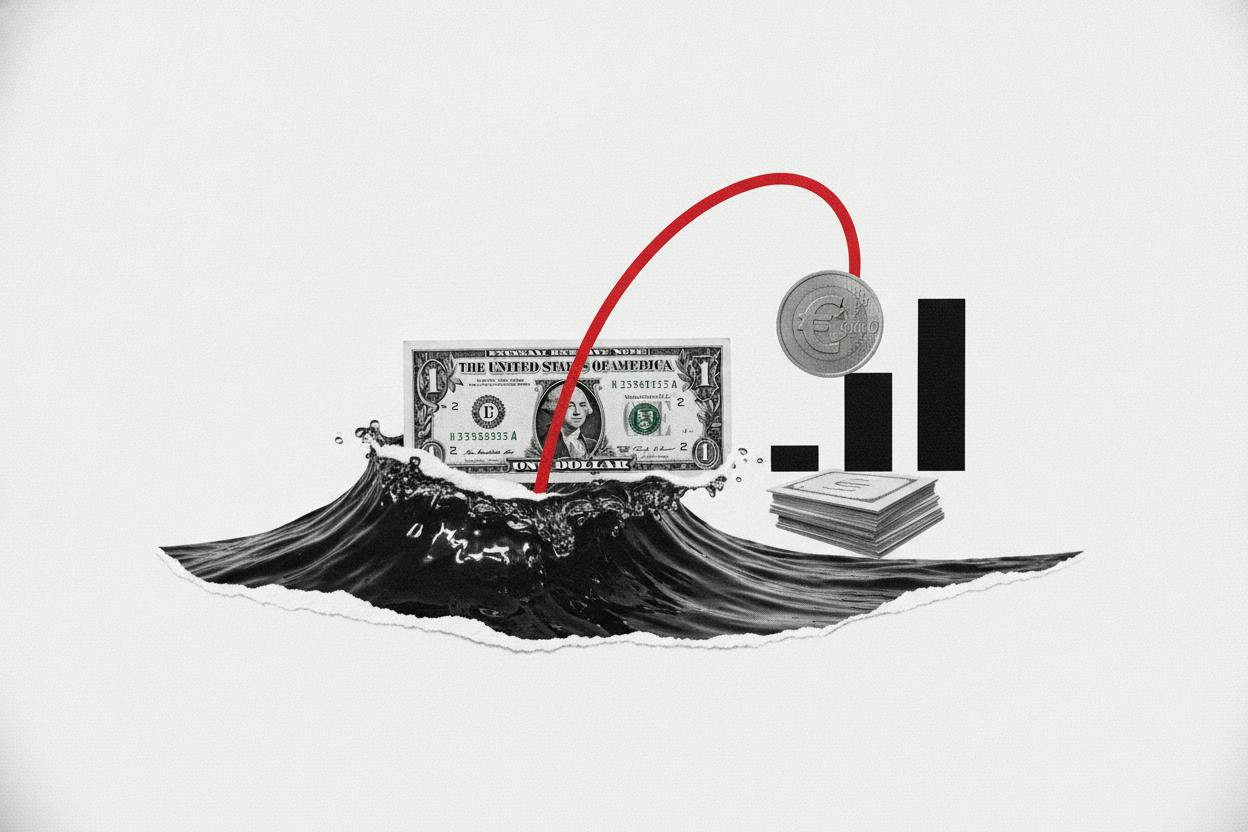
The US dollar held its ground on Tuesday as investors continued to seek safety amid rising Middle East tensions, while the euro came under fresh pressure from concerns about France's fiscal health. The moves highlight how geopolitical risk and government debt worries are shaping currency markets this week.
Safe-haven demand keeps dollar supported
In times of uncertainty, many investors park their money in the US dollar. That's because US financial markets are among the deepest and most liquid in the world, making it easier to buy and sell assets quickly even when volatility spikes. This week, the dollar has been underpinned by that classic safe-haven bid, as conflict in the Middle East keeps traders on edge.
Oil prices have also played a role. When crude jumps on fears of supply disruptions, the dollar often benefits because the US is far more energy self-sufficient than many other major economies. That relative insulation can make the greenback look more attractive when energy costs surge elsewhere.
However, the dollar's strength has limits. When investors rush into US government bonds as well, Treasury yields tend to fall. Lower yields reduce the income advantage of holding dollars, which can temper the currency's gains. That dynamic has kept the dollar's advance in check even as geopolitical risks simmer.
Euro slips on France's debt worries
Across the Atlantic, the euro weakened on renewed concerns about France's debt outlook. France has one of the largest government debt piles in the eurozone, and investors are watching closely as the country navigates its budget and borrowing costs. Any sign that France's fiscal position is deteriorating can weigh on the euro, since it raises questions about the stability of the broader eurozone economy.
These worries are not new. France has struggled to bring its deficit under control, and political uncertainty has at times made it harder for the government to push through reforms. When such concerns flare up, the euro tends to lose ground against the dollar, as investors shift money toward safer assets.
What it means for investors
For everyday investors, currency moves matter even if you don't trade forex directly. A stronger dollar can affect the returns on international investments, the cost of imported goods, and the earnings of US companies that do business abroad. A weaker euro, meanwhile, can impact European stocks and bonds held in global portfolios.
If you own US-based funds or stocks, a firmer dollar can be a mild headwind for multinational companies that earn a large share of revenue overseas, because those foreign earnings are worth less when converted back into dollars. On the other hand, a stronger dollar can make US assets more attractive to foreign investors, which can support US markets.
For those with exposure to European assets, the euro's slide could reduce the value of those holdings when translated into dollars. But it could also make European exports cheaper, which might help some European companies compete globally.
Looking ahead
Traders will be watching several factors in the coming days. Oil prices remain a key barometer for geopolitical risk, and any escalation in the Middle East could push the dollar higher and the euro lower. At the same time, any fresh data on France's budget or borrowing costs could reignite or ease concerns about its debt.
Investors are also keeping an eye on central bank policy. The Federal Reserve and the European Central Bank are both navigating inflation and growth, and their interest rate decisions can have a big impact on currency values. As always, it's wise to stay diversified and avoid making sudden moves based on short-term currency swings.
For now, the dollar's safe-haven appeal remains intact, but the tug-of-war between geopolitical risk and falling yields means its path is far from certain. Similarly, the euro's fate is tied to France's fiscal story, which is unlikely to resolve quickly.
As recent dollar movements have shown, currency markets can shift quickly as new information emerges. Staying informed and keeping a long-term perspective is often the best approach for most investors.