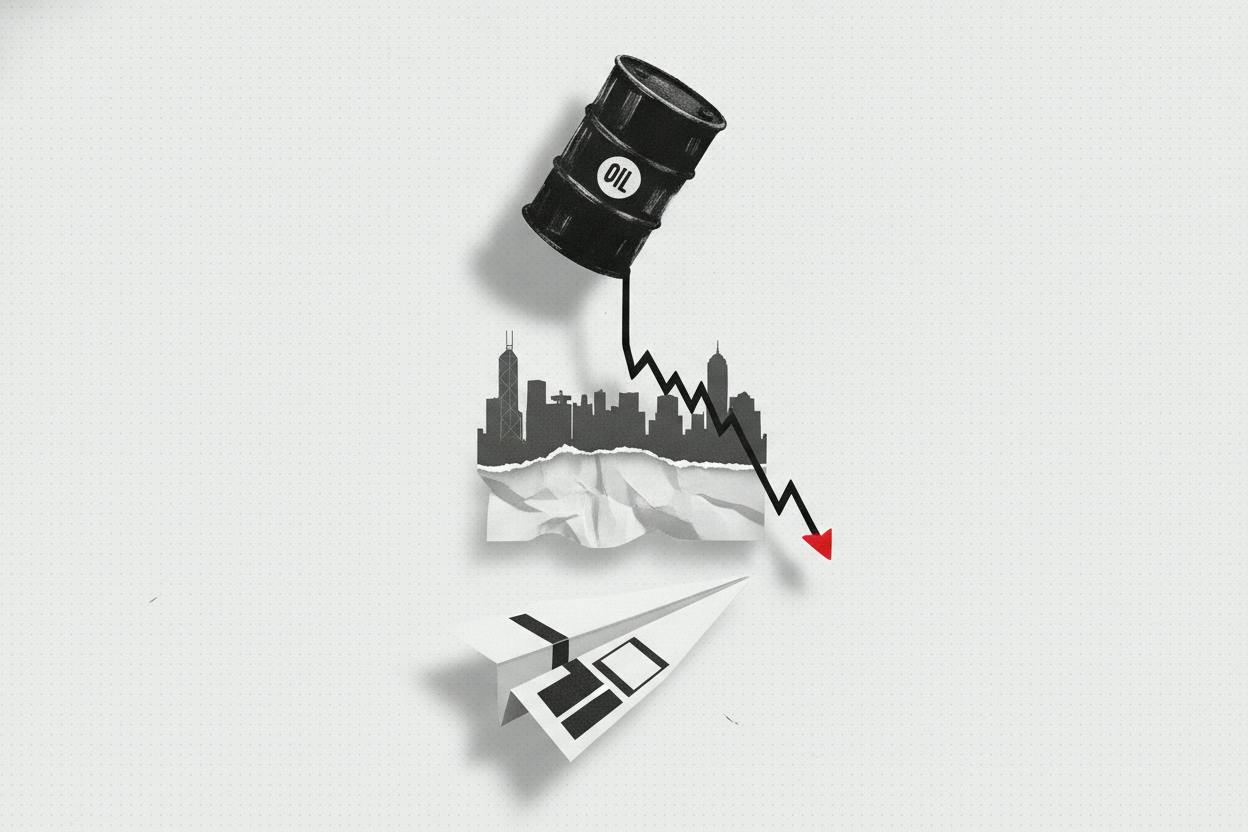
Hong Kong stocks slipped on Wednesday, with the Hang Seng index closing 0.9% lower as two worries collided: rising oil prices that threaten to keep inflation sticky, and growing doubts about whether the massive spending on artificial intelligence will actually translate into profits.
The move came as Brent crude climbed 1.1% to $110 a barrel, its highest level in months, after tensions in the Gulf revived fears of supply disruptions. Higher energy costs can ripple through the economy, pushing up prices for everything from transport to manufacturing. When inflation looks persistent, central banks are less likely to cut interest rates quickly, which means borrowing costs stay elevated for longer.
That backdrop makes investors more cautious about paying up for future growth, especially in sectors like technology where valuations often depend on expectations of strong earnings down the road. The AI trade, in particular, has been a major driver of global markets over the past year, but some shareholders are now questioning whether today's huge build-out of data centers and computing power will lead to steady profits or just higher capital spending.
Related concerns have already hit other markets. Data-center stocks have faced sharp selloffs when investors worry about the costs and infrastructure risks of AI expansion. The broader caution also echoes recent moves in Chinese and Hong Kong equities, where sentiment has been fragile.
Oil's inflation ripple
The rise in oil prices is a key factor behind Wednesday's risk-off mood. Brent crude at $110 a barrel is a level that historically has made policymakers nervous. Energy is a major input in almost every sector, so sustained high prices can push up headline inflation and force central banks to keep interest rates higher than they otherwise would.
For investors, that means the era of cheap money and easy valuations may be over for now. When rates are high, future earnings are worth less in today's terms, and companies with heavy debt or big capital spending plans face tougher scrutiny. This is especially true for growth stocks, which often trade on promises of future profits rather than current cash flow.
The Gulf stocks have already slipped as US-Iran talks stalled and oil topped $110, showing how geopolitical risk is feeding directly into markets. Meanwhile, the dollar has steadied on war risk, while the euro slipped on France's debt worries, adding to the global uncertainty.
Vobile's convertible bond plan
The risk-off tone showed up in individual stocks too. Vobile, a Hong Kong-listed video software company, fell 5% after it said it plans to raise HK$530 million by issuing convertible bonds due in 2027.
Convertible bonds are a hybrid instrument: they start as loans but can later be swapped into shares. For growth companies, they can be an attractive way to raise money without immediately diluting existing shareholders. But in a high-rate environment, investors demand more protection, either through a higher interest rate on the bond or a conversion price that's more favorable to them. That can increase the odds of future dilution for existing shareholders.
The announcement also often pressures the stock right away, as traders hedge the deal by selling shares. Vobile's 5% drop is a reminder that in a cautious market, equity-linked fundraising can become both harder to price and more painful for smaller Hong Kong growth names that rely on it.
What it means for investors
For everyday investors, Wednesday's moves highlight two key risks. First, oil at $110 can push up inflation and keep interest rates higher, which affects everything from mortgage rates to the value of growth stocks. Second, the AI spending boom is not guaranteed to deliver profits, and any sign of doubt can trigger sharp selloffs in tech-heavy markets.
That doesn't mean the AI story is over, but it does mean investors should be prepared for more volatility. Companies that are spending heavily on AI infrastructure may see their stocks swing as earnings reports and guidance come in. Similarly, oil prices could stay elevated if geopolitical tensions persist, keeping inflation pressures alive.
For those with diversified portfolios, the key takeaway is to stay balanced. While growth stocks may struggle in a high-rate, high-oil environment, other sectors like energy or value stocks might benefit. As always, it's important to focus on long-term goals rather than reacting to daily market moves.
Wednesday's slip in Hong Kong is a snapshot of a market caught between two powerful forces: the cost of energy and the cost of ambition. How those forces resolve will likely shape investor sentiment in the weeks ahead.