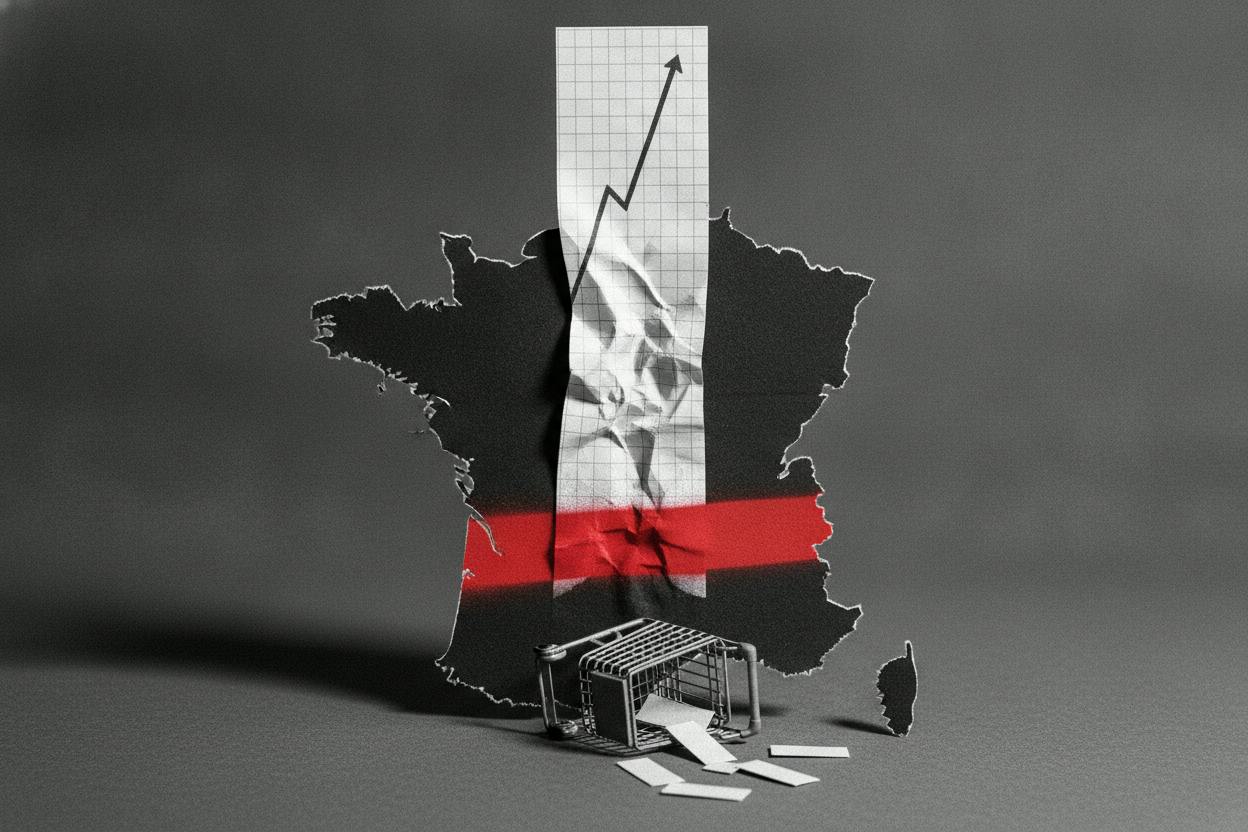
Europe's stock market rebound kept grinding higher on Tuesday, but the mood was far from comfortable. The STOXX Europe 600 index edged up 0.24%, yet investors remained on edge after several nights of riots in France, the eurozone's second-largest economy. The tension was visible in a split-screen market: internationally exposed companies like eyewear maker EssilorLuxottica rose on strong results, while domestically focused businesses felt the disruption more directly.
The clearest casualty was Carrefour, one of Europe's biggest grocers. The company cut its annual earnings forecast, citing curfews, looting, and higher operating costs. Its shares tumbled 13.3% — a stark reminder that even in a period of generally improving corporate earnings, local shocks can quickly overshadow the broader trend.
Why Carrefour's drop matters
Supermarkets operate on notoriously thin profit margins. A small dip in sales can have an outsized effect on earnings because many costs — rent, staffing, utilities — are fixed in the short term. When curfews shorten opening hours or keep shoppers at home, revenue falls, but those fixed costs don't budge. Add in extra spending on security, repairs, or lost inventory, and operating profit can shrink almost one-for-one with the revenue decline.
That's why a France-specific disruption can hit consumer names with lots of domestic stores much harder than it hits companies that earn a larger share of revenue abroad. For example, EssilorLuxottica, which sells eyewear globally, can offset weakness in one region with strength elsewhere. Carrefour, with its heavy reliance on French hypermarkets and supermarkets, has less room to maneuver.
The 13.3% share price drop is a vivid illustration of how fast a local event can translate into a big market move. It also underscores a key lesson for everyday investors: when a company warns on profits, the market often reacts swiftly and severely, especially in low-margin sectors like retail.
The broader picture: earnings vs. politics
Despite the unrest, the STOXX 600's modest gain suggests that earnings season is still providing a tailwind. Many European companies have reported better-than-expected results, and global markets have been buoyed by strong corporate performance. But the France situation is a reminder that politics and interest rate expectations can quickly steal the spotlight when they threaten day-to-day trading and costs.
Investors are also keeping an eye on bond markets. The euro slipped on concerns about France's debt, and France's debt worries have added to the jittery tone. Meanwhile, global stocks have risen on strong earnings, but bonds remain nervous, reflecting uncertainty about central bank policy and inflation.
For the broader European market, the key question is whether the unrest will spread or fade. If it remains contained, the earnings bounce could continue. But if disruptions persist, more companies with domestic exposure may follow Carrefour's lead and trim their forecasts.
What it means for investors
For everyday investors, the Carrefour episode offers a few takeaways. First, diversification matters. A portfolio that holds only domestic-focused stocks is more vulnerable to local shocks. Companies with international revenue streams can often cushion the blow.
Second, watch for profit warnings. When a company cuts its outlook, it's often a sign that underlying conditions are worse than expected. The market's reaction can be swift and severe, as Carrefour's 13.3% drop shows.
Finally, keep an eye on the macro backdrop. The unrest in France is a reminder that political events can have real economic consequences, from disrupted supply chains to higher costs. While the STOXX 600's gain suggests investors are not panicking, the caution is palpable.
As the situation develops, markets will be watching for any signs that the unrest is spreading to other sectors or countries. For now, the earnings bounce remains intact, but it's running into a wall of uncertainty.