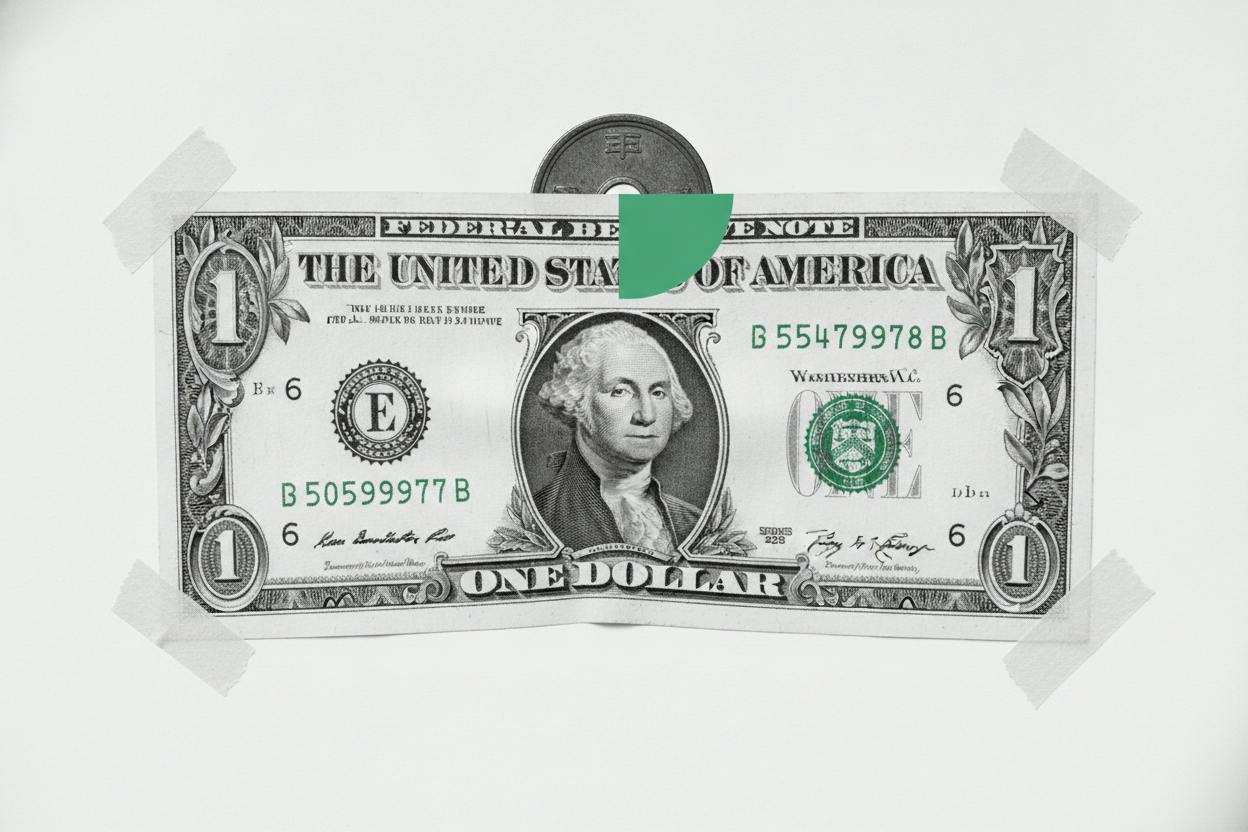
The US dollar is holding near recent highs as currency markets brace for a widely expected Federal Reserve interest rate hike. Traders are pricing in a quarter-point move that would lift the Fed's policy rate to a range of 3.75% to 4%, a level not seen in years. Meanwhile, Japan's yen slipped to about 155.49 per dollar, reflecting the ongoing pressure on the Japanese currency as global interest rate differentials remain wide.
Why the dollar is firm
The dollar's strength is not just about the Fed. Currency markets have been relatively calm even as government bond yields climbed, because major countries' borrowing costs have largely moved together. That matters because foreign exchange often responds to the gap between countries' interest rates, not the absolute level. When central banks around the world are tightening in tandem, those gaps don't swing as much, which keeps currencies from making dramatic moves.
Still, the dollar has been supported by the relative resilience of the US economy and the Fed's commitment to fighting inflation. Investors are watching the central bank's statement and press conference for clues about the pace of future hikes. A quarter-point increase is already priced in, so the market's focus will be on whether policymakers signal a pause or a continued path of tightening.
Yen under pressure
The yen's slide to 155.49 per dollar is a reminder of how wide the gap remains between US and Japanese interest rates. The Bank of Japan has kept its policy ultra-loose, even as other major central banks have raised rates aggressively. That divergence makes the yen less attractive to investors seeking yield, and it has been a persistent drag on the currency.
For Japanese consumers and businesses, a weaker yen means higher import costs, which can feed into inflation. For global markets, a rapidly falling yen can sometimes trigger intervention by Japanese authorities, though they have so far refrained from stepping in at these levels. Traders will be watching for any verbal intervention or actual action if the yen continues to weaken.
What it means for investors
For everyday investors, the dollar's strength and the Fed's rate decision have ripple effects across portfolios. A higher US policy rate tends to make dollar-denominated assets like Treasuries more attractive, which can draw capital away from other markets. It also affects emerging market currencies and stocks, as we've seen in recent moves in the African markets and Aussie and kiwi dollars.
For those with international exposure, a strong dollar can reduce the value of foreign investments when converted back to US dollars. Conversely, US multinational companies that earn revenue abroad may see a headwind to earnings. The shift in foreign investor flows from Treasuries to stocks is another factor that could reshape dollar dynamics in the coming months.
Commodity prices are also sensitive to the dollar. A firmer dollar often puts downward pressure on oil and metals, as we've seen with copper hitting a two-month low. That can affect inflation expectations and the earnings of commodity producers.
Looking ahead
The immediate catalyst is the Fed decision, but the market's reaction will depend on the tone of the statement and the updated economic projections. If the Fed signals that it is nearing the end of its hiking cycle, the dollar could give back some gains. If it sounds more hawkish, the dollar may extend its rally.
Beyond the Fed, traders will also be watching the Bank of Japan's policy meeting, which follows shortly after. Any hint of a shift in Japan's ultra-loose stance could trigger a sharp move in the yen. For now, the dollar remains in the driver's seat, and the yen's slide is a reminder of how central bank policy differences continue to shape currency markets.
For investors, the key takeaway is to stay diversified and be aware of how currency movements can affect returns. While the Fed's decision is important, it's just one piece of a complex global puzzle.