Domino's Pizza is increasingly turning to third-party delivery apps to reach more customers, and UBS analysts believe that strategy could help the chain post modest US sales growth this quarter. In a note to clients, UBS forecast that Domino's US same-store sales—a key metric that tracks revenue at locations open at least a year—would rise 0.5% in the third quarter, topping the 0.2% consensus among Wall Street analysts.
The expected uptick comes from a combination of promotional activity, new menu items, and continued expansion through delivery partners like Uber Eats and DoorDash. UBS also argues that Domino's can pull more orders into slower periods of the day, such as lunch, with products like its personal pizza. That would help fill capacity during hours when stores typically see less traffic.
Why delivery apps matter for Domino's
Domino's has historically relied on its own delivery network, which gives it control over the customer experience and data. But in recent years, the company has partnered with Uber Eats and DoorDash to broaden its reach, especially among customers who prefer to order through those platforms. The move is part of a broader industry trend: many restaurant chains are embracing third-party delivery to capture demand they might otherwise miss.
For Domino's, the appeal is clear. Third-party apps can introduce the brand to new customers who might not have ordered directly. They also allow the chain to tap into the apps' large user bases, potentially driving incremental orders during off-peak hours. That could help Domino's spread its fixed costs—like rent and baseline staffing—across more sales, which would boost profitability even if each order carries a lower margin.
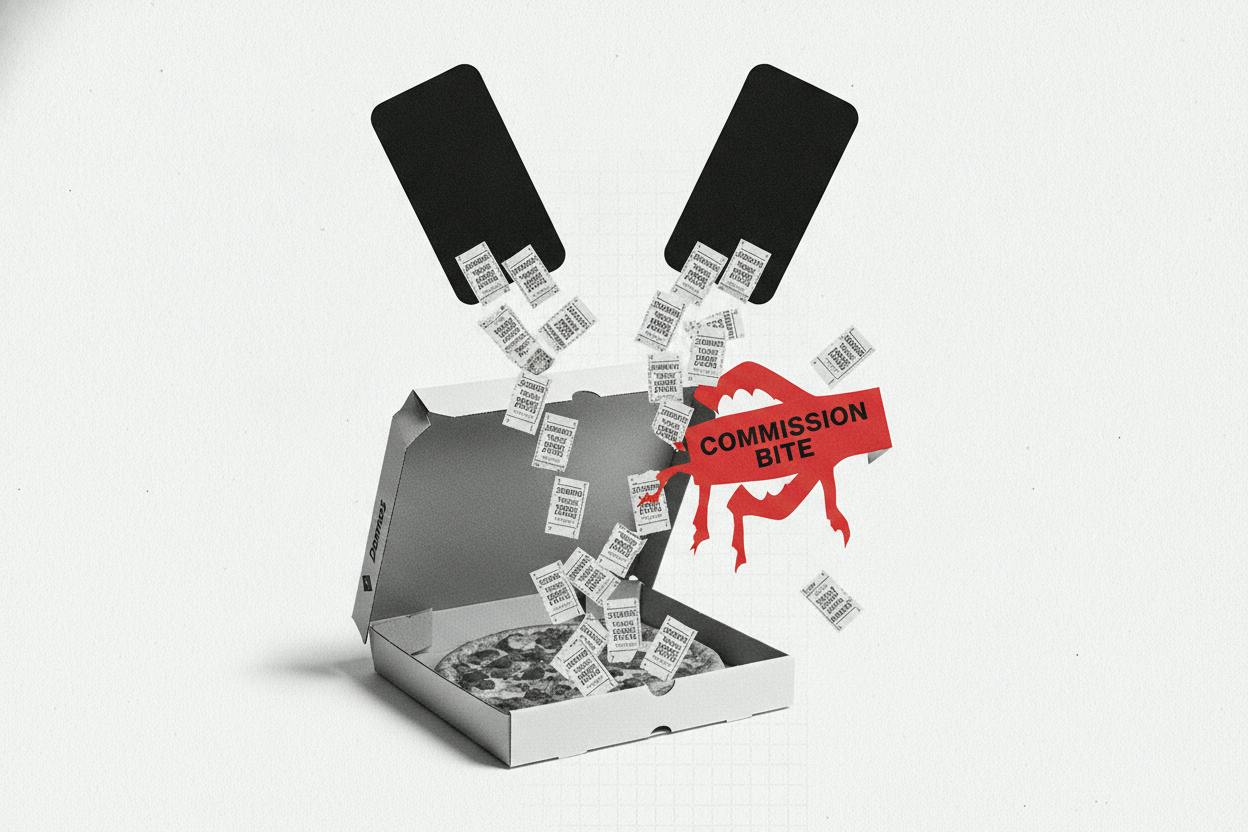
However, the strategy comes with a trade-off. Delivery apps charge commissions on each order, which can eat into the restaurant's margins. If app-based orders are truly incremental—meaning they bring in customers who wouldn't have ordered otherwise—the extra volume can outweigh the fee drag. But if the apps simply redirect customers who would have ordered directly through Domino's, the company could end up paying platform fees for the same demand, squeezing its restaurant-level economics.
What it means for investors
For investors, the key question isn't just whether Domino's can eke out a small sales gain—it's how profitable those extra orders are. UBS says the balance still supports its view that Domino's can deliver mid- to high-single-digit operating income growth in 2026, excluding currency effects. That projection hinges on the assumption that delivery partner orders are mostly incremental, especially during slower dayparts like lunch.
If that assumption holds, Domino's could see profit dollars rise even as commissions take a bite out of each order. But if the apps mostly cannibalize direct orders, the company could face margin pressure that offsets any sales growth. The mix of incremental volume versus fee drag will be a critical factor to watch in the coming quarters.
This dynamic isn't unique to Domino's. Many restaurant chains are grappling with the same trade-off as they expand into third-party delivery. The outcome will depend on how well they can attract new customers without eroding their existing base. For Domino's, the personal pizza and other lunch-focused items are part of that effort, aiming to capture demand during hours when stores have spare capacity.
UBS's forecast is just one view, and actual results could differ. But the note highlights a broader trend in the restaurant industry: the growing reliance on delivery platforms to drive growth. For everyday investors, it's a reminder that sales growth alone doesn't tell the whole story—profitability and the quality of that growth matter just as much.
As Domino's prepares to report its third-quarter results, investors will be watching not only the headline same-store sales number but also any commentary on delivery partner performance and margin trends. The company's ability to balance volume growth with cost control will be key to delivering the operating income growth UBS is modeling for 2026.
In the meantime, the broader market context is mixed. Consumer spending remains resilient in some areas, but inflation and higher interest rates continue to pressure discretionary budgets. For a pizza chain like Domino's, value promotions and new menu items are designed to appeal to cost-conscious customers, which could help sustain demand even in a tougher economic environment.
Ultimately, the story here is about how a mature business can find new avenues for growth. By leaning into delivery partnerships and targeting underutilized dayparts, Domino's is trying to squeeze more out of its existing store base. Whether that strategy pays off will become clearer when the company reports its quarterly numbers.