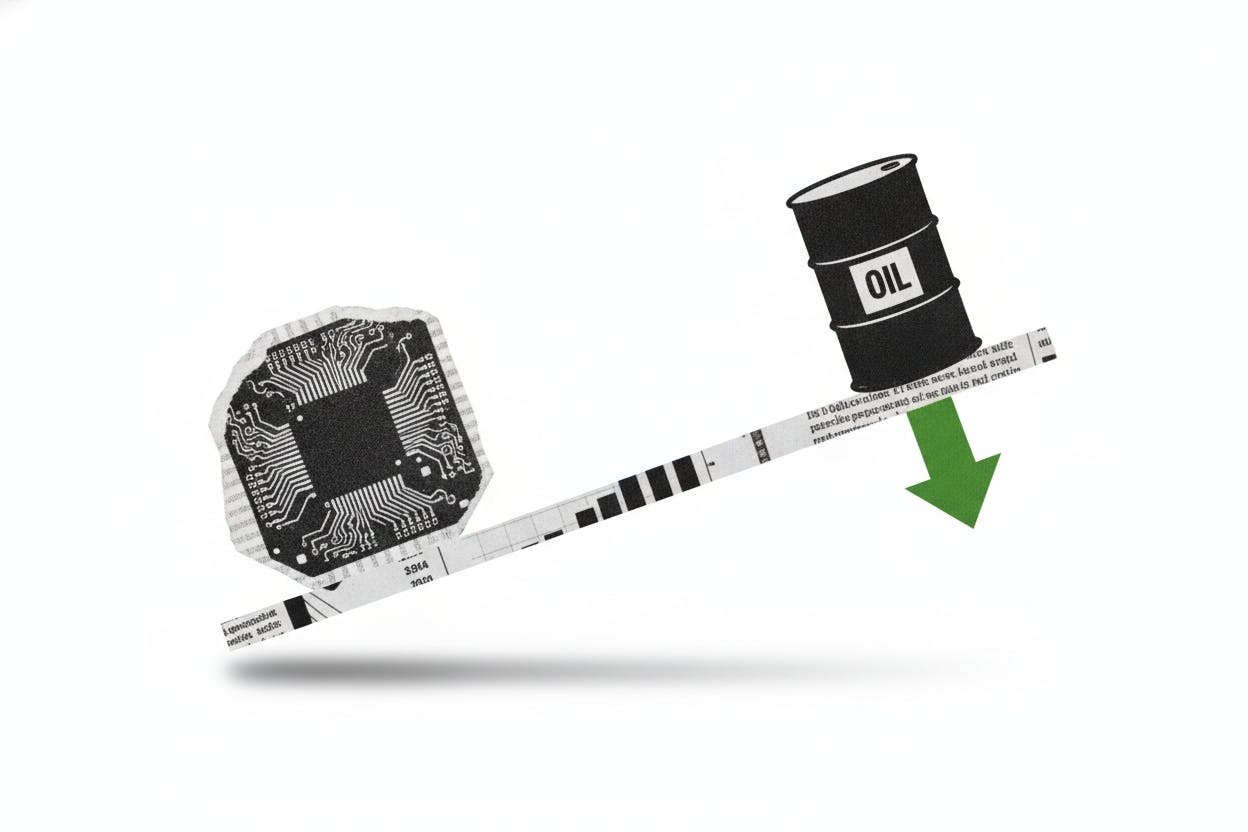
US stock futures pointed in opposite directions on Tuesday, as investors weighed encouraging signals from the White House on Iran negotiations against renewed weakness in semiconductor shares. The Dow Jones Industrial Average futures edged higher, while Nasdaq futures slipped, reflecting a market split between optimism over lower energy costs and caution over the tech sector.
What happened in the markets
President Donald Trump said there was a 'good chance' of reaching a deal with Iran, describing the talks as 'good talks' during a press appearance. He also warned that the US would resume attacks if negotiations failed. The comments came alongside a statement from Iran's Foreign Ministry, which confirmed discussions with Saudi Arabia and Oman about maritime passage through the Strait of Hormuz—a critical chokepoint for global oil shipments.
Oil prices eased on the news, as traders priced in a lower risk of supply disruptions. Brent crude fell roughly 1% in early trading, providing a tailwind for sectors sensitive to fuel costs, such as airlines and industrials. That helped lift Dow futures, which track blue-chip stocks with less exposure to the tech sector.
Why chip stocks are under pressure
On the other side of the market, semiconductor stocks continued their recent slide, dragging down the tech-heavy Nasdaq. The weakness in chips has been building for several sessions, driven by growing doubts about the payoff from massive investments in artificial intelligence infrastructure. Major chipmakers have seen their shares decline as investors question whether the AI boom can sustain its rapid pace of spending.
This is not an isolated US phenomenon. Similar concerns have hit chip stocks across Asia, where semiconductor-heavy indexes in Taiwan, South Korea, and Japan have all fallen in recent days. The sell-off reflects a broader reassessment of the AI trade, as investors look for clearer evidence that the billions poured into data centers and advanced chips will translate into higher revenues and profits.
What it means for everyday investors
The divergence between the Dow and Nasdaq highlights a key dynamic in today's market: not all stocks move together. For ordinary investors, this split is a reminder that diversification matters. A portfolio concentrated in tech or chip stocks would have felt the pain of the Nasdaq's decline, while one with exposure to energy-sensitive sectors or value stocks might have fared better.
The Iran talks are also worth watching closely. Any deal that reduces tensions in the Middle East could keep oil prices in check, which would be a positive for consumers and many businesses. Lower fuel costs can help ease inflationary pressures, potentially giving the Federal Reserve more room to cut interest rates later this year. That would be a broad tailwind for stocks. However, the situation remains fragile—Trump's warning about resuming attacks if talks fail means the risk of escalation has not disappeared.
For now, the market is taking a cautious but not panicked view. The Dow's resilience suggests that investors see some reasons for optimism, even as the tech sector faces its own headwinds. The coming days will likely bring more clarity on both fronts: the Iran negotiations and the outlook for chip demand.
What to watch next
Investors will be monitoring any further statements from the White House or Iran's government for signs of progress or breakdown in talks. On the economic data front, upcoming reports on inflation and consumer spending will also influence market direction. And in the chip sector, earnings reports from major semiconductor companies in the weeks ahead will be crucial for determining whether the recent sell-off is a temporary dip or the start of a deeper correction.
For a broader perspective on how AI spending doubts are affecting markets, see our coverage of AI chip stocks slipping after Big Tech earnings and the spread of AI spending concerns across Asia.