DP World, one of the world's largest port operators, reported a first-half profit of $585 million on revenue of $12.72 billion, showing resilience even as regional conflict temporarily reduced vessel traffic into its flagship Jebel Ali port in Dubai.
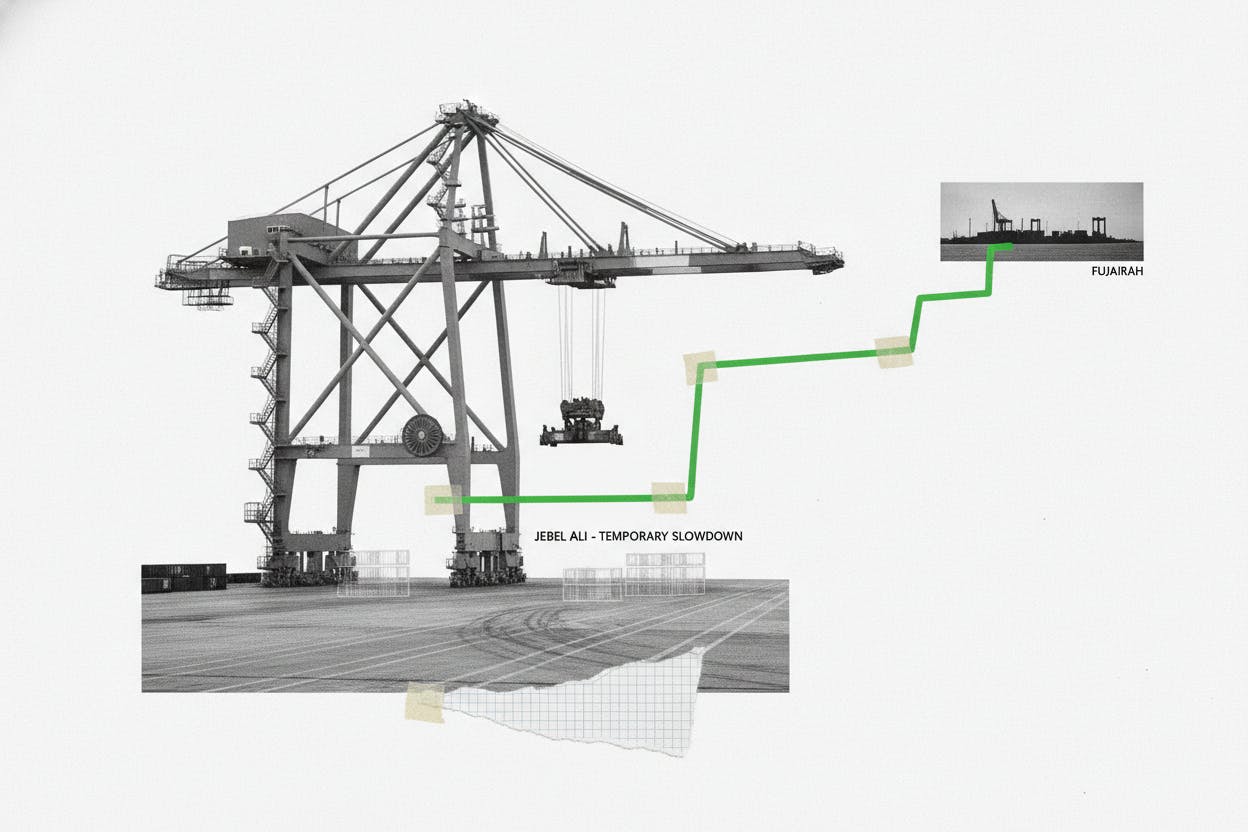
The company said the disruption, linked to ongoing tensions in the region, has slowed ship calls at Jebel Ali, a critical hub for trade between Asia, Europe, and Africa. Despite that, DP World pushed ahead with $1.5 billion in capital expenditure and is building new terminals at Fujairah, on the UAE's eastern coast.
What's behind the numbers?
Jebel Ali is one of the busiest container ports in the Middle East, handling millions of containers each year. A slowdown in vessel traffic there could signal broader trade friction in the region, especially with the Strait of Hormuz nearby—a chokepoint for global oil shipments. As Gulf stocks have edged up amid thin Hormuz traffic, investors are watching how shipping lanes adjust to geopolitical risk.
DP World's profit held steady, suggesting that higher fees or diversified operations helped offset lower volumes. The company operates ports and logistics assets across dozens of countries, so a dip at one location can be balanced by growth elsewhere.
Why does this matter for investors?
For everyday investors, DP World's results offer a window into global trade health. Port operators are like toll booths for the world economy—when goods move, they earn. A slowdown at a major hub can hint at weaker consumer demand or supply chain disruptions, but DP World's stable profit suggests the company is managing the headwinds.
The $1.5 billion capital expenditure plan is a signal that DP World sees long-term growth opportunities, even amid short-term turmoil. Investing in new terminals, like those at Fujairah, could diversify revenue away from any single port and reduce exposure to regional risks.
Fujairah, located outside the Strait of Hormuz, offers an alternative route for shipping, which could become more valuable if tensions persist. This strategic move may appeal to investors looking for companies that adapt to geopolitical challenges.
What to watch next
Investors will likely monitor whether the Jebel Ali slowdown is truly temporary. If conflict escalates, vessel traffic could decline further, affecting DP World's revenue. Conversely, a de-escalation could bring a swift rebound in volumes.
Also watch how DP World's capital spending translates into future earnings. New terminals take time to build and ramp up, so the payoff may not be immediate. But for a company with a global footprint, these investments are often a bet on long-term trade growth.
In the broader context, DP World's performance is a reminder that geopolitical events can ripple through markets. As seen with Dubai toll traffic sliding, regional disruptions can affect various infrastructure plays. Investors should consider how such risks might impact their portfolios.
For those interested in the logistics and shipping sector, DP World's results provide a case study in resilience. The company's ability to maintain profits despite headwinds could be a positive sign for other trade-dependent businesses.
However, it's important to remember that past performance isn't a guarantee of future results. Geopolitical situations can change quickly, and what works today may not work tomorrow. As always, diversification and a long-term perspective are key.
In summary, DP World's H1 numbers show a company navigating choppy waters with a steady hand. The $585 million profit and continued investment signal confidence, but the Jebel Ali slowdown is a reminder of the fragility of global supply chains.
For investors, the takeaway is to keep an eye on trade flows and geopolitical developments, as they can have outsized effects on companies like DP World and the broader market.