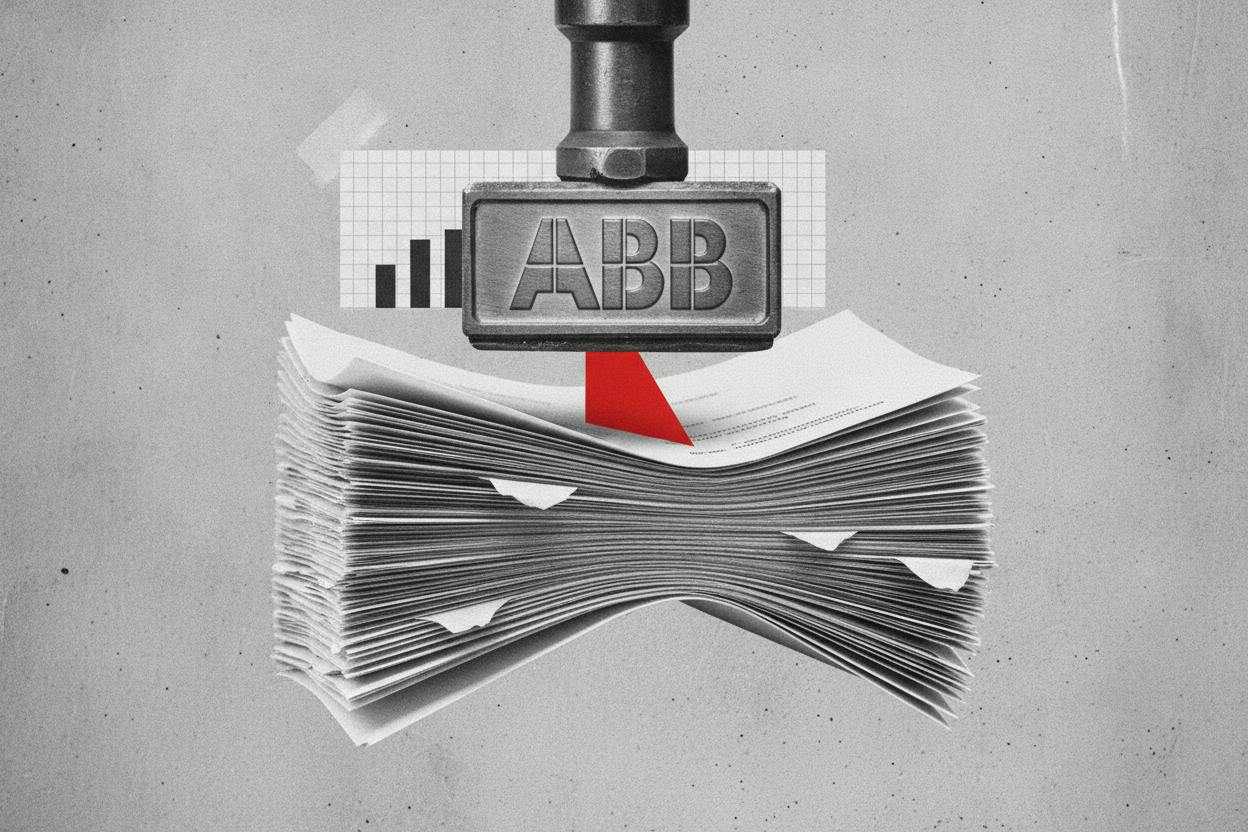
Swiss industrial giant ABB is set to release its third-quarter results on Oct. 20, and the headline numbers are likely to look strong. Analysts at Berenberg forecast revenue of $9.80 billion and order intake of $11.38 billion — a 15% and 32% increase year over year, respectively. But the real test, according to the bank, is whether that surge in new orders can translate into healthier profits rather than simply padding the company's backlog.
Why order intake matters
For companies like ABB, which makes electrical equipment, robotics, and automation systems, order intake is a leading indicator. It represents new contracts signed during the quarter, while revenue is recognized later as the work is delivered. So when orders outpace revenue, it signals that demand is strong and that future sales are already lined up. The gap between the two — $1.58 billion in Berenberg's estimates — suggests the backlog is still building.
ABB's Electrification division, which sells products like switchgear, motors, and charging infrastructure, has been a particular bright spot. Berenberg expects another strong quarter there, reflecting robust demand from data centers, utilities, and industrial customers upgrading their electrical systems.
This pattern is not unique to ABB. Many industrial firms show momentum first in orders and only later in revenue. But investors are increasingly focused on whether that momentum is profitable. A growing backlog is good, but if it comes with rising costs or pricing pressure, it may not boost the bottom line as much as hoped.
What to watch in the report
Beyond the top-line numbers, investors will be looking at ABB's margin performance and any updates to its full-year guidance. The company has been working to improve profitability through cost cuts and a focus on higher-margin businesses, and the market will want to see that effort paying off.
Another factor is the broader economic backdrop. Industrial demand has been resilient in some areas, but there are signs of weakness elsewhere. For instance, UK retailers have cut orders at a record pace as consumer spending slows, and Berenberg has noted a seasonal pause in LNG carrier orders for another company it covers. These are reminders that not every sector is firing on all cylinders.
ABB's exposure to electrification and automation puts it in a sweet spot for long-term trends like the energy transition and factory automation. But it also means its results are sensitive to global industrial activity and capital spending by businesses.
What it means for investors
For everyday investors, the key takeaway is that ABB's order growth is a positive sign, but it's not the whole story. The company needs to convert that demand into earnings. If margins expand, the stock could get a boost. If not, the market may be disappointed despite the strong order numbers.
It's also worth remembering that analysts' estimates are just forecasts. Actual results could come in higher or lower. Investors should wait for the official release and listen to management's commentary on the outlook for the rest of the year.
Berenberg's view is that ABB is on track, but the bank has also been cautious on other names. For example, it recently trimmed its profit view for ICG while keeping the price target, and it has flagged trade imbalances in Hong Kong driven by AI imports. These are reminders that even bullish analysts are selective.
Ultimately, ABB's report will be a test of whether the industrial sector's momentum is translating into profitability. If orders stay hot and margins hold up, it could be a good sign for the broader market. If not, it might raise questions about the durability of the current cycle.