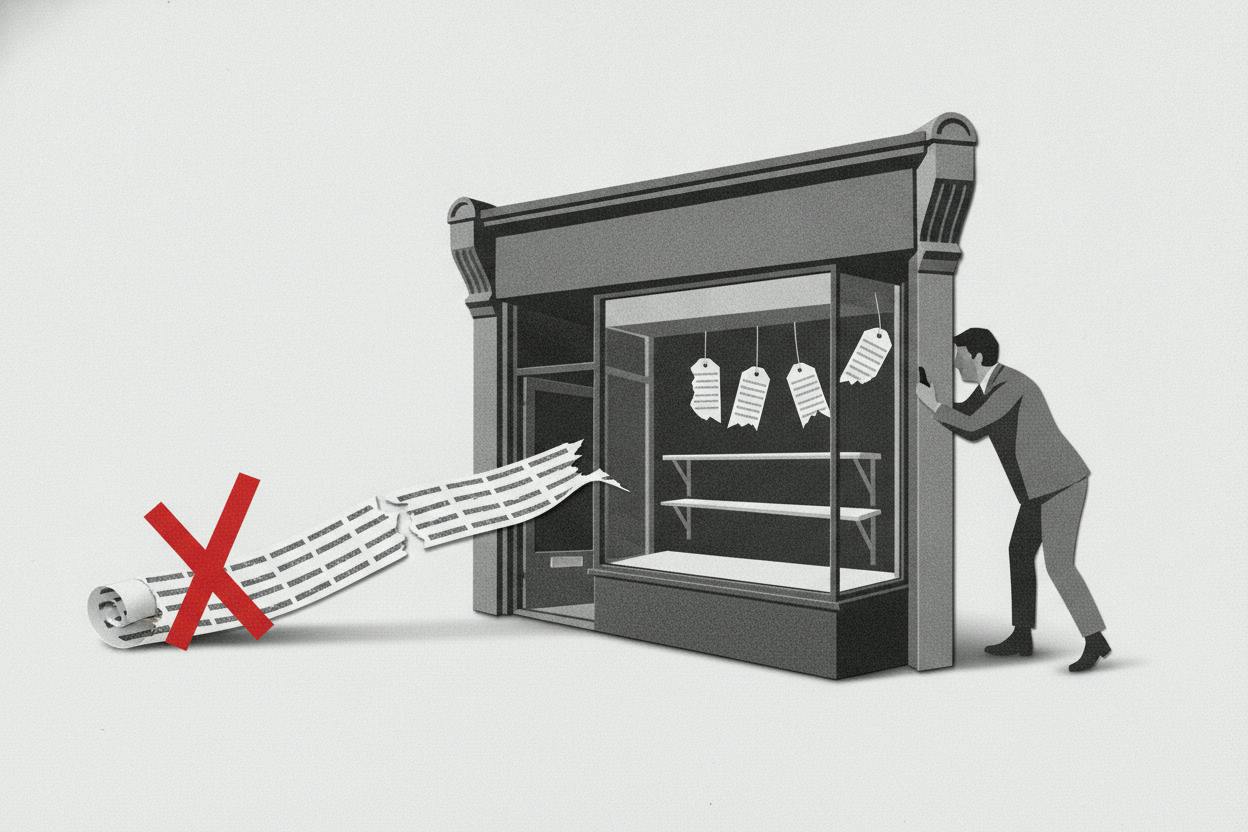
UK retailers are feeling the chill. A closely watched survey from the Confederation of British Industry (CBI) shows that sales fell sharply in September, and stores slashed orders to suppliers at the fastest pace since the survey began in 1983. The data adds to a picture of cautious consumers and a fragile high street.
What the survey shows
The CBI's monthly distributive trades survey, which tracks retail activity, reported a year-on-year sales balance of -55 in September. That's a drop from -48 in August and marks the steepest decline since April. The balance is calculated by subtracting the percentage of retailers reporting a fall in sales from those reporting a rise, so a negative number means more retailers saw sales decline than grow.
Retailers also indicated they are ordering less stock for the coming months. That's a forward-looking signal, suggesting businesses expect demand to stay weak. The CBI noted that the pace of order reductions was the fastest since the survey began in 1983, underscoring how cautious retailers have become.
The survey's findings align with other recent data pointing to soft consumer spending in the UK. High inflation, elevated interest rates, and lingering economic uncertainty have weighed on household budgets, making shoppers more selective about what they buy.
Why it matters
Retail is a major part of the UK economy, and what happens on the high street often reflects broader consumer confidence. When retailers pull back on orders, it ripples through the supply chain—affecting manufacturers, wholesalers, and logistics companies. A sustained downturn in retail could weigh on economic growth.
For investors, the survey is a reminder that consumer-facing companies face headwinds. Retailers may see profit margins squeezed as they discount to move inventory, while suppliers could face lower order volumes. The news also comes as other economies show mixed signals: for instance, US business activity recently hit a five-year high, highlighting a divergence between the two economies.
What it means for investors
For everyday investors, this survey is a useful gauge of the UK's economic health. A weak retail environment can affect a range of sectors, from consumer goods companies to commercial property. It may also influence the Bank of England's thinking on interest rates, as sluggish demand could ease inflationary pressures.
However, it's important to keep perspective. One month's survey doesn't define a trend, and retail data can be volatile. The CBI's balance is a sentiment indicator, not a hard measure of sales volumes. Still, the record pace of order cuts is a notable warning sign that retailers are bracing for tougher times.
Investors might watch for upcoming earnings reports from major UK retailers and consumer brands to see if the weakness shows up in their numbers. Companies that rely heavily on discretionary spending—like fashion and home goods—are often the most exposed. In contrast, discount retailers and grocers may prove more resilient as shoppers trade down.
The broader global context also matters. While the UK struggles, other regions are showing resilience. For example, EU car sales rose in August, and Japan's private sector growth slowed but remained positive. These contrasts suggest that the UK's retail weakness is not necessarily a global trend.
The bottom line
The CBI survey is a clear signal that UK retailers are feeling the pinch. With sales falling and orders being cut at a record pace, the near-term outlook for the high street looks challenging. For investors, it's a cue to stay alert to how consumer spending evolves, but not to overreact to a single data point.
As always, diversification and a long-term view remain key. Retail is cyclical, and today's downturn could be tomorrow's recovery. Keeping an eye on economic indicators and company fundamentals will help investors navigate the uncertainty.