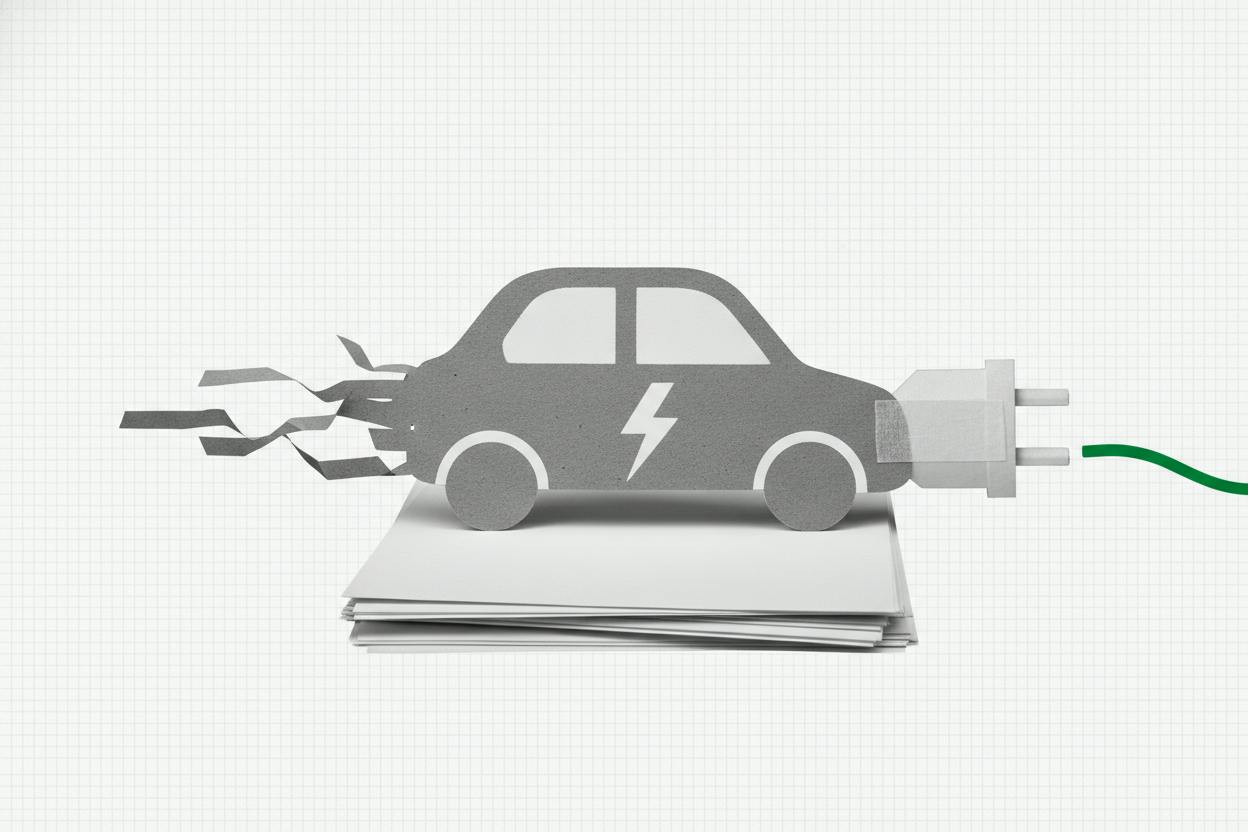
New car sales in the European Union continued their steady climb in August, but the headline growth masks a more dramatic transformation underneath: buyers are rapidly abandoning traditional petrol and diesel engines in favor of electric and hybrid models.
The European Automobile Manufacturers’ Association (ACEA), the industry's main trade group, reported that new registrations in the EU rose 4.5% year-on-year in August to 708,211 vehicles. That brings the January-to-August total to 7.55 million, up 5.3% from the same period last year.
While the overall market is growing at a modest pace, the composition of those sales is changing quickly. Battery-electric vehicles (BEVs) surged 44.9% through August to 1.64 million registrations, lifting their share of the market to 21.7% from 15.8% a year earlier. Hybrids also grew strongly, up more than 11% to 2.76 million units, representing roughly 37% of all new car registrations.
Why the mix matters
For investors, the shift in the powertrain mix is arguably more important than the overall sales figure. Automakers that have bet heavily on electric vehicles are seeing that bet pay off in terms of consumer demand, while those slower to transition risk losing ground.
The rise of BEVs and hybrids is squeezing traditional internal combustion engine vehicles. Petrol and diesel cars, which once dominated the European market, are now a shrinking slice of the pie. This trend has been building for years, driven by stricter emissions regulations, government incentives, and a growing range of affordable electric models.
It's not just about cars themselves. The shift has ripple effects across the entire supply chain, from battery manufacturers to charging infrastructure providers. Companies that produce components for internal combustion engines, such as exhaust systems and fuel injection parts, face a declining market, while those involved in battery production and electric drivetrains are seeing demand soar.
This dynamic is playing out across the global auto industry. For instance, Volkswagen's partnership with Xpeng to build an SUV for the Chinese market reflects the pressure traditional automakers feel in the world's largest car market, where electric vehicles are already mainstream. Similarly, Geely's recent unveiling of a 2.2MW charger highlights the race to improve charging speed, a key factor in consumer adoption of EVs.
What it means for investors
For everyday investors, the data points to a few takeaways. First, the auto industry is in the middle of a structural shift, not a temporary blip. The growth in electric and hybrid sales is consistent and accelerating, which suggests that companies aligned with this trend may be better positioned for long-term growth.
Second, the overall sales growth, while positive, is modest. This suggests that the market is mature and competitive, and that automakers will need to fight for market share. That could put pressure on profit margins, especially as they invest heavily in new technology.
Third, the shift to EVs is not just a European story. It's a global phenomenon. Saudi Arabia's new EV startup Ceer is targeting sales by 2027, and Taiwan's factory output jumped 23.5% in August, partly on AI chip demand, which is also relevant to the tech-heavy components in modern vehicles.
Investors should also consider the broader economic context. Car sales are often seen as a barometer of consumer confidence and economic health. The steady growth in Europe suggests that consumers are still willing to make big-ticket purchases, despite inflation and higher interest rates. However, the mix shift means that the companies benefiting from this spending are changing.
For those who own auto stocks or funds, it's worth paying attention to how each company is navigating the transition. Some are leading the charge, while others are playing catch-up. The ACEA data provides a clear snapshot of where the market is heading, and it's a direction that favors electrification.
As always, it's important to remember that past performance is not a guarantee of future results. But the trend is clear: the European car market is electrifying, and that has implications for investors across the board.