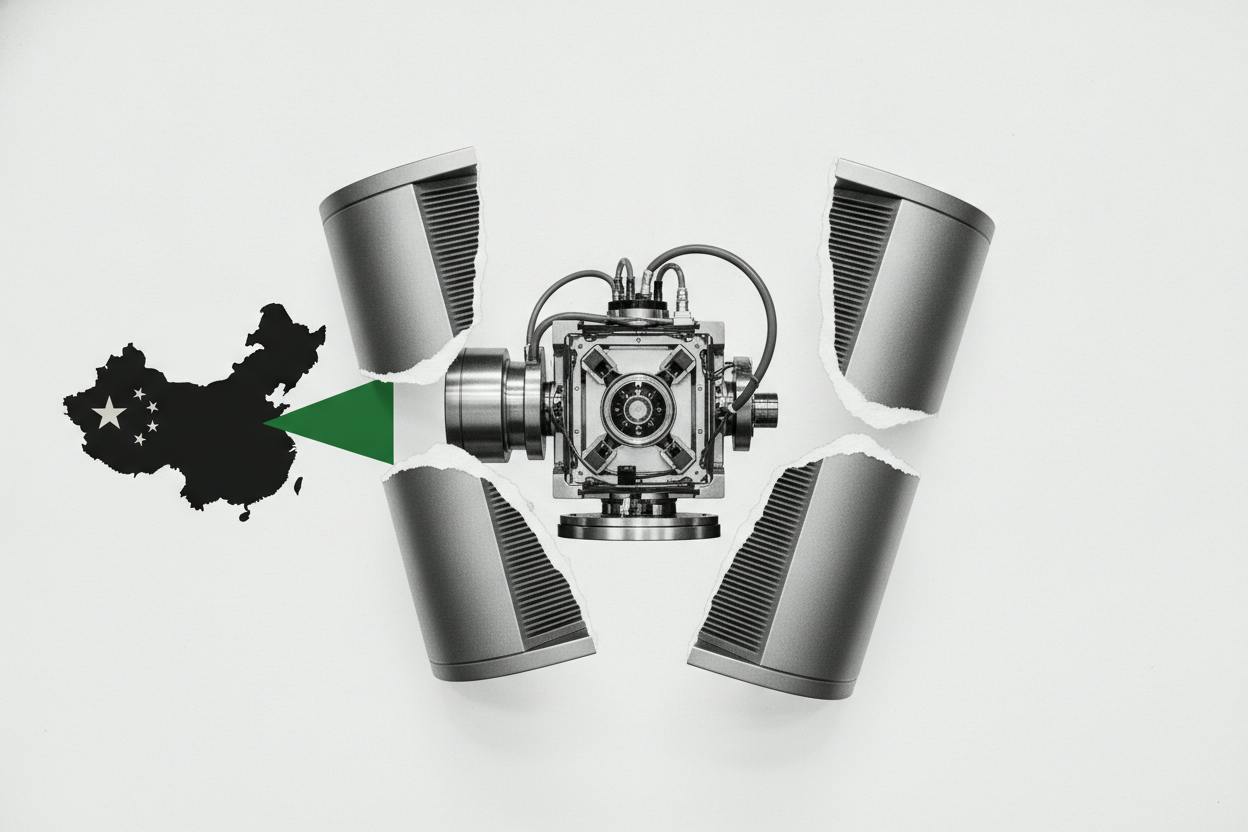
Swedish radiotherapy equipment maker Elekta is adapting to a fractured tungsten market by deepening its reliance on Asian supply chains, after China's February 2025 export controls created two distinct price tiers for the critical metal.
Tungsten is a key material in radiotherapy systems, particularly in components that shape radiation beams to target tumors while sparing healthy tissue. When China—the world's dominant producer—restricted exports, buyers outside the country suddenly faced higher prices, while material sold within China remained significantly cheaper. That divergence has turned tungsten into a commodity with no single global price.
Elekta's CEO, Jakob Just-Bomholt, told Reuters that this price gap is already influencing the company's decisions on where to source materials and where to build its machines. He declined to name specific suppliers, but the strategic shift is clear: Elekta operates manufacturing plants in both Britain and China, and recently expanded its Beijing facility to cover its full product portfolio in 2025, after delivering its 1,000th linear accelerator there.
What the two-tier tungsten market means
Export controls can effectively split a commodity into two markets: a lower-priced pool where the material is produced and consumed domestically, and a higher-priced pool for everyone else. Until alternative supply chains scale up, that gap acts like a persistent cost surcharge for manufacturers that rely on Western sourcing.
For Elekta, the impact has been tangible. The company says higher tungsten costs have pressured its gross margin this year. In response, it has raised prices on some products and is exploring ways to recover tungsten from decommissioned equipment. However, not every product line can use reclaimed material, so the company must still buy new tungsten at prevailing market rates for many of its systems.
The broader lesson is that when an input stops having a single global price, a company's manufacturing footprint becomes as important as the raw-material market itself. Firms that can source and assemble within the cheaper zone gain a cost advantage, while those tied to Western supply chains face a structural headwind.
How Elekta is adapting
Elekta's response illustrates a common playbook for companies navigating export controls: redirect procurement toward the cheaper region and, where feasible, move assembly closer to it. By expanding its Beijing plant and integrating Asian sourcing more deeply into its operations, Elekta is positioning itself to benefit from the price differential.
This approach is not without limits. The company still manufactures in Britain, and some products may not be easily shifted to Asian production due to regulatory, logistical, or technical constraints. Moreover, relying more on China could expose Elekta to geopolitical risks, as fresh US tariff talk and broader trade tensions continue to roil global supply chains.
What it means for investors
For everyday investors, Elekta's situation highlights how export controls can ripple through corporate earnings and strategy. When a critical input becomes more expensive for some buyers, companies must decide whether to absorb the cost, pass it on to customers, or restructure their supply chains. Elekta is doing a mix of all three.
The company's ability to shift sourcing toward Asia could help protect its margins over time, but it also signals that the era of cheap, globally fungible commodities may be ending for certain materials. This is part of a broader trend where governments and companies are trying to reduce reliance on China for critical inputs, even as they grapple with the cost implications.
Investors should watch how Elekta's margin trajectory evolves in coming quarters, and whether its Asian sourcing strategy delivers the expected savings. The company's experience also offers a case study for other manufacturers that depend on Chinese-controlled materials, from rare earths to other metals used in high-tech equipment.
Ultimately, the tungsten split is a reminder that commodity prices are not always global. For companies like Elekta, the ability to navigate such fractures may become a key competitive advantage—or a persistent drag on profitability.