Dubai's Emirates Group reported a half-year profit before tax of AED 4.1 billion, holding steady even as revenue slipped 12% compared with the same period a year earlier. The result, covering April 1 to September 30, shows how the airline group managed to protect its bottom line despite a softer operating backdrop.
The group, which includes Emirates Airline and airport-services provider dnata, said profit after tax came in at AED 3.6 billion for the six months. Revenue fell as the airline cut capacity by 10%, and its seat factor—the measure of how full planes are—averaged 72.0% over the period. By the end of September, the carrier had restored 91% of its pre-disruption network.
What drove the resilient profit?
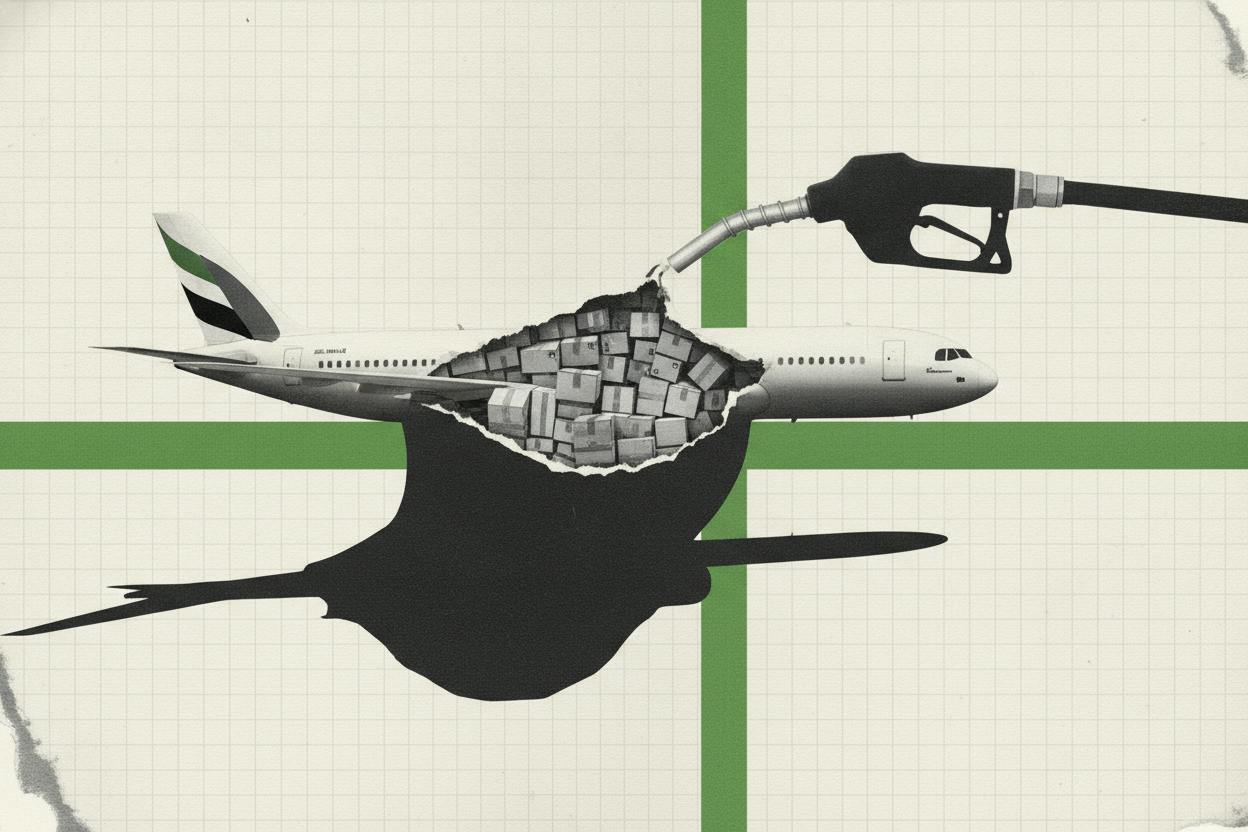
Two factors helped offset the revenue decline. First, cargo demand remained strong, providing a steady income stream even as passenger numbers were still recovering. Second, the group benefited from a significant fuel-hedging gain. Fuel hedging is a practice where airlines lock in fuel prices in advance to protect against sudden spikes. When market prices rise above the hedged rate, the airline books a gain that cushions its fuel costs.
This is particularly important in an environment of high and volatile fuel prices, which have been a major cost pressure for airlines worldwide. By hedging, Emirates was able to soften the blow of expensive jet fuel, helping to keep profits from falling alongside revenue.
The airline industry is notoriously sensitive to fuel costs, which can swing sharply with global oil prices. For carriers, a hedging strategy can be a double-edged sword: it can provide stability when prices rise, but it can also mean missing out on savings when prices fall. In this case, the hedges worked in Emirates' favor.
What it means for investors
For investors, the key takeaway is that Emirates managed to protect its profitability even as its top line shrank. That suggests the group has some resilience in its cost structure and revenue mix, particularly from cargo, which has been a bright spot for many airlines during the pandemic and its aftermath.
However, the softer operating metrics—lower capacity and a seat factor of just 72%—indicate that passenger demand is still not back to pre-crisis levels. A seat factor below 80% is generally considered weak for a major carrier, and it points to continued pressure on the passenger side of the business.
The fact that the airline is back to 91% of its pre-disruption network is a positive sign, but it also means there is still a gap to close. Investors will likely watch how quickly Emirates can rebuild its network and fill its planes, especially as travel demand recovers in different regions at different speeds.
Emirates is not a publicly listed company, so everyday investors cannot buy its shares directly. But its performance is a bellwether for the broader aviation and travel sector, and for the economy of Dubai, which relies heavily on tourism and air connectivity. Strong results from Emirates can signal healthy demand for premium travel and cargo, which may also be relevant for investors in other airlines, travel companies, or logistics firms.
The group's ability to hold profits steady despite falling revenue is a reminder that airlines can use financial tools like hedging to manage risk. But it also underscores the challenges the industry faces as it navigates an uneven recovery.
Looking ahead, the next few months will be crucial. The winter season typically sees lower travel demand, and fuel prices remain a wildcard. If cargo demand stays strong and fuel costs remain manageable, Emirates could continue to post solid results. But if passenger demand falters or fuel prices spike again, the pressure on revenue and margins could intensify.
For now, the half-year numbers offer a mixed picture: profits are holding up, but the underlying revenue and capacity trends show the recovery is far from complete. Investors should keep an eye on how Emirates and other carriers manage these headwinds in the coming quarters.